
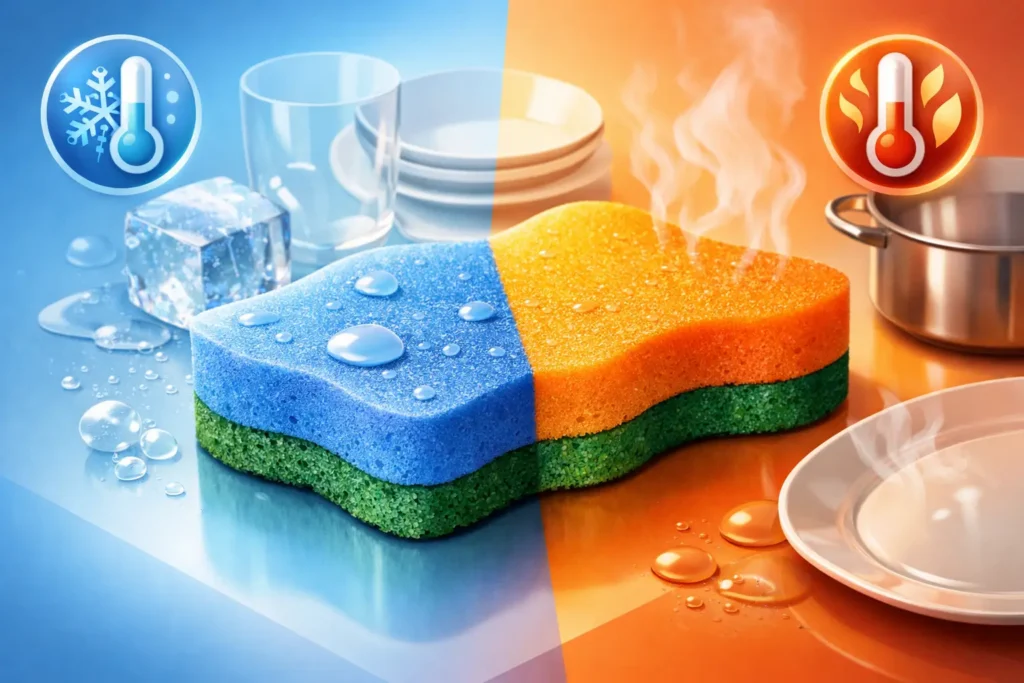
A baked-on pan needs more cleaning power than a wine glass, but most households reach for the same sponge. A temperature sensitive cleaning sponge offers a smarter response: its scrubbing texture changes with water temperature, helping you move from gentle care to stronger cleaning without switching tools at the sink.
For busy kitchens, that simple change can make dishwashing faster, more satisfying, and safer for the surfaces you use every day. Soft when you need a light touch and firmer when grease and food residue need extra effort, this type of sponge brings visible innovation to an everyday task.
How a Temperature Sensitive Cleaning Sponge Works
The key feature is temperature-responsive foam. In warm water, the sponge becomes softer and more flexible. This makes it comfortable to hold and better suited to delicate items such as glasses, coated cookware, ceramic dishes, and everyday plates. The softer texture can glide across surfaces while lifting fresh food residue and grease.
In cooler water, the same foam becomes firmer. That added firmness gives you more scrubbing support for stuck-on messes, kitchen counters, sink stains, and cookware that needs more attention. You are not adding a harsh cleaner or reaching immediately for an abrasive pad. You are simply using the water temperature to adjust the sponge’s feel and cleaning strength.
This does not mean cold water turns a sponge into a heavy-duty metal scourer. Tough, burnt-on residue may still need soaking time, dish soap, or a dedicated scouring tool. The advantage is control: one sponge can handle more of the day-to-day cleaning range with less guesswork.
Gentle for Dishes, Firm for Messes
A temperature-responsive sponge is especially useful because real kitchen cleanup rarely involves one surface or one level of soil. After dinner, you may have a delicate drinking glass, a greasy stovetop splash, a nonstick skillet, and a food container with dried sauce. Using a single overly rough sponge on all of them can be risky. Using a sponge that is too soft for everything can be frustrating.
Warm water is a practical choice when washing items that benefit from a gentle touch. The softened sponge is easier to squeeze, reaches around curves and corners, and helps you wash without applying unnecessary pressure. That matters for cookware finishes and surfaces that can dull or scratch when cleaned aggressively.
Cooler water makes sense when you want a little more grip and scrubbing action. Use it for everyday marks on sinks, stubborn food around cookware edges, or residues that have started to dry. Pair the sponge with a suitable dish soap, let the soap work for a moment, then scrub with steady pressure. Often, a short soak does more for a difficult mess than pressing harder ever will.
A Better Fit for Nonstick Cookware
Nonstick pans are a common reason to choose a more adaptable sponge. Their coatings are designed to release food easily, but abrasive tools can shorten the life of the surface. A temperature-sensitive sponge used in warm water gives you a softer option for routine washing while still offering a firmer feel in cooler water when residue needs more help.
Always follow the cookware maker’s care instructions. If a pan has deep scratches, peeling coating, or visible damage, cleaning more aggressively is not the answer. Gentle daily care is the better habit.
Useful Beyond the Dish Rack
The kitchen is the natural home for this sponge, but its flexible cleaning feel can help with other small household jobs. In its softer state, it can be useful for wiping washable bathroom fixtures, cleaning soap dishes, or refreshing smooth countertop surfaces. In its firmer state, it can assist with sink marks, food-prep areas, and durable surfaces that need a little extra effort.
Surface type always comes first. Avoid aggressive scrubbing on unsealed stone, high-gloss finishes, painted surfaces, or any material that can be damaged by friction. Test on a hidden area when you are unsure, and use the product care guidance for specialty surfaces.
Why the Ergonomic Shape Matters
A sponge should not be awkward to hold when your hands are wet and the sink is full. An ergonomic shape can make a noticeable difference, particularly during larger cleanup sessions. A well-designed sponge is easier to grip, helps keep fingers away from hot water and sharp dish edges, and gives you more control when cleaning the inside of mugs, bowls, and pans.
PowerMax Teddy Boo Scrub Sponge combines this easy-to-hold design with temperature-responsive foam and a playful character-inspired shape. It brings a little personality to the sink while delivering a practical benefit: more comfortable control for gentle washing and more confident scrubbing when the job calls for it.
That combination is not only about making cleaning look different. It helps make routine cleaning feel less repetitive. When a tool is comfortable, clear in its purpose, and pleasant to use, it is easier to keep up with the small cleaning tasks that prevent bigger messes later.
Get the Best Results From Your Sponge
A temperature-sensitive sponge works best when you match your method to the mess. Start by rinsing loose food from dishes instead of grinding particles against the surface. Add dish soap to the sponge or wash water, then choose warmer water for gentle washing and cooler water when you want a firmer scrubbing texture.
For dried food, do not rush straight into hard scrubbing. Soak the item in warm, soapy water for several minutes first. This loosens residue and reduces the effort needed afterward. It is a simple habit that protects cookware and helps your sponge perform more effectively.
After cleaning, rinse the sponge thoroughly until water runs clear. Squeeze out excess water and leave it in an open, well-ventilated spot to dry. A sponge left wet at the bottom of the sink can develop odors more quickly and will not feel fresh for the next use.
Care, Hygiene, and Replacement
No sponge lasts forever, including a temperature-responsive one. Regular rinsing and drying help extend usable life, but replacement is part of good kitchen hygiene. Replace your sponge when it develops a persistent odor, starts to break down, loses its shape, or no longer cleans effectively.
A sponge is a cleaning tool, not a disinfectant. For tasks involving raw meat juices, use a cleaning method appropriate for food-contact surfaces, then follow with the right sanitizing step for that surface when needed. Keep separate tools for especially messy jobs if that works better for your household routine.
It also helps to avoid using the same sponge on every surface in the home. A dedicated kitchen sponge should stay in the kitchen, while bathroom and floor-cleaning tools should remain separate. This small bit of organization supports a cleaner, more hygienic home.
Is It Worth Choosing a Temperature-Responsive Sponge?
For households that want fewer tools without settling for one-size-fits-all cleaning, the answer is often yes. The main benefit is not a complicated cleaning system. It is the ability to adjust your sponge through a simple change in water temperature, giving delicate dishes a softer clean and everyday messes a firmer scrub.
It is most useful for people who regularly wash a mix of cookware, dishes, containers, and kitchen surfaces. If you need to remove heavy rust, burned-on oven grime, or deeply embedded stains, a specialized heavy-duty tool may still be the right choice. But for the daily work of keeping the kitchen clean, a temperature-sensitive sponge adds convenience exactly where it counts.
The best cleaning tools earn their place by making ordinary tasks easier. Choose the water temperature that fits the surface, give tough residue time to loosen, and let a smart sponge help turn the next pile of dishes into a simpler job.