
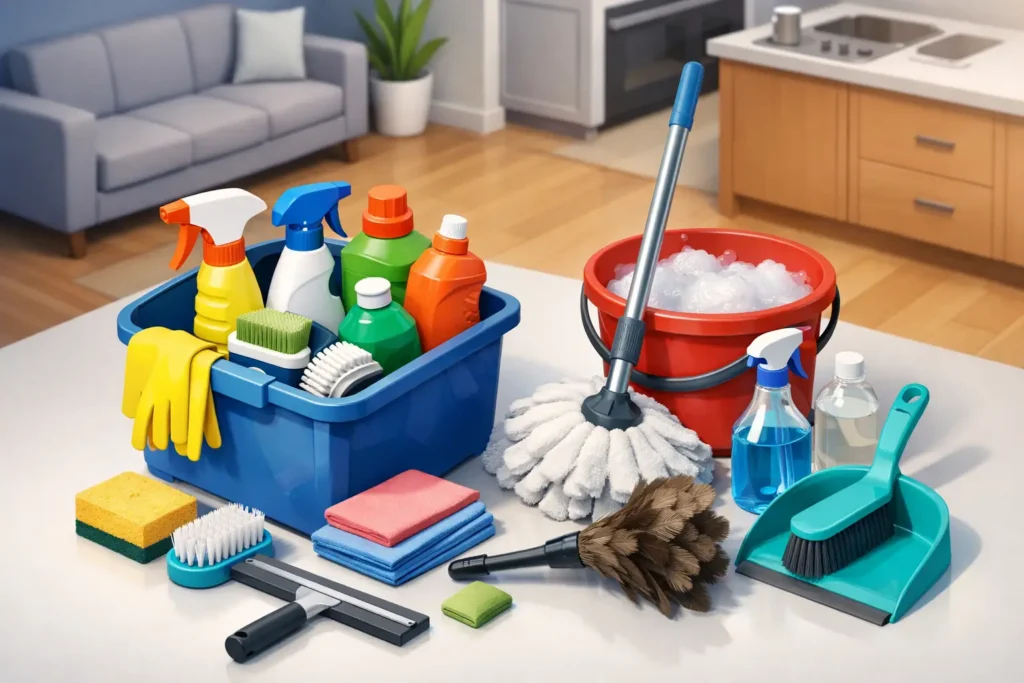
The first spill in a new apartment always feels bigger than it is: coffee on an unfamiliar countertop, cooking grease on the stovetop, or dust collecting under furniture you just assembled. The right cleaning supplies for first apartment living turn those small messes into quick jobs instead of weekend projects. Start with a focused kit that handles the rooms you use most, protects the surfaces you rent, and does not take over your limited cabinet space.
You do not need a separate product for every possible stain. A few dependable tools, paired with the right cleaners and a simple routine, will cover nearly all everyday cleaning. Buy for the apartment you have now, then add specialty tools only when a real need appears.
Build a First Apartment Cleaning Kit That Works
A good starter kit has three jobs: remove food and grease, control bathroom buildup, and keep dust and dirt from traveling through your home. The best choices are reusable where possible, durable enough for regular use, and gentle enough for common surfaces such as laminate, sealed counters, glass, stainless steel, tile, and finished floors.
Start with these core supplies:
- A multipurpose cleaner for sealed hard surfaces, including counters, tables, cabinet fronts, and many appliances
- Dish soap and two to three dishwashing sponges for cookware, dishes, and quick sink cleanup
- Microfiber cloths for dusting, wiping, polishing, and drying without leaving lint behind
- A bathroom cleaner suited to soap scum and everyday grime, plus a toilet brush and toilet bowl cleaner
- A broom and dustpan or a vacuum, depending on your flooring and the size of your apartment
- A mop with washable pads or a microfiber floor cloth for hard floors
- Glass cleaner or a streak-free window cloth for mirrors, glass tables, and windows
- Trash bags, paper towels, and disposable gloves for messy jobs
This may look like a long list, but most items are compact and earn their place quickly. Reusable cloths and mop pads are especially smart for a first apartment because they reduce repeat purchases and work across several rooms.
Start in the Kitchen, Where Messes Build Fast
The kitchen is usually the busiest cleaning zone in a first home. Even if you cook simple meals, crumbs, grease, water spots, and food residue can collect quickly. Keep dish soap, a sponge, and a microfiber cloth within easy reach of the sink so cleanup happens while the mess is still fresh.
Choose a sponge with a soft side for plates and delicate surfaces and a scouring side for stuck-on residue. Not every pan, countertop, or appliance finish can handle abrasive scrubbing, so check the care instructions before using a heavy-duty scouring pad. Nonstick cookware, glossy cabinet fronts, and some stainless-steel surfaces need a gentler touch.
For counters, use a cleaner that is appropriate for the material. Most apartment counters are sealed laminate, quartz, or similar engineered surfaces, and a multipurpose cleaner with a non-abrasive cloth is usually enough. If you have natural stone, such as marble or granite, use a stone-safe product instead. Acidic or harsh cleaners can dull or damage certain finishes.
A small kitchen reset each evening makes a noticeable difference. Wash dishes or load them into the dishwasher, wipe the counter and stovetop, rinse the sink, and replace a sponge when it starts to smell or lose its shape. Clean tools perform better and help keep food-prep areas more hygienic.
Give the Bathroom Its Own Tools
Bathroom grime is different from kitchen grime. Moisture encourages soap scum, toothpaste splatters, water marks, and mildew around showers and sinks. Keeping dedicated bathroom supplies prevents you from carrying residue from one room to another.
Your essentials are simple: a bathroom surface cleaner, toilet bowl cleaner, toilet brush, microfiber cloths reserved for the bathroom, and a scrubber for the tub or shower. A shaped scrub sponge can make a real difference in tight areas around faucets, drains, and tile edges, where buildup tends to settle.
Clean the toilet brush after use by rinsing it in clean toilet water, then allow it to dry before placing it back in its holder. For the shower, a quick wipe after bathing reduces water spots and gives soap scum less time to harden. If your bathroom has poor ventilation, run the fan during and after showers or crack the door open once it is safe to do so.
Avoid mixing cleaners, especially products containing bleach, ammonia, or acids. More product does not always mean better results. Use one cleaner at a time, follow the label directions, and keep the room ventilated.
Choose Floor Tools for Your Actual Flooring
Floors determine whether your apartment looks freshly cleaned or merely tidied. Before buying a mop or floor solution, identify what is underfoot. Tile and vinyl can usually handle regular damp mopping, while hardwood and laminate often need less water and a cleaner made for that finish.
For a small apartment with hard floors, a broom, dustpan, and microfiber mop are often enough. Sweep high-traffic areas first, then damp mop when needed. A mop with reusable pads is convenient because it picks up fine dust and can be washed after use. Do not soak laminate or wood-look flooring. Excess water can seep into seams and cause lifting or swelling.
If you have carpet, add a vacuum with attachments. The attachments matter for baseboards, sofa cushions, corners, and the narrow gap beside the refrigerator. A small handheld vacuum can be useful in a studio, but it may not replace a full vacuum if you have wall-to-wall carpet or pets.
The Small Tools That Save Time
The most useful cleaning supplies for a first apartment are often the ones that prevent a tiny mess from becoming a difficult one. Keep microfiber cloths in more than one area, such as under the kitchen sink and in the bathroom. Use separate colors, if possible, so kitchen and bathroom cloths do not get mixed up.
A good set of cloths replaces a surprising amount of paper towel use. Use a dry cloth for dusting and polishing, a lightly damp one for everyday wiping, and a clean dry one to buff glass or stainless steel. Wash reusable cloths regularly without fabric softener, which can reduce their absorbency.
Add a few practical extras if your apartment calls for them: a lint roller for pet hair, a small detail brush for grout and tracks, a plunger for bathroom emergencies, and a pair of rubber gloves for deep cleaning. These are not glamorous purchases, but they offer welcome peace of mind when you need them.
Store Supplies Safely in a Small Space
Apartment storage can be tight, so organize cleaning supplies by room or task rather than letting bottles collect under every sink. A handled caddy makes it easy to carry your most-used products from room to room. Keep frequently used tools accessible and reserve higher shelves for refills and occasional-use items.
Store cleaners away from food, children, and pets. Keep products in their original containers, with labels intact, and never transfer chemicals into drink bottles or unlabeled jars. Sponges, cloths, and mop pads should dry fully between uses to reduce odor and extend their usable life.
PowerMax cleaning tools are designed to make this kind of everyday care feel easier, from durable sponges for kitchen cleanup to microfiber solutions for polished, streak-free surfaces. Choosing reliable tools from the start means less frustration when routine cleaning comes around.
Buy Less First, Then Upgrade With Purpose
It is tempting to fill a cart with every cleaning spray, gadget, and specialty scrubber. For most first apartments, that creates clutter before it creates results. Begin with versatile basics, learn which surfaces and messes show up most often, and add targeted products only when they solve a recurring problem.
A compact, well-chosen kit lets you clean confidently without wasting money or storage space. Put a few minutes into the kitchen and bathroom each week, refresh your floors before dirt settles in, and keep your tools clean. Your apartment will feel more comfortable from the day you move in, no matter how small the space may be.