
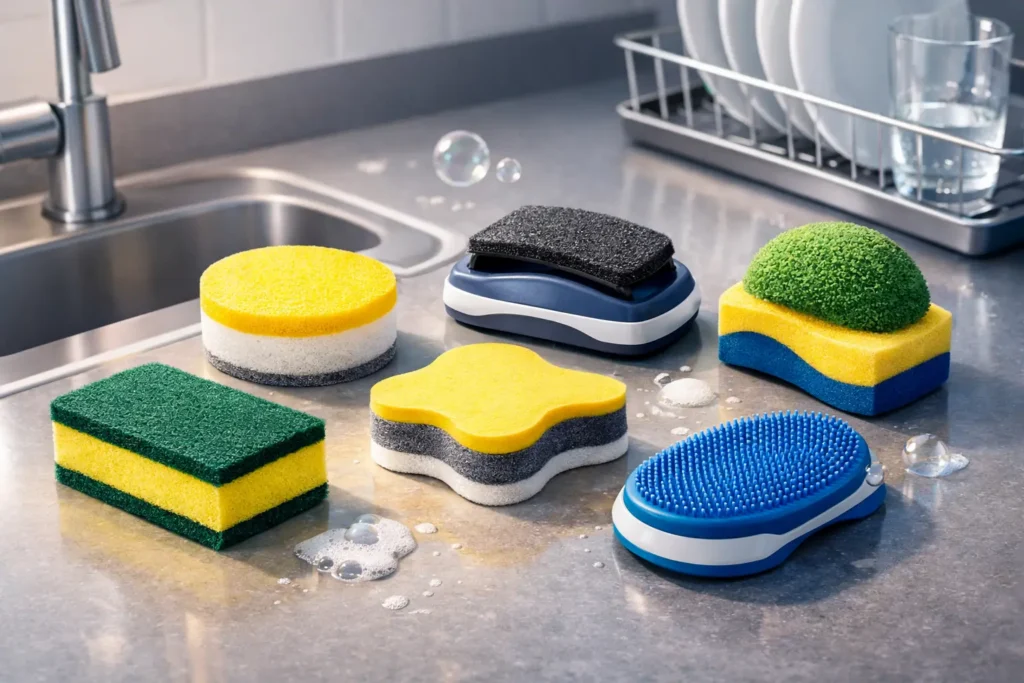
A sponge that scratches a favorite pan, holds unpleasant odors, or falls apart after a few washes does not make kitchen cleanup easier. The phrase en kullanışlı bulaşık süngerleri means the most useful dishwashing sponges, and the best choice is rarely one sponge for every job. A well-equipped kitchen uses the right texture, shape, and scrubbing power for the mess in front of it.
From delicate glasses to casserole dishes with baked-on residue, a smart sponge choice protects your surfaces while cutting down on scrubbing time. Here is how to build a more effective dishwashing routine around the sponges you actually need.
What Makes a Dish Sponge Truly Useful?
A useful dish sponge should feel comfortable in your hand, absorb enough soap and water to create a good lather, and release food residue without becoming difficult to rinse. Durability matters, but harder is not automatically better. The most aggressive scrubber may remove dried food quickly, yet it can also leave marks on nonstick coatings, glossy ceramics, and some stainless steel finishes.
The best option depends on three things: the cookware material, the type of soil, and how often you cook. Someone who mostly washes glasses, plates, and food containers needs a soft, flexible sponge. A busy family kitchen with roasting pans, stovetop splatters, and daily cookware needs a stronger scrub side as well.
A good sponge also supports cleaner habits. When it rinses easily and dries between uses, it is less likely to trap food particles and develop odors. Convenience is not just about speed at the sink. It is also about using a tool that stays pleasant and reliable through regular use.
6 Types of En Kullanışlı Bulaşık Süngerleri
1. Classic dual-sided sponge for everyday dishes
The familiar foam-and-scrubber sponge earns its place for a reason. The soft foam side works well for plates, bowls, cups, and most food storage containers, while the abrasive side helps lift sauce residue and greasy marks. It is a practical all-around choice for households that want one dependable sponge within easy reach.
Use the soft side first whenever possible. If a spot needs more effort, add dish soap and use the scrub side with light pressure. This approach helps preserve surfaces and prevents unnecessary wear on the sponge.
2. Non-scratch scrub sponge for nonstick cookware
Nonstick pans need gentle treatment. Metal scouring pads, harsh abrasives, and overly rough sponge surfaces can weaken the coating over time. A non-scratch scrub sponge gives you more cleaning power than plain foam without turning routine washing into a risk for your cookware.
These sponges are especially helpful for eggs, pancakes, melted cheese, and lightly baked-on sauces. For stubborn residue, let the pan soak in warm soapy water first. The sponge should finish the job, not fight a hardened layer of food dry.
3. Heavy-duty scouring sponge for tough kitchen messes
Baking dishes, oven-safe cookware, grill accessories, and durable pots can sometimes need more muscle. A heavy-duty scouring sponge is made for these moments, helping loosen burned-on food and greasy buildup with less repeated scrubbing.
This option comes with a clear trade-off: use it selectively. It is excellent for strong, scratch-resistant surfaces but not for every pan or countertop. Check the care instructions for your cookware, especially if it has a coated, polished, or decorative finish.
4. Ergonomic scrub sponge for better control
Shape can make a real difference when you wash dishes every day. An ergonomic sponge is easier to grip, helps keep fingers away from sharp edges, and offers better control around pot rims, glasses, and awkward corners. This matters even more when a sponge is wet and soapy.
A playful design can serve a practical purpose, too. PowerMax Teddy Boo Scrub Sponge combines an easy-to-hold shape with temperature-responsive foam, giving routine dishwashing a more comfortable and enjoyable feel. When cleaning tools are pleasant to use, keeping up with daily kitchen cleanup feels less like a chore.
5. Cellulose sponge for high absorbency
Cellulose sponges are valued for their absorbency and soft feel. They work particularly well for wiping up small spills, washing lightly soiled dishes, and cleaning smooth kitchen surfaces after meal prep. If you prefer a sponge that holds plenty of water and soap, cellulose is a strong everyday option.
Because high absorbency also means it can stay damp, rinse it carefully after use and store it where air can circulate. A sponge holder or a dry edge of the sink is better than leaving it flat in a puddle of water.
6. Slim or corner-shaped sponge for details
Not every cleaning task happens on a flat plate. Bottle threads, blender parts, reusable straws, lunch containers, and narrow corners can hold residue that broad sponges miss. A slim, pointed, or contoured sponge helps reach these small areas without forcing your hand into an uncomfortable angle.
This type is not a replacement for your main dish sponge. It is a useful second tool for the places where food tends to hide. Keeping one nearby can make detailed cleaning faster and more complete.
Match the Sponge to the Surface
The quickest way to make dishwashing easier is to stop treating every item the same. Glassware and delicate dinnerware respond best to soft foam or non-scratch materials. Nonstick cookware needs gentle scrub power. Stainless steel pots may tolerate firmer scrubbing, but a test in a less visible spot is wise if the finish is polished.
For cast iron, follow the care routine recommended for your pan. In many cases, a brush or dedicated scrubber is more suitable than a soap-filled sponge. Wood cutting boards and wooden utensils should also be cleaned with a soft sponge, rinsed promptly, and dried thoroughly.
A separate sponge for dishes and another for countertops is a simple upgrade. Raw-food residue, greasy stovetops, and dishware do not always need the same cleaning tool. Separating tasks helps you keep each sponge in better condition and makes kitchen hygiene easier to manage.
How to Make Your Sponge Last Longer
A durable sponge starts with how you use it. Avoid using the same sponge for dishes, floors, bathroom fixtures, and greasy stove cleanup. Different cleaning zones call for different tools, especially when you want to avoid transferring grime from one surface to another.
After washing dishes, remove visible food particles under running water. Squeeze out excess moisture without twisting the sponge aggressively, since repeated twisting can break down foam and separate scrub layers. Then place it in a position where both sides can dry.
Replace a sponge when it develops a persistent odor, tears, loses its scrubbing surface, or stays slimy after rinsing. There is no single replacement schedule that fits every household. A sponge used several times a day for heavy cooking will wear out faster than one used for light dishwashing. Let its condition guide you.
Small Habits That Reduce Scrubbing Time
The right sponge works even better with a few simple habits. Soak pans while you eat rather than leaving residue to dry overnight. Wipe greasy cookware with a paper towel before washing to reduce buildup in the sponge. Use warm water and enough dish soap to loosen oils before reaching for a rougher scrub surface.
For food stuck to a baking dish, patience often outperforms force. A short soak can save both your sponge and your cookware. This is especially true for nonstick pans and coated bakeware, where hard scraping can cause lasting damage.
Your kitchen does not need a drawer full of complicated tools. A soft everyday sponge, a non-scratch scrubber, and a heavy-duty option for durable cookware can cover most needs. Choose each one with the surface in mind, rinse it well, and replace it when performance drops. The result is cleaner dishes, better-protected cookware, and a sink routine that feels noticeably easier.