
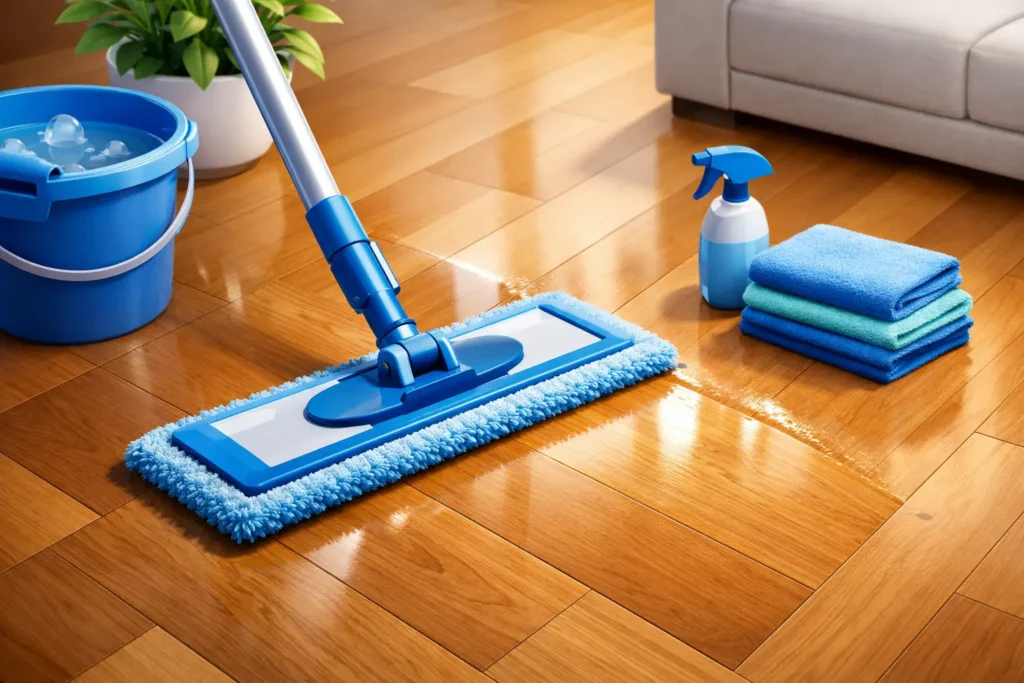
Hardwood floors look beautiful right up until dust gathers along the edges, footprints dull the finish, and a wet mop leaves you wondering if you just cleaned the floor or stressed it out. That is exactly why a microfiber mop for hardwood floors has become such a smart everyday tool. It gives you the control hardwood needs, with the quick pickup and gentle contact that busy homes appreciate.
Hardwood is not like tile or vinyl. It reacts to excess water, harsh scrubbing, and residue left behind by the wrong cleaner. A good mop has to do more than move dirt around. It needs to lift fine dust, handle light spills, and protect the surface while keeping the job fast and simple.
Why a microfiber mop for hardwood floors works so well
Microfiber stands out because it is built for efficient pickup without being aggressive on delicate finishes. The fibers grab dust, pet hair, and small debris instead of pushing them across the room. That matters on hardwood, where grit can act like sandpaper underfoot and slowly wear the surface.
Another advantage is moisture control. Traditional string mops hold a lot of water, which is rarely a good match for wood. Microfiber pads can be used dry for daily dusting or lightly damp for routine cleaning. You get a cleaner floor without soaking the boards, and that balance is what helps preserve both appearance and performance over time.
There is also the finish factor. Hardwood often shows streaks, haze, and leftover cleaner more than people expect. A quality microfiber pad helps reduce that problem because it spreads moisture more evenly and picks up residue efficiently. The result is a floor that looks clean, not just wet.
What to look for in the best microfiber mop for hardwood floors
Not every microfiber mop performs the same way. The best ones combine soft contact, strong pickup, and easy handling. If you are shopping carefully, start with the pad.
Pad quality matters more than most people think
A thicker, well-made microfiber pad usually delivers better pickup and lasts longer through repeated washing. Low-quality pads can flatten quickly, lose grip on dust, or leave lint behind. On hardwood, that means more passes and less satisfying results.
Washable reusable pads are often the better value, especially for households cleaning multiple rooms each week. They are more convenient for routine care and help keep performance consistent over time. If the pad is easy to remove and replace, the whole cleaning routine becomes faster.
A flat head is usually the better choice
Flat mops tend to work especially well on hardwood because they glide smoothly and distribute light pressure evenly. They also reach under furniture more easily than bulkier mop styles. That means less strain and better coverage in places where dust often collects.
A swivel head adds another practical advantage. Corners, chair legs, and narrow spaces around tables are easier to manage when the mop can turn with you instead of forcing awkward angles.
Moisture control should be simple
For hardwood, lightly damp is the goal. A microfiber mop that is easy to wring out or pair with a controlled spray system gives you better results than one that leaves the pad too wet. More water does not mean more clean. In fact, with wood floors, too much moisture is often the fastest way to create avoidable problems.
Spray mops can be convenient, but it depends on the design. A fine, even mist can help with fast touch-ups. If the spray is heavy or inconsistent, it can leave patches too wet for comfort. The best option is the one that helps you clean with confidence, not guesswork.
Handle comfort affects real-world use
People often focus on the pad and ignore the handle, but comfort changes the entire experience. A mop that feels balanced and easy to guide is more likely to get used regularly. Look for a handle length that suits your height and a grip that feels secure without being bulky.
If a mop is awkward, heavy, or flimsy, even strong cleaning performance starts to feel less appealing. Good design should make the task easier from start to finish.
Dry mopping vs. damp mopping on hardwood
One of the biggest benefits of microfiber is flexibility. You can dry mop for quick maintenance or damp mop when the floor needs more attention. Knowing when to use each approach helps protect the surface and saves time.
Dry mopping is ideal for everyday care. It removes dust, crumbs, hair, and fine debris before they get ground into the finish. In busy homes, this can make a visible difference very quickly, especially in entryways, kitchens, and living areas.
Damp mopping is better for footprints, light smudges, and routine buildup. The key word is damp. The pad should feel slightly moist, never dripping. If you can see water sitting on the floor, the mop is too wet for hardwood.
This is where microfiber earns its reputation. It handles both tasks without needing separate tools, which is exactly the kind of practical convenience shoppers want from everyday cleaning products.
Common mistakes to avoid
Even the best microfiber mop for hardwood floors will disappoint if it is used the wrong way. The most common mistake is over-wetting the floor. Wood and standing moisture are simply not a good mix, especially around seams and edges.
Another issue is using a dirty pad for too long. Once the pad is loaded with dust and grime, performance drops. Instead of lifting debris, it can start spreading it around. Switching or washing pads regularly keeps the floor looking cleaner with less effort.
Harsh chemicals are also a poor match for many hardwood finishes. If you use a cleaner, it should be suitable for sealed wood and applied lightly. Too much product can leave streaks or residue, which often makes the floor look worse even after cleaning.
Finally, do not skip dry debris removal if the floor is gritty. Fine dirt particles can scratch when dragged under the pad. A quick dry pass first is a simple habit that helps protect the finish.
How to get better results from your microfiber mop
A few small adjustments can make a big difference. Start with a clean pad every time you mop. That alone improves pickup and reduces streaking. If you are cleaning a larger area, keep an extra pad ready so you can switch midway instead of pushing a saturated pad across the entire floor.
Work in sections and follow the grain when possible. It creates a more even appearance and helps you spot missed areas more easily. For sticky spots, let the damp pad rest on the area for a few seconds before wiping instead of scrubbing aggressively.
It also helps to clean more often with less moisture rather than waiting for heavy buildup. Hardwood responds well to consistent maintenance. Short, regular cleaning sessions are usually safer and more effective than occasional deep wet cleaning.
For households that want dependable everyday performance, smart design really matters. A well-made microfiber mop with durable pads, smooth maneuverability, and surface-safe cleaning action can turn a routine chore into something much more manageable. That is the kind of practical value PowerMax brings to home cleaning tools designed for real life.
Is a microfiber mop enough for every hardwood floor?
Usually, yes for routine maintenance, but it depends on the floor and the mess. Sealed hardwood floors respond especially well to microfiber care. They benefit from frequent dust removal and lightly damp cleaning when needed.
Older floors or floors with worn finishes need more caution. If water no longer beads lightly on the surface or the finish looks uneven, moisture should be used very sparingly. In those cases, a dry microfiber pass may be the safest everyday option until the floor is assessed or refinished.
Homes with pets, kids, or heavy foot traffic may also need a slightly more frequent cleaning schedule. The good news is that microfiber makes that easier. Because it is fast, gentle, and effective, it supports the kind of repeat use hardwood floors benefit from.
A great floor care routine does not need to be complicated. It just needs the right balance of softness, control, and reliable pickup. When your mop can handle dust one day and damp touch-ups the next without overworking the floor, keeping hardwood clean feels less like a chore and more like a simple win you can count on.