
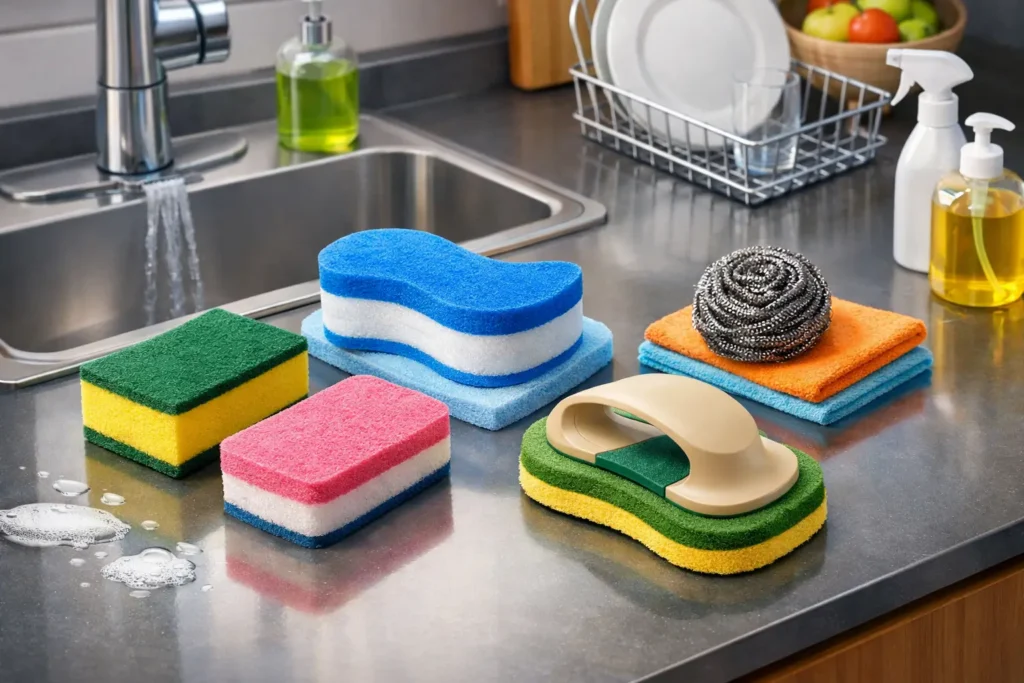
A sponge can make the difference between a quick, satisfying cleanup and a long battle with baked-on food, greasy pans, and dull-looking counters. The best sponge for kitchen cleaning is not always the roughest or the thickest one. It is the sponge that matches the job, cleans effectively with less effort, and treats your cookware and surfaces with care.
For most homes, one sponge type cannot do everything well. A sturdy scrub sponge is excellent for pans and stovetops, while a softer sponge is the safer choice for glassware, coated cookware, and polished surfaces. Choosing with purpose helps your cleaning tools last longer and helps your kitchen look its best every day.
What Makes the Best Sponge for Kitchen Cleaning?
A quality kitchen sponge needs to balance cleaning power, absorbency, durability, and surface safety. The right balance depends on what you clean most often. If your kitchen sees frequent frying, roasting, or family meals, you may need more scrubbing strength. If you use nonstick pans and delicate dishes every day, protecting those surfaces should come first.
Look closely at the sponge’s materials and construction. A dense foam center can hold dish soap and water well, creating a rich lather for everyday washing. A well-bonded scouring layer gives you reliable power for stuck-on messes without separating after a few uses. An ergonomic shape also matters more than it may seem. A sponge that fits comfortably in your hand gives you better control around pan edges, sink corners, and tight spaces.
The best option should feel useful from the first plate to the last pot, not fall apart halfway through the week. Strong materials and thoughtful design make routine kitchen care faster, easier, and more satisfying.
Match Your Sponge to the Kitchen Task
Kitchen messes are different, so your sponge should be ready for more than one kind of cleaning. Keeping the right tool within reach prevents unnecessary scrubbing and reduces the risk of scratching a surface that needs gentler care.
For everyday dishes and glasses
A soft foam or cellulose sponge is a dependable choice for plates, cups, cutlery, and lightly soiled bowls. It absorbs water quickly and works well with dish soap, helping you spread suds evenly without using too much product. Choose a soft texture for wine glasses, clear plastic containers, and decorative dishware.
For everyday dishwashing, rinse the sponge fully after use and squeeze out excess water. Leaving it sitting in a puddle in the sink encourages odors and makes it less pleasant to use the next time.
For pots, pans, and baked-on food
A dual-sided sponge with a soft absorbent side and a scouring side is one of the most practical tools in a busy kitchen. Use the soft side for initial washing, then turn to the scrubber for dried sauces, food residue, and stubborn pan marks.
More abrasive does not always mean better. Avoid aggressive scouring pads on nonstick coatings, cast iron seasoning, delicate stoneware, or polished metal finishes. For a difficult pan, start by soaking it in warm, soapy water. This simple step loosens residue and lets the sponge do its job with less pressure.
For nonstick cookware and delicate surfaces
Nonstick pans need a non-scratch sponge. A harsh abrasive layer can wear down the coating over time, affecting both appearance and performance. Soft sponges and non-scratch scrubbers remove everyday grease and food residue while helping preserve the surface you paid for.
The same care applies to glass cooktops, stainless steel appliances, and glossy cabinet fronts. Use a gentle sponge with warm water and a suitable cleaner, then wipe with the grain on stainless steel where applicable. Finish with a clean microfiber cloth when you want a streak-free shine.
For sinks, stovetops, and food-prep areas
The kitchen sink collects grease, food particles, and soap residue, so it benefits from a sponge with more cleaning power. A durable scrub sponge can lift grime from stainless steel or ceramic sinks and help refresh the area around the drain. Use a separate sponge for this task rather than the one used on dishes.
For counters and food-prep surfaces, choose a clean, soft sponge or cloth. Wipe up spills promptly, especially acidic foods such as tomato sauce, citrus juice, and vinegar-based dressings. Quick attention keeps surfaces looking clean and reduces the need for heavy scrubbing later.
Scrub Strength: Choose Enough, Not Too Much
The most useful kitchen sponge delivers enough friction to remove grime without damaging the material underneath. This is where surface awareness pays off. A scouring sponge is ideal for durable items such as stainless steel pots, oven-safe bakeware, and many kitchen sinks. It may be the wrong choice for a coated skillet or a glossy cooktop.
Before using a new sponge on an unfamiliar surface, test it in a small, less visible area. Use light pressure and let warm water, dish soap, and a few extra seconds of contact time do more of the work. Pressing harder is rarely the best solution. It can scratch surfaces, weaken sponge fibers, and make a routine chore feel tougher than it needs to be.
A temperature-responsive design can also add useful control to everyday cleaning. The PowerMax Teddy Boo Scrub Sponge combines a comfortable shape with foam that changes with water temperature, bringing a playful, practical touch to dishwashing and scrubbing tasks.
Keep Kitchen Sponges Fresh and Effective
Even the best-performing sponge needs proper care. Sponges handle moisture and food residue daily, so hygiene should be part of your kitchen routine. A clean sponge works better, smells fresher, and makes every wash-up feel more comfortable.
After each use, rinse away visible food particles and dish soap under running water. Squeeze the sponge thoroughly and store it in a holder or upright position where air can circulate. Avoid leaving it at the bottom of a wet sink, where it stays damp longer.
For a more thorough refresh, clean your sponge according to its care instructions. Some sponges can be sanitized in the dishwasher or with heat, while others are best replaced rather than heavily cleaned. Always check the manufacturer’s guidance, especially for sponges with specialty materials or layered construction.
Replace a kitchen sponge when it develops a persistent odor, tears, sheds material, or no longer springs back after squeezing. There is no single replacement schedule for every household. A sponge used several times a day for greasy cookware will wear out faster than one used lightly for cups and plates. Let its condition guide you.
A Simple Sponge Setup That Works Harder
Many households get better results by assigning different sponges to different jobs. This reduces cross-use between dishes and grimier areas while ensuring you always have an appropriate tool ready. You do not need a crowded cleaning cabinet. A simple, organized setup can cover nearly every kitchen task:
- A soft sponge for dishes, glassware, and nonstick cookware.
- A scrub sponge for durable pots, pans, and the sink.
- A separate sponge or cloth for countertops and food-prep areas.
- A dedicated cleaning tool for greasy appliances, stovetops, and tougher cleanup jobs.
Choose different colors or store each tool in its own designated spot to make the system easy for everyone in the home to follow. It is a small habit that supports cleaner surfaces and prevents the frustration of grabbing the wrong sponge at the wrong moment.
Get Better Results With Less Effort
The right technique extends the life of your sponge and improves cleaning results. Start by soaking heavily soiled cookware instead of immediately scrubbing. Use warm water for grease when the surface allows it, apply dish soap directly to the sponge or pan, and clean from the least soiled items to the messiest ones.
For stubborn spots, work in small sections and rinse the sponge often. A sponge packed with grease and crumbs cannot scrub efficiently. Fresh water and a clean surface of the sponge restore its performance quickly.
The best kitchen cleaning routine is one you can maintain without making chores feel overwhelming. Choose a sponge that suits your cookware, replace it when needed, and give each cleaning task the right level of care. With dependable tools in hand, even the everyday pile of dishes becomes a simpler, cleaner finish to the day.