
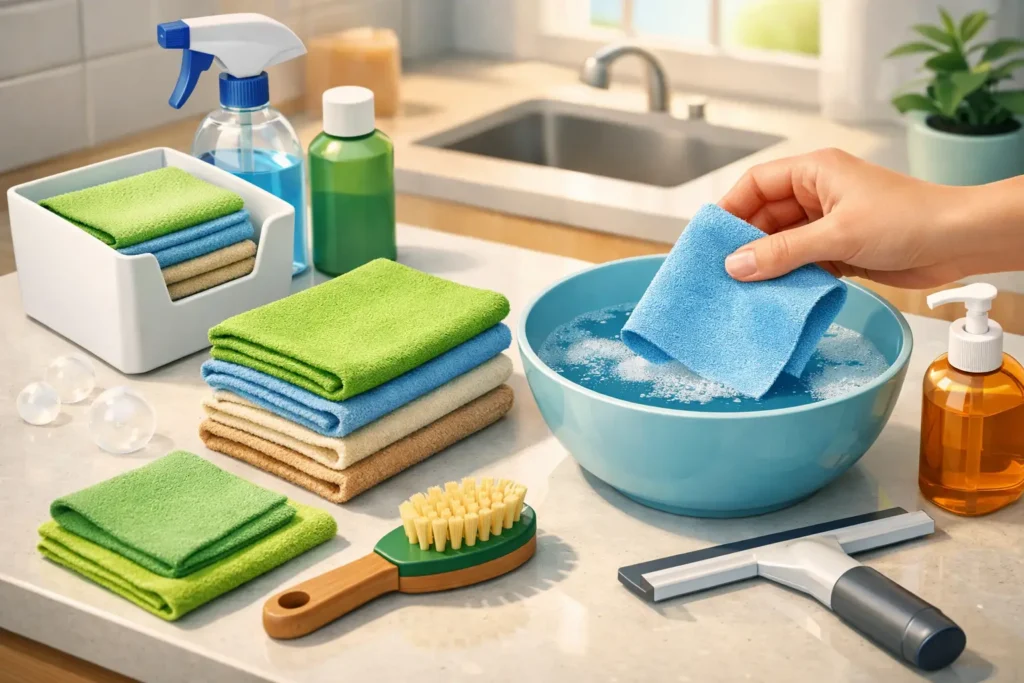
A paper towel can disappear in seconds when you are wiping a spill, polishing a faucet, or tackling greasy fingerprints on cabinet doors. Reusable cleaning wipes for home offer a smarter everyday alternative: one dependable cloth that can handle the job, rinse clean, and come back ready for the next mess. The right wipe saves time at the sink, helps you use fewer disposable products, and gives every room a cleaner finish.
Why Reusable Cleaning Wipes Belong in Every Room
Reusable wipes are designed for the work that happens between deep-cleaning days. They pick up crumbs after breakfast, dry splashes around the bathroom sink, wipe down a stovetop, and refresh dusty tables without requiring a new sheet every time. That makes them a practical choice for busy households where small messes do not wait for a full cleaning routine.
Their biggest advantage is versatility, but material matters. A soft microfiber cloth is excellent for trapping fine dust and polishing smooth surfaces. An absorbent nonwoven wipe is useful for wet spills and quick kitchen cleanup. A more textured cloth can help lift stuck-on residue when paired with the right cleaner. Keeping more than one type on hand lets you match the wipe to the task instead of forcing one cloth to do everything.
Reusable does not mean endlessly reusable. Even a durable wipe eventually wears down, especially when it is used on rough surfaces or washed with harsh products. The goal is to choose quality materials, care for them properly, and replace them when they stop absorbing, start shedding, or no longer leave surfaces clean.
Choose Reusable Cleaning Wipes for Home by Task
A good cleaning routine starts with using the right tool in the right place. The cloth that delivers a streak-free mirror is not always the best choice for a greasy pan or a muddy floor edge.
Kitchen counters, appliances, and tables
For daily kitchen cleanup, choose an absorbent wipe that holds water well and releases food residue easily when rinsed. It should be soft enough for sealed countertops and appliance exteriors, yet durable enough to manage splatters and sticky spots. Use a separate wipe for food-prep surfaces so it is not carrying residue from the sink, stove, or floor.
Microfiber works especially well for stainless steel, glossy appliance panels, and glass cooktops when used with a surface-safe cleaner or lightly dampened with water. Fold the cloth into sections as you work. Once one section is soiled, turn to a clean side instead of spreading grease across the surface.
Bathrooms and high-touch areas
Bathrooms call for a wipe that can manage moisture without becoming limp after one pass. Use one dedicated cloth for the vanity, faucet, and mirror, and another for the toilet exterior and surrounding floor. This simple separation supports better hygiene and prevents cross-contamination.
For mirrors and chrome, a clean microfiber cloth is the reliable choice. Use it slightly damp for initial cleanup, then follow with a dry section to buff away water marks. Avoid abrasive pads or heavily textured wipes on delicate finishes, as they can dull the surface over time.
Glass, screens, and delicate finishes
Fine microfiber wipes are made for surfaces where streaks and scratches stand out. They are ideal for windows, glass tables, televisions, and polished furniture when used gently. The key is to remove loose dust first. Rubbing grit across glass or a screen can cause marks, no matter how soft the cloth feels.
Use minimal moisture around electronics and always follow the device manufacturer’s care instructions. A cloth that is barely damp is usually enough for fingerprints and light dust. For a window or mirror, work from top to bottom with overlapping strokes so drips do not create a second round of cleanup.
Floors, entryways, and tougher messes
Reusable wipes can support fast floor touch-ups, especially around entrances, pet bowls, and kitchen work zones. Choose a thicker, highly absorbent cloth for these jobs and reserve it for floors only. Dirt and grit can quickly wear down fibers, so rinse thoroughly after use and do not use the same wipe on countertops afterward.
For heavier residue, a wipe works best alongside a purpose-built scrub sponge, scouring pad, or mop. The wipe can lift loosened soil and collect excess moisture, while the tougher tool handles stuck-on grime. That combination protects surfaces and makes cleaning feel more efficient.
A Simple Color System Prevents Mix-Ups
When every cloth looks the same, it is easy to grab a bathroom wipe for the kitchen by mistake. Assigning colors by room makes your routine faster and more hygienic. For example, reserve one color for kitchen surfaces, one for bathrooms, one for glass, and one for dusting or general living areas.
If your wipes are all one color, use a small storage bin or label each group. Keep kitchen wipes close to the sink, bathroom cloths in the vanity or cleaning caddy, and floor wipes with your mop supplies. Good organization turns reusable tools into the convenient option, not the extra step.
How to Wash Reusable Wipes So They Perform Better
A reusable wipe is only as effective as its care routine. Rinse it after each use until the water runs clear, especially after cleaning up food, soap residue, or a concentrated cleaner. Leaving grime in the fibers can reduce absorbency and create unpleasant odors.
Wash wipes regularly based on how they are used. A cloth used for light dusting may last through several uses, while a kitchen or bathroom wipe should go into the laundry much sooner. Follow the care label for water temperature and drying instructions. In many cases, avoiding fabric softener is helpful because softener can coat microfiber fibers and reduce their ability to grab dust and absorb moisture.
Do not overload the wash with heavily soiled items. Wipes need enough water movement to release dirt. After washing, dry them completely before folding or storing them. A damp cloth left in a closed container can develop odor, even if it looks clean.
When it is time to replace a wipe
Watch for reduced absorbency, persistent odor after washing, frayed edges, shedding fibers, or a rough feel on surfaces that once cleaned smoothly. These are signs that the material has reached the end of its useful life. Replacing a worn wipe at the right time helps protect your home’s finishes and keeps each cleaning task effective.
Get Better Results With Less Product
Reusable wipes can help you use cleaning products more carefully. A quality cloth distributes moisture and cleaner evenly, so you often need less spray than you would with a thin disposable sheet. Start with a small amount, clean in manageable sections, and add more only if the soil requires it.
This approach is especially helpful on glass and stainless steel, where too much product can leave streaks or residue. It is also a better choice for sealed wood, laminate, and other sensitive finishes that should not be saturated. Always use a cleaner approved for the specific surface, and never mix cleaning chemicals.
For everyday spills, plain water and a clean, absorbent wipe are often enough. Save stronger products for grease, soap scum, disinfecting needs, or other messes that truly call for them. This keeps your routine simple while helping your wipes stay easier to wash.
Build a Cleaning Kit That Works Harder
The most useful home cleaning kit is not built around one miracle cloth. It includes a small selection of reusable wipes, each chosen for a clear job: microfiber for polishing and dust, absorbent cloths for spills, and tougher materials for hands-on cleanup. Add sponges, brushes, and floor tools where they make sense, and every room becomes easier to maintain.
PowerMax cleaning tools are made to support that practical approach, with durable options for the kitchen, bathroom, windows, and everyday surfaces. When each tool has a purpose, cleaning takes less guesswork and delivers more satisfying results.
Keep a few fresh wipes within reach, wash them before buildup becomes a problem, and give every room its own cleaning routine. The next spill will feel less like an interruption and more like a quick job already under control.