
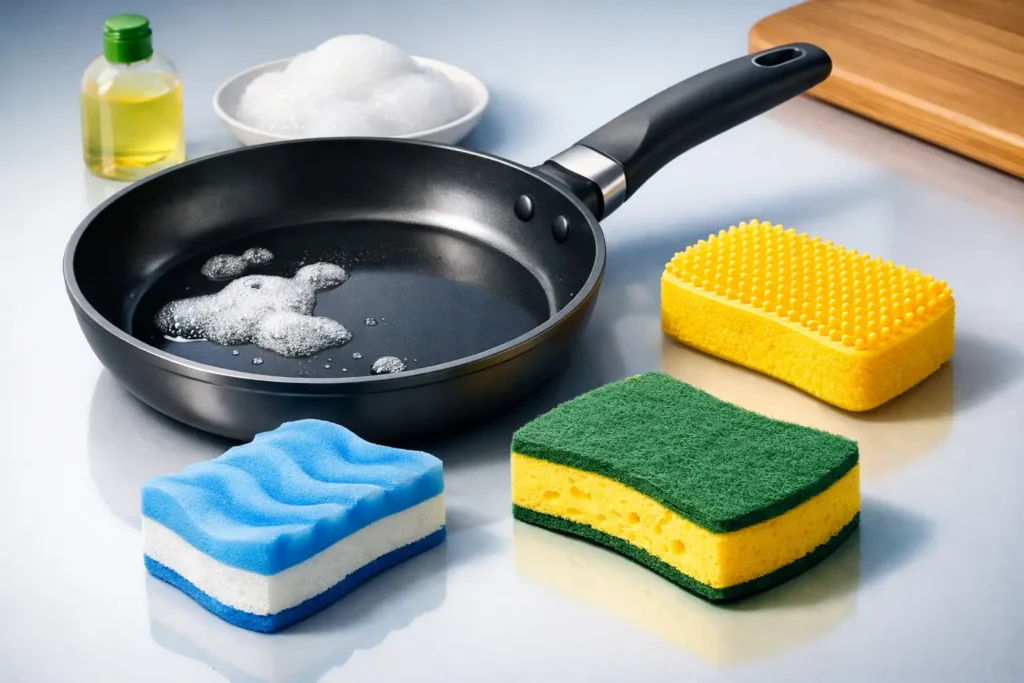
A scratched nonstick pan usually starts with one small mistake – the wrong sponge at the sink. If you are looking for the best sponge for nonstick pans, the goal is not the most aggressive scrubber. It is the one that lifts grease, sauce, and stuck-on bits without wearing down the coating you rely on every day.
That sounds simple, but this is where many shoppers get tripped up. A sponge can feel soft in your hand and still have an abrasive layer that is too harsh for delicate cookware. On the other side, a sponge that is too gentle may smear oil around and leave you scrubbing longer than necessary. The best choice sits in the middle: effective on food residue, safe on the pan surface, comfortable to hold, and durable enough to stay useful past a few washes.
What makes the best sponge for nonstick pans?
The short answer is a non-scratch sponge with a soft foam body and a surface designed for gentle scrubbing. This type of sponge gives you enough friction to remove cooked-on food while reducing the risk of damaging the nonstick layer.
Material matters more than most people think. Metal scrubbers and heavy-duty scouring pads are the clear no-go options. They may save a minute in the moment, but they can leave fine scratches that shorten the life of the pan. Once the coating starts to wear, food sticks more easily, cleanup gets harder, and the pan stops performing the way it should.
A better sponge uses a softer scrub layer, often labeled non-scratch or safe for delicate surfaces. That label is a good starting point, but you should still pay attention to texture. If the surface feels rough enough to catch on your skin, it is probably too aggressive for a nonstick finish.
The foam portion matters too. A good foam core helps the sponge absorb dish soap, create suds quickly, and hold enough water to loosen grease. It should spring back after squeezing rather than flatten out right away. That bounce is a simple sign that the sponge can keep its shape and stay easier to use over time.
Why harsh scrubbers are a bad trade
Many people reach for a tougher sponge when they see browned residue in the pan. That makes sense, but it is usually the wrong fix. Nonstick pans are designed to release food easily when they are cared for properly. If food is sticking hard enough to tempt you into using an abrasive scrubber, the better answer is usually to soak the pan briefly in warm soapy water first.
This is the key trade-off: more scrubbing power can mean faster removal of stubborn bits, but it can also mean faster wear on the coating. For nonstick cookware, surface safety should win every time. A pan with a healthy coating is easier to clean every day. A damaged one becomes a constant frustration.
There is also the issue of consistency. Heavy-duty scrubbers tend to create uneven wear, especially around the center of the pan where most cleaning pressure lands. That can leave some areas performing worse than others. A gentle sponge keeps the cleaning action more controlled and more predictable.
The features worth looking for
When comparing options, focus on how the sponge performs in real kitchen use, not just how it looks in the package. The best sponge for nonstick pans should check a few practical boxes.
First, it should be clearly non-scratch. This is the baseline. If the packaging does not say it, or if the scrub side feels overly coarse, move on.
Second, it should remove grease without excessive pressure. You should not need to bear down hard to get results. A smart sponge design combines soft scrubbing fibers with a foam body that helps distribute soap and water where you need them.
Third, it should be easy to grip. This sounds minor until you are cleaning a slippery skillet with one hand under running water. An ergonomic shape helps you control pressure better, especially along curved sides and near rivets where residue tends to collect.
Fourth, it should hold up to repeated use. A sponge that shreds, curls, or traps odors quickly is not saving you money. Durability matters because a worn sponge becomes less hygienic and less effective.
Innovative options can also make a difference. PowerMax, for example, builds cleaning tools with comfort, performance, and surface-safe use in mind, which is exactly what shoppers should want for delicate cookware.
Soft does not mean weak
One common misconception is that a sponge safe for nonstick pans cannot handle real messes. In practice, a well-made non-scratch sponge can be surprisingly capable. The trick is letting the sponge work with heat, moisture, and dish soap instead of asking it to overpower burnt residue through force alone.
For everyday cooking messes like eggs, sautéed vegetables, pancakes, or light oil film, a soft non-scratch sponge is more than enough. For tougher cleanup after searing or sugary sauces, a short soak usually solves what extra abrasiveness would otherwise be asked to do.
This is why the best-performing option often feels balanced rather than extreme. It is not the fluffiest sponge on the shelf, and it is not the toughest. It is the one engineered to clean efficiently without turning routine dishwashing into a risk for your cookware.
How to clean nonstick pans without damaging them
Even the best sponge for nonstick pans works best when paired with the right cleaning habits. A few small changes make a big difference in how long your pans last.
Let the pan cool before washing. Plunging a hot pan into cold water can stress the material and, over time, may affect performance. Once it has cooled enough to handle safely, rinse away loose residue.
Add warm water and dish soap, then let the pan sit for a few minutes if food is stuck. This softens residue so your sponge does less heavy lifting. Use the soft side or non-scratch scrubbing side with light to moderate pressure, moving in small circles or smooth passes instead of aggressive scraping.
If you still feel resistance, pause and soak again rather than switching to a harsh pad. That extra patience protects the finish. After washing, rinse thoroughly and dry the pan with a soft cloth or let it air dry completely before stacking.
When to replace your sponge
A sponge can be surface-safe and still stop being the right tool once it wears down. If the scrubbing layer starts peeling, the foam loses shape, or the sponge holds onto odor even after rinsing, it is time for a new one.
This matters for both hygiene and performance. An old sponge spreads grime instead of removing it well, and it often requires more pressure to get the same result. That extra effort is exactly what you want to avoid on nonstick cookware.
If you use one sponge for everything from pans to countertops to tougher kitchen messes, it will wear out faster. Many households get better results by keeping a dedicated non-scratch sponge specifically for cookware and dishes. It is a simple way to protect delicate surfaces and keep cleaning more efficient.
The best choice depends on your cooking style
There is no single perfect sponge for every home. If you cook lightly and wash pans right after meals, a very soft foam sponge may be all you need. If you cook daily, deal with oil and sauces often, or need something more versatile, a durable non-scratch scrub sponge is usually the better fit.
Shape can also depend on preference. Some people like a classic rectangular sponge for broad wiping. Others prefer a contoured shape that fits the hand better and reaches curved pan sides more naturally. If comfort helps you use less force, that is a real benefit.
The best option is the one that makes delicate cleaning feel easy, not fussy. You should be able to wash your pan quickly, remove residue cleanly, and move on with confidence that the surface is still protected.
A good nonstick pan deserves a sponge that treats it that way. Choose one that is soft, non-scratch, durable, and easy to control, and you will spend less time battling stuck-on messes and more time enjoying cookware that keeps performing the way it should.