
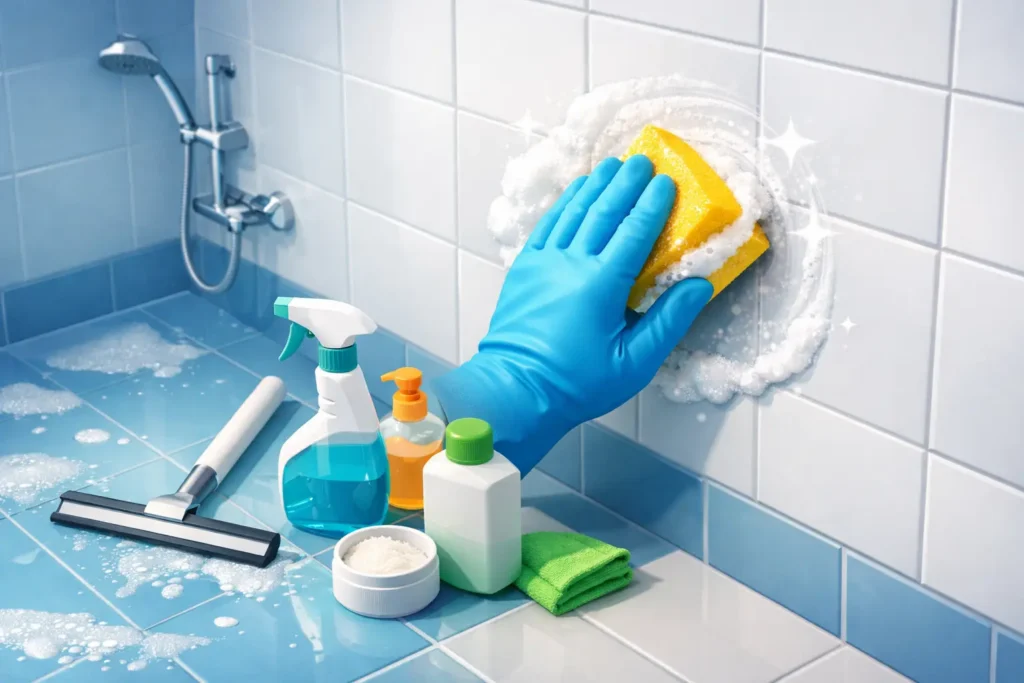
Bathroom tiles can look clean at a glance and still hold onto soap scum, water spots, and grime that make the whole room feel dull. If you’re wondering how to clean bathroom tiles easily, the good news is that you do not need a complicated routine. You need the right approach, the right tools, and a method that works with your tile type instead of against it.
The biggest mistake people make is treating every bathroom mess the same. A light weekly wipe-down is very different from removing built-up residue around the shower or dealing with grout that has started to darken. When you match the job to the right cleaning tool and technique, tile cleaning gets faster, easier, and much more satisfying.
How to clean bathroom tiles easily without wasting time
The fastest way to get better results is to stop over-scrubbing dry dirt. Bathroom residue usually loosens much more easily when you start with moisture and a little dwell time. That means spraying the surface, letting the cleaner sit for a few minutes, and then wiping or scrubbing with a surface-safe tool.
This matters because most bathroom tile buildup is layered. You may have soap residue, body oils, hard water deposits, and dust all on the same wall or floor. If you go straight in with a rough scrubber, you can spend more effort than necessary and risk damaging glossy finishes.
Start by removing loose dust, hair, or debris. A dry microfiber cloth, a soft broom, or a bathroom brush works well for this step. Once the surface is clear, apply your preferred tile cleaner or a gentle cleaning solution suited to the tile. Let it sit long enough to loosen grime, but do not let it dry on the surface.
Then work in sections. Smaller areas are easier to control, easier to rinse, and less likely to leave streaks behind. For walls, clean from top to bottom when rinsing so dirty water does not run over finished sections. For floors, move from the far corner toward the door so you are not stepping back over clean tile.
The tools that make tile cleaning easier
The tool matters as much as the cleaner. Smooth ceramic wall tile usually responds well to a microfiber cloth or soft sponge. Textured floor tile often needs a bit more friction, so a scrubbing pad or brush can save time. Grout lines need targeted cleaning, which is where a narrow brush becomes useful.
A good microfiber cloth is one of the most effective everyday tools because it lifts residue instead of just pushing it around. For stuck-on soap scum, a non-scratch scrub sponge can help break up buildup without being too harsh on the finish. If you are cleaning larger areas, a mop designed for bathroom floors helps you cover more ground with less bending and less mess.
This is also where quality pays off. A durable sponge or cloth keeps its shape, performs more consistently, and makes the job feel easier from the first swipe. Brands like PowerMax focus on practical cleaning tools that are designed to handle both daily wipe-downs and heavier bathroom messes, which is exactly what most households need.
What works best for wall tiles, floor tiles, and grout
Bathroom walls and bathroom floors collect different kinds of dirt, so they usually need slightly different treatment. Wall tiles near the shower or bathtub tend to build up soap film and water marks. Floor tiles collect dust, hair, splashes, and tracked-in dirt. Grout absorbs grime more easily than tile, so it often becomes the first place the bathroom starts to look dirty.
For wall tiles, spray the surface and give the cleaner a few minutes to work. Wipe with a sponge or microfiber cloth using circular motions on visible buildup. Rinse with clean water and dry with a fresh cloth to reduce streaks.
For floor tiles, sweep first so loose dirt does not turn into muddy residue. Then mop or wipe with a cleaning solution that is safe for the surface. If you have textured tiles, use a brush or scrubbing pad on problem spots where dirt settles into the pattern.
Grout needs a little patience. Use a grout brush or small cleaning brush and scrub along the lines rather than across them. This gives you better contact and lifts dirt more effectively. If the grout is only lightly discolored, regular maintenance may be enough. If it has heavy staining or mold, you may need repeated cleaning sessions rather than one aggressive attempt.
How to clean bathroom tiles easily when soap scum builds up
Soap scum is one of the most common bathroom problems because it creates a cloudy film that makes clean tile look dirty. It usually forms in showers and around tubs, especially where water does not dry quickly.
The easiest way to deal with soap scum is to soften it first. Spray the affected area generously and let the solution sit. Then use a non-abrasive sponge or cloth to work through the film. You may need a second pass on thicker buildup, but that is still easier than trying to scrub everything off at once.
If the tile still feels slick or looks hazy after cleaning, rinse and dry it fully before deciding it needs more product. Wet tile can hide leftover residue and also create the illusion of streaking. Drying with microfiber often reveals whether the surface is actually clean.
A simple habit helps here: wipe down shower walls after use a few times a week. That one step reduces the amount of soap and moisture left behind, so deep cleaning becomes much less frequent.
Hard water stains and mold need a different approach
Hard water deposits often show up as chalky white marks or a dull film, especially in homes with mineral-heavy water. Mold and mildew are different. They usually appear as dark spots or pinkish residue in corners, grout lines, and damp areas with poor airflow.
These issues are easy to confuse, but they do not respond the same way. Hard water needs a cleaner that helps break down mineral residue. Mold and mildew need a cleaner suited to bathroom sanitation and a scrubbing method that reaches into corners and grout.
Ventilation also makes a real difference. If your bathroom stays damp for hours after a shower, stains and growth return faster no matter how well you clean. Running a fan, opening a window, and drying wet areas can cut down future buildup significantly.
There is a trade-off here. Stronger cleaners may work faster on tough stains, but they are not always the best choice for every surface. Delicate finishes, natural stone, and older grout can react badly to harsh products. If you are not sure what your tile can handle, start with the gentlest effective option and test a small hidden spot first.
Easy tile cleaning is really about routine
If bathroom tile cleaning always turns into a major project, the real problem is usually timing. Waiting too long lets residue harden, spread, and settle into grout. A quick weekly clean is much easier than a monthly rescue job.
That routine does not need to be complicated. Wipe shower walls, rinse away visible product residue, and clean floor splashes before they dry into marks. Keep a microfiber cloth or sponge nearby so the easiest tool is already within reach. Convenience matters because the simpler the routine feels, the more likely it is to happen.
For busy households, this is often the best strategy. Instead of planning a long deep-cleaning session, handle tile in short bursts. Five minutes after a shower and another few minutes on the floor later in the week can keep the whole bathroom looking fresher with much less effort.
Common mistakes that make tile harder to clean
One of the biggest problems is using too much product. More cleaner does not always mean more cleaning power. In many cases, excess product leaves residue behind and creates more wiping later.
Another common mistake is using overly harsh scrubbers on glossy or delicate tile. Scratches can trap dirt and make the surface harder to maintain over time. The goal is enough friction to lift grime, not so much that you damage the finish.
Skipping the rinse step also causes trouble. Even a good cleaner can leave the tile looking dull if residue stays on the surface. A final rinse and dry are often what give bathroom tile that bright, finished look.
And finally, do not ignore grout until it turns dark. Light, regular attention is much easier than trying to reverse months of buildup in one session.
Clean bathroom tiles do more than improve appearance. They make the whole room feel fresher, brighter, and easier to manage. Once you have the right cloths, scrubbers, and a simple routine, tile cleaning stops feeling like a stubborn chore and starts becoming one of the quickest wins in the bathroom.