
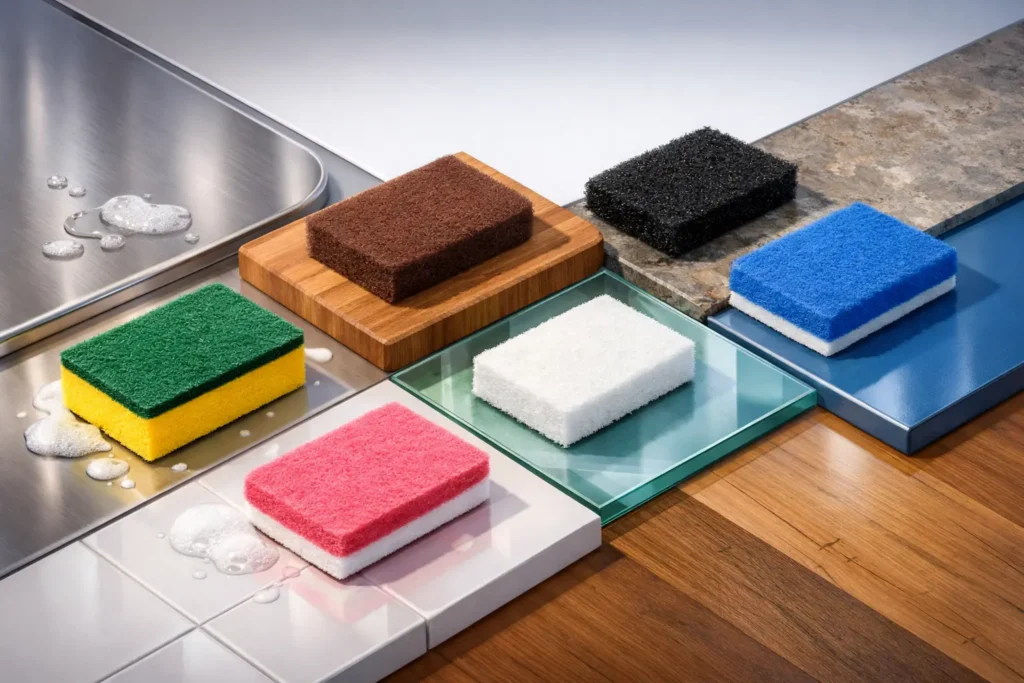
A burned pan, cloudy shower door, and greasy stovetop may all need scrubbing, but they should not all get the same pad. This scouring pad abrasiveness guide helps you match the cleaning power of your scrubber to the material underneath, so you can remove messes confidently without trading grime for scratches.
The simplest rule is this: use the least abrasive pad that will do the job. A pad that feels wonderfully tough on a steel pot can permanently dull a glossy cooktop or acrylic tub. The right choice saves effort, protects the finish, and keeps everyday cleaning feeling far more satisfying.
What scouring pad abrasiveness really means
A scouring pad cleans through friction. Its fibers, mineral particles, weave, and density create a textured surface that loosens stuck-on food, soap scum, grease, and residue. The rougher, denser, and more aggressively textured the pad, the more material it can remove.
That power is useful, but it comes with a trade-off. Abrasion does not know the difference between burnt food and a delicate coating. On a hard, durable surface, a stronger pad can make cleaning much faster. On a polished, coated, painted, or plastic surface, the same pad can leave fine marks that gradually make the area look dull or harder to clean.
Color can offer a helpful first clue, but it is not a universal rating system. Many households recognize green pads as heavy-duty and blue or white pads as gentler. However, manufacturers use different materials and constructions, so always check the product label and surface-care guidance instead of relying on color alone.
Choose your pad by cleaning level
Non-scratch pads for delicate finishes
Non-scratch pads are designed for routine messes on surfaces that need extra care. They are a smart choice for nonstick cookware, glassware, ceramic dishes, stainless steel appliances with a brushed or polished finish, coated baking pans, and many countertop materials.
These pads still provide useful scrubbing action, especially when paired with warm water and dish soap. They are ideal for grease, dried food, fingerprints, and everyday kitchen buildup. If a mess has been sitting for hours, soak it first rather than immediately reaching for a tougher pad.
Be especially careful with nonstick pans. Even a pad labeled non-scratch should be used gently and according to the cookware maker’s instructions. Deep scratches can damage the coating and shorten the life of the pan.
Medium-duty pads for everyday stuck-on messes
Medium-abrasive pads sit in the practical middle ground. They offer more bite than a soft sponge but are not meant for every finish. Use them on durable, uncoated surfaces such as stainless steel sinks, sturdy cookware without a nonstick coating, oven racks, grill tools, and some ceramic or porcelain surfaces.
This category is often the go-to for dried pasta sauce, baked-on residue, greasy roasting pans, and sink stains. Start with light pressure. Let the pad and cleaner work together instead of pressing harder than necessary.
When cleaning stainless steel, scrub with the grain of the metal whenever a visible grain is present. Circular, aggressive scrubbing can leave a hazy look, particularly on appliance fronts. A medium pad may be suitable for a stainless sink but not for the decorative exterior of a refrigerator or range.
Heavy-duty pads for the toughest jobs
Heavy-duty scouring pads are made for serious buildup on hard, resilient materials. Think cast iron, uncoated pots and pans, grill grates, oven racks, unfinished metal tools, and heavily soiled stainless steel sinks.
Their strength makes them effective for charred food, stubborn grease, rust-prone outdoor tools, and residue that a regular sponge cannot shift. They are not a shortcut for every difficult mess. Avoid using them on nonstick coatings, acrylic, plastic, glass, polished metal, painted surfaces, and delicate natural stone.
A heavy-duty pad also works best as a targeted tool, not an all-purpose one. Keep it for occasional deep-cleaning jobs and use a gentler sponge for daily dishes. This helps protect both your surfaces and the pad itself from cross-contamination with grease or grit.
Match the pad to the surface, not just the mess
The same stain can need different treatment depending on where it is. Tomato sauce on a stainless steel saucepan is very different from tomato sauce on a glossy ceramic cooktop. Before you scrub, consider whether the surface is coated, polished, porous, or soft.
For cookware, nonstick and enameled pieces call for a non-scratch pad or soft sponge. Bare stainless steel and cast iron can generally handle more abrasion, although cast iron should be dried promptly and cared for according to its seasoning needs. Copper, aluminum, and decorative metal finishes can scratch or discolor easily, so use mild tools and test carefully.
In the bathroom, acrylic tubs, fiberglass showers, plastic fixtures, and glossy tiles need gentle treatment. Soap scum often responds better to a bathroom cleaner that has time to work than to aggressive scrubbing. Porcelain sinks and durable ceramic tile can tolerate more friction, but grout and glazed surfaces still benefit from a measured approach.
For kitchens, glass cooktops deserve special attention. Never attack cooked-on spills with a rough scouring pad. Use a cooktop-safe cleaning method, and follow the appliance manufacturer’s care instructions. On countertops, avoid abrasive pads unless you know the material can handle them. Natural stone, laminate, solid surface, and engineered stone all have different care needs.
A quick test prevents expensive mistakes
When you are unsure, test the pad in a small hidden area first. Wet the surface and pad, use light pressure, then wipe and inspect the area under good lighting. If you see dullness, fine lines, or a change in shine, stop and switch to a gentler option.
Water matters more than many people realize. A dry pad creates more friction and can trap loosened particles against the surface. Wetting the pad, adding the appropriate cleaner, and giving the cleaner a minute or two to loosen grime reduces the need for forceful scrubbing.
For stubborn residue, use a simple progression: soak, clean, scrub gently, then increase abrasiveness only if necessary. This approach is usually faster than repeatedly attacking a stain with the toughest pad in the drawer.
Get better results from every scouring pad
Technique affects abrasiveness as much as the pad itself. A medium pad used with heavy pressure can be harsher than a heavy-duty pad used carefully on the right surface. Work in small sections, rinse the pad often, and check your progress before continuing.
Keep separate pads for dishes, bathroom cleaning, and heavy grease jobs. A pad used on grill grates or an oven rack can hold grease and debris that you do not want near glasses, plates, or food-prep surfaces. Replacing worn pads also matters. Once fibers become flattened, torn, or packed with residue, cleaning becomes less effective and you may be tempted to scrub harder.
After use, rinse the pad thoroughly and let it dry in an open, well-ventilated spot. A clean, dry pad stays fresher and performs better. If it develops an odor, remains greasy after rinsing, or looks heavily worn, it is time for a replacement.
Common scouring pad mistakes to avoid
The most common mistake is using one tough pad for the entire home. It may feel convenient, but it puts delicate finishes at risk. Another is assuming that more pressure equals better cleaning. Usually, better cleaning comes from the right cleaner, a little dwell time, and a pad matched to the job.
Avoid mixing strong abrasive scrubbing with harsh chemicals unless the product directions specifically allow it. Some cleaners can irritate skin or react poorly with certain materials. Gloves can improve comfort during demanding jobs, and good ventilation is always a sensible choice when using cleaning products.
Finally, do not ignore surface instructions. A countertop, appliance, or cookware manufacturer may have specific warnings that override general cleaning advice. Those instructions are the best protection for specialty finishes and warranties.
A well-chosen pad turns scrubbing from a risky chore into a quick, controlled step. Keep a gentle non-scratch option for daily care, reserve stronger pads for durable surfaces, and let each material set the limit. With the right PowerMax cleaning tool in hand, even the stubborn jobs can look clean, cared for, and ready for what comes next.