
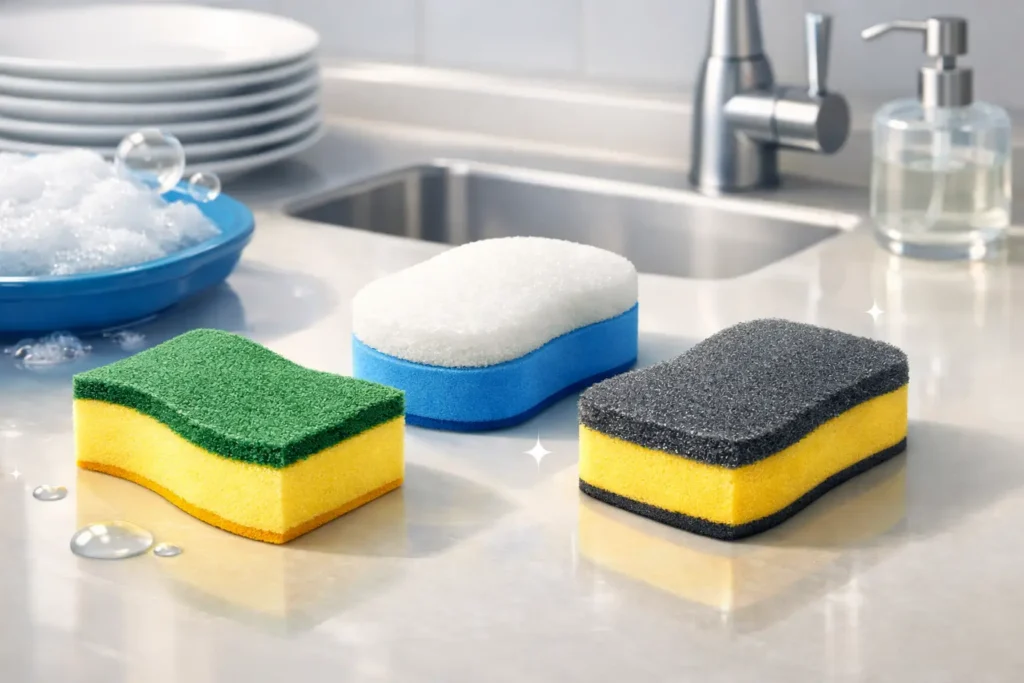
A pan can look spotless after dinner and still come away with faint marks that were not there before. That is usually when people realize the sponge matters just as much as the soap. A scratch free dish sponge is designed for exactly this problem – it helps lift grease, food residue, and daily messes without being too harsh on the surfaces you use every day.
For most households, that balance is the whole game. You want enough cleaning power to handle stuck-on sauce, oily plates, and coffee-stained mugs, but you do not want to dull a nonstick coating, haze glassware, or leave visible scuffs on polished finishes. The right sponge makes dishwashing faster, safer, and far less frustrating.
Why a scratch free dish sponge matters
Not every dishwashing tool is built for modern kitchens. Many homes use a mix of nonstick pans, coated cookware, ceramic plates, glass bowls, stainless steel sinks, and delicate serving pieces. That means a one-texture-fits-all scrubber often creates problems. If the abrasive layer is too aggressive, it may clean quickly at first but shorten the life of your cookware and leave surfaces looking worn.
A scratch free dish sponge gives you a more surface-safe option for daily cleaning. It is especially useful when you are washing nonstick pans, coated bakeware, glossy dishes, stemware, and even countertops or appliance exteriors that need a gentler touch. For value-conscious shoppers, this is not just about appearance. Protecting surfaces helps you avoid replacing items early, which makes the right cleaning tool a smarter buy over time.
That said, scratch free does not mean weak. A well-made sponge should still remove food residue efficiently, hold its shape, rinse clean, and stay comfortable to use through repeated washing cycles. The goal is controlled scrubbing, not soft foam that gives up the moment it meets dried food.
What makes a sponge scratch free
A scratch free dish sponge is usually made with a softer scrubbing layer or a non-abrasive fiber designed to loosen residue without cutting into delicate finishes. It often combines two functions in one tool: an absorbent foam side for soap and wiping, and a gentler scrub side for lifting tougher messes.
Material quality makes a big difference here. Low-quality sponges can feel acceptable at first but become rougher as they wear down, especially after exposure to grease, hot water, and repeated squeezing. A better sponge keeps its structure longer and delivers more consistent contact across the surface you are cleaning.
Design matters too. A sponge with a practical shape is easier to grip, easier to maneuver around corners, and less tiring to use during a full sink of dishes. When a sponge fits the hand well, you get better pressure control. That lowers the risk of pressing too hard on surfaces that need a lighter touch.
Where scratch free sponges work best
Nonstick cookware
This is the first place most shoppers think about, and for good reason. Nonstick coatings are convenient, but they do not respond well to aggressive scouring. A scratch free dish sponge helps remove oil and food film while treating the coating more carefully. If food is heavily stuck on, soaking the pan first will always improve results and reduce the need for force.
Glass and glossy dishes
Cloudy-looking marks on glassware are not always caused by the dishwasher. Handwashing with a rough tool can also leave fine surface wear over time. A gentler sponge is a safer choice for everyday glasses, serving bowls, and plates with glossy finishes.
Stainless steel sinks and fixtures
Stainless steel is durable, but it still shows scuffs and swirl marks. A scratch free option is a smart pick for light daily cleaning, especially when paired with the right cleaner and a rinse afterward. For heavier mineral buildup, you may need a more specialized tool, but for routine maintenance, gentle is usually better.
Countertops and appliance exteriors
Many kitchens include finishes that look strong but can show wear quickly, including laminates, polished surfaces, and coated appliance doors. A surface-safe sponge helps you clean spills and fingerprints without creating a dull patch that stands out in bright light.
What to look for before you buy
The best sponge for your kitchen depends on what you wash most often. If your sink is full of delicate cookware and everyday dishes, a scratch free dish sponge is likely the right everyday choice. If you regularly deal with burnt-on food or cast iron, you may also need a separate heavy-duty scrub tool for those specific jobs.
Start with texture. The scrub side should feel firm enough to work but not sharp or gritty. If it feels overly abrasive in your hand, it is probably not the best option for sensitive surfaces. Look for a sponge that clearly positions itself for nonstick, glass, or delicate cleaning rather than one that tries to act like a heavy-duty scourer.
Next, consider absorbency. A good dish sponge should carry enough soap and water to clean efficiently without constantly needing to be reloaded. Too little absorbency slows you down. Too much, combined with poor rinsing, can make the sponge feel soggy and less hygienic.
Durability is another key factor. A sponge that starts peeling, flattening, or breaking apart too soon creates waste and frustration. Strong bonding between layers, resilient foam, and dependable scrubbing material all contribute to better long-term value.
Comfort should not be overlooked. If you wash dishes every day, the shape and feel of the sponge matter. An ergonomic form can make a routine task feel easier, especially when cleaning larger pots, corners, or awkward items like lids and storage containers. PowerMax has shown how smart shape and material choices can make everyday cleaning more efficient and more enjoyable, and that kind of practical innovation matters in real kitchens.
How to get better results with a scratch free dish sponge
Even the right sponge performs better when you use it the right way. The first rule is simple: let water and dish soap do part of the work. Soak baked-on or dried messes for a few minutes before scrubbing. This protects the surface and reduces effort.
Use the foam side for lighter residue and the scrub side for areas that need more friction. That sounds obvious, but many people use the rougher side for everything, which increases wear on cookware and shortens the sponge’s life. Matching the side to the mess helps both the dish and the sponge last longer.
Rinse the sponge thoroughly after each use. Food particles trapped in the surface make cleaning less effective and can cause odors faster. Squeeze out excess water and store it where it can dry properly. A sponge left wet at the bottom of the sink will wear out sooner and feel less fresh.
It also helps to separate tasks. If one sponge is doing dishes, counters, spills, and sink cleaning all at once, it will degrade faster and be less sanitary. Many households get better results by assigning one scratch free sponge to dishwashing and another cleaning tool to general surfaces.
Common mistakes that lead to scratches anyway
Sometimes the sponge gets blamed when the real issue is technique. Pressing too hard is a common one. If residue is stubborn, more force is not always the answer. More soaking time or a little more detergent is usually safer and more effective.
Using a scratch free dish sponge on surfaces with trapped grit is another problem. If a pan or countertop has sand-like particles, crumbs, or hardened debris on it, dragging any tool across the surface can leave marks. Rinsing first helps prevent that.
There is also the wear factor. A sponge may start out gentle but become less reliable once it is damaged, frayed, or contaminated with tougher particles from other tasks. Replacing it at the right time is part of protecting your cookware.
When scratch free is the right choice – and when it is not
For everyday dishwashing, a scratch free dish sponge is often the best all-around option because it matches the surfaces most households use most often. It offers the cleaning strength needed for normal grease and residue while reducing the risk of avoidable surface damage. That makes it a practical standard choice for busy kitchens.
Still, there are situations where it is not enough on its own. Burnt-on food, oven racks, grill grates, and some heavy-duty cleaning jobs call for more specialized tools. The smartest setup is not one tool for every task. It is a small set of tools chosen with purpose, so delicate items stay protected and tougher jobs still get handled efficiently.
That is what makes a good cleaning routine feel easier rather than more complicated. When your tools match the task, you spend less time scrubbing, get better results, and keep your kitchenware looking newer for longer.
A scratch free dish sponge may seem like a small choice, but it is one of those everyday upgrades that pays off every time you wash up. If your goal is cleaner dishes, protected surfaces, and a smoother routine, choosing gentle cleaning power is a very smart place to start.