
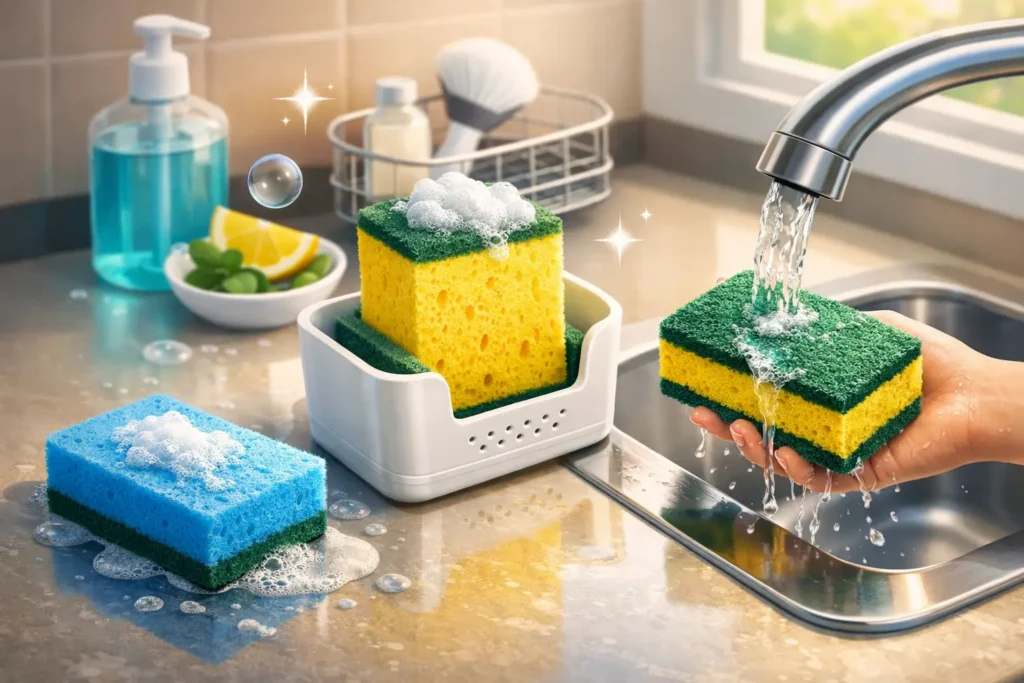
A sponge can make quick work of plates, pans, and counters, but it also holds onto food residue and moisture after every use. If you have searched for “sünger hijyeni nasıl sağlanır,” the answer starts with a simple shift: treat your sponge as a cleaning tool that needs cleaning, drying, and timely replacement.
A fresh-looking sponge is not always a hygienic one. Warm, damp conditions and trapped crumbs can create an environment where odors and germs build up. The good news is that a few easy habits can keep your kitchen routine cleaner, make dishwashing more pleasant, and help your sponge perform at its best.
Why Sponge Hygiene Deserves Daily Attention
Dish sponges work hard because their porous structure lifts grease and loosens stuck-on food. That same structure can hold water, detergent residue, and tiny food particles. When the sponge stays wet in the sink or is used on multiple messy surfaces without being rinsed, it can develop an unpleasant smell and become less effective.
This does not mean every sponge needs to be discarded after a single use. It means the sponge needs the same practical care you give other kitchen tools. Rinsing it properly, letting it dry fully, and replacing it before it breaks down are small actions with a noticeable payoff.
Sponge hygiene matters even more when you have cleaned raw meat juices, spoiled food, pet bowls, or a heavily soiled sink. In these situations, avoid using the same sponge immediately on dishes, cutting boards, or food-prep surfaces. A separate scrubber or disposable cleaning cloth is often the smarter choice for high-mess tasks.
How to Keep a Kitchen Sponge Hygienic Every Day
The most reliable routine is short enough to do without thinking. After washing dishes or wiping a surface, remove visible food particles under warm running water. Squeeze the sponge several times until the water runs clear, then press out as much moisture as possible.
Do not leave it crumpled at the bottom of the sink, where water collects and air circulation is limited. Instead, place it on a raised sponge holder, a dry dish, or another ventilated spot where both sides can air-dry. A sponge that dries between uses is far less likely to become smelly than one that stays wet all day.
Keep the sponge away from dirty dishwater and avoid storing it directly beside raw food packaging. If you use a two-sided scrub sponge, rinse both the soft and abrasive sides thoroughly. Grease can cling to the scrubbing layer, while food particles can settle into the foam.
For a fast routine that fits busy households, focus on four actions:
- Rinse out food and detergent after every cleaning task.
- Squeeze out water thoroughly instead of leaving the sponge saturated.
- Store it upright or on a holder with good airflow.
- Use separate tools for dishes, counters, bathrooms, and heavy-duty messes.
This simple separation is one of the easiest ways to make cleaning feel more controlled. A kitchen sponge should stay in the kitchen. Bathroom surfaces, floors, and trash-area spills need their own designated tools.
Sanitize Your Sponge When It Needs Extra Care
Daily rinsing and drying are the foundation, but regular sanitizing adds another layer of care. The best method depends on the sponge material and the manufacturer’s instructions. Always check the product packaging before exposing a sponge to high heat, dishwashers, or sanitizing solutions.
For dishwasher-safe sponges, running them through a hot dishwasher cycle can be a convenient option. Place the sponge securely where it will not block the spray arms, and allow it to dry completely afterward. This approach works well for households already running frequent dishwasher loads.
Heat can also be used with certain sponge types, but caution matters. Never microwave a dry sponge, a sponge with metallic fibers, or any product that is not labeled as microwave-safe. A sponge must be thoroughly wet before microwave use, and it should cool before handling. Because material construction varies, follow the product guidance rather than assuming every sponge can be treated the same way.
A diluted bleach solution may be suitable for some household sponges, particularly after contact with a high-risk mess. Follow the bleach label for dilution and contact-time directions, rinse the sponge thoroughly afterward, and never mix bleach with other cleaners. Mixing cleaning products can create harmful fumes and is never worth the risk.
What about vinegar? Vinegar can help reduce odors and loosen mineral buildup, but it should not be relied on as a complete sanitizing method for a heavily contaminated sponge. It is useful for routine freshness, not a substitute for proper cleaning practices, heat treatment where approved, or replacement.
When to Replace a Dish Sponge
Sanitizing extends useful life, but it cannot restore a sponge that is worn out. Replace your sponge when it smells even after cleaning, starts shedding, becomes slimy, stays discolored, or loses its shape and scrubbing power. These are clear signs that the material is no longer delivering the hygienic, effective clean you expect.
For many homes, replacing a frequently used kitchen sponge every one to two weeks is a practical rule of thumb. The right schedule can be shorter if you cook often, wash dishes by hand every day, or use the sponge for greasy cookware. It may be a little longer for a lightly used sponge that is rinsed and dried consistently.
Do not wait for a strong odor to make the switch. A fresh sponge gives you better control over cleanup and helps prevent the frustration of spreading grease or residue from one item to another. Keeping a backup pack on hand makes replacement easy, especially during busy weeks.
Use the Right Sponge for the Job
Better hygiene starts with better task matching. A gentle foam sponge is ideal for everyday dishwashing and delicate surfaces, while a scrub sponge can help remove cooked-on food from durable pots and pans. For glassware, nonstick cookware, stainless steel, and other surface-sensitive items, choose a tool designed to clean effectively without unnecessary scratching.
Avoid using one all-purpose sponge for every room. Assign colors or storage locations to make separation effortless: one for dishes, one for counters, one for the bathroom, and one for tough utility tasks. This can be especially helpful in family kitchens, where several people may clean throughout the day.
PowerMax cleaning tools are designed to support this kind of simple, surface-aware routine, from daily dishwashing to tougher scrubbing jobs. Choosing a durable sponge that fits the task helps reduce excessive scrubbing, protects surfaces, and makes regular replacement feel like an easy part of home care.
Small Habits That Keep the Sink Area Fresher
Your sponge is only as clean as the space around it. Rinse the sink after washing dishes, remove food scraps from the drain area, and clean the sponge holder regularly. If the holder collects standing water, wipe it dry before placing the sponge back.
It also helps to avoid using your dish sponge to wipe up spills from raw poultry, meat, seafood, or eggs. Use paper towels or a dedicated disposable cloth first, then clean and sanitize the area according to the product directions. Save your dish sponge for routine washing and everyday kitchen surfaces.
A clean sponge is not about adding complicated steps to your day. It is about rinsing well, drying completely, sanitizing when appropriate, and replacing the sponge before it loses performance. With the right tool in the right place, your kitchen can feel fresher every time you clean.