
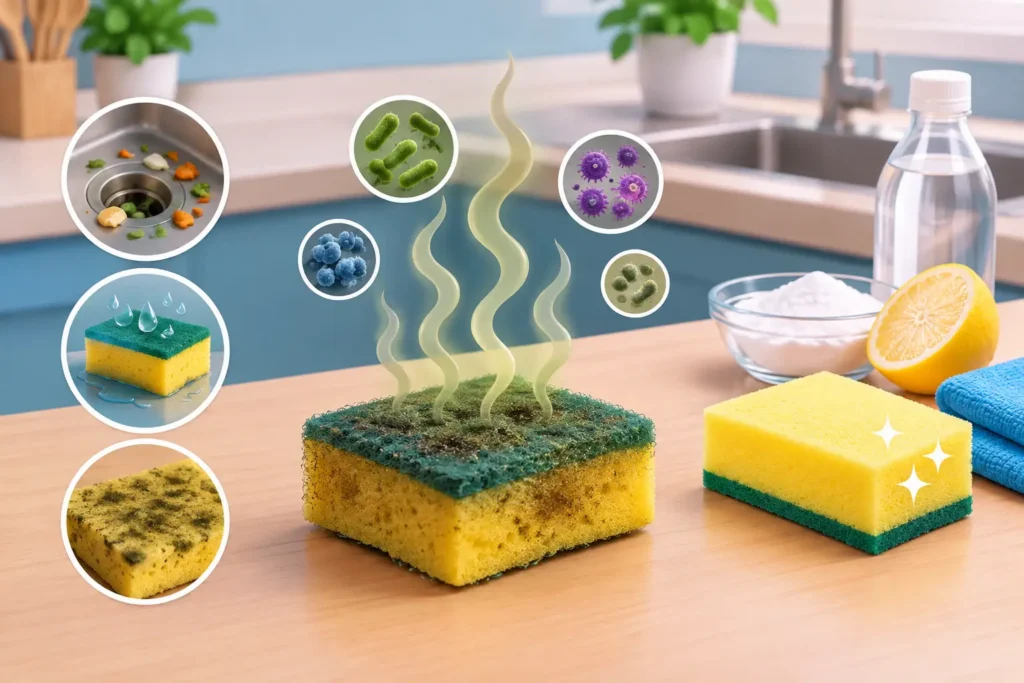
That sour smell reaching up from the sink is not something a little extra dish soap can solve. Sponge odors usually mean moisture, food residue, and bacteria have had time to build up inside the sponge. The good news is that a few simple habits can keep your dishwashing tools fresher, more hygienic, and more pleasant to use.
A sponge is designed to hold water and lift away grease, crumbs, and residue. Those same useful qualities can also make it a comfortable place for odor-causing microbes to grow when it stays damp for too long. Better rinsing, faster drying, and timely replacement make a noticeable difference – without making your kitchen routine more complicated.
What Causes Sponge Odors?
The most common cause is trapped food. Tiny particles from plates, pans, cutting boards, and utensils settle into the sponge’s pores, especially after washing greasy cookware or foods with strong aromas. When the sponge remains wet on the counter or at the bottom of the sink, that residue starts to break down and produces an unpleasant smell.
Warmth and limited airflow make the problem worse. A sponge left in a closed sink caddy, pressed against another wet tool, or sitting in a puddle of water may not fully dry between uses. Even a high-performing sponge needs air circulation to stay fresh.
The type of task matters, too. A sponge used for raw-meat cleanup, pet bowls, heavily soiled cookware, or wiping up spills can become contaminated faster than one used for everyday dishes. In these cases, rinse it thoroughly right away and consider switching to a fresh sponge sooner. One sponge should not have to handle every mess in the kitchen.
How to Get Rid of Sponge Odors
If your sponge smells mildly sour but is still structurally sound, start with a thorough clean. Hold it under warm running water and squeeze it repeatedly until the water runs clear. Add a small amount of dish soap, work it through the sponge, and rinse again. This helps remove loose grease and food particles that may be feeding the odor.
Next, sanitize the sponge according to its material and the care instructions on its packaging. Many dishwashing sponges can be cleaned in the dishwasher on a hot cycle, placed in the utensil section or securely on the top rack. Let the sponge dry completely afterward. Dishwasher cleaning is convenient because it combines heat, detergent, and a full rinse cycle, but it is not suitable for every sponge or scrubber material.
For a washable sponge that is microwave-safe, dampen it fully before heating. Never microwave a dry sponge, a sponge with metallic fibers, or one with unknown material content. Heat methods can reduce odor temporarily, but they are not a substitute for replacing a sponge that is worn, slimy, or deeply stained.
If the odor returns quickly after cleaning, do not keep trying to rescue it. That is a clear signal that the sponge has reached the end of its useful life. A fresh sponge gives you better cleaning results and greater peace of mind.
When Replacement Is the Better Choice
A sponge should be replaced when it has a persistent smell, tears, flattened foam, loose abrasive material, or visible discoloration that remains after washing. It is also smart to replace it after cleaning up spoiled food, raw poultry juices, or a particularly messy spill.
How often you replace a sponge depends on how often you cook, how many people are in your household, and what you clean with it. Busy family kitchens may need a fresh sponge every week or two. A lightly used sponge may last longer, provided it is rinsed and dried properly. Durability is valuable, but hygiene should always come first.
Prevent Sponge Odors Before They Start
The fastest way to prevent odor is to rinse the sponge completely after every use. Do not simply leave it coated in soap and assume it is clean. Soap helps lift grease, but the sponge still needs a clear-water rinse and several firm squeezes to release food particles and suds.
After rinsing, store the sponge where air can circulate around it. A raised sponge holder, ventilated caddy, or drying rack is far better than a flat, wet spot beside the faucet. Keep it out of standing water and avoid tucking it into a closed container while damp. A sponge that dries faster has less opportunity to develop odor.
It also helps to use the right tool for the job. Reserve a dishwashing sponge for plates, glasses, and cookware. Use a separate cloth or disposable wiper for counters, raw-food spills, and quick wipe-downs. For baked-on food or heavy-duty pots, a dedicated scouring pad may be the better choice. This simple division keeps your primary dish sponge cleaner for longer and protects delicate surfaces from unnecessary abrasion.
For households that clean frequently, keeping several fresh sponges on hand removes the temptation to stretch one beyond its best days. PowerMax cleaning tools are designed to make everyday cleaning more efficient, so choosing a sponge suited to your task can help you clean confidently while reducing mess, odor, and wasted effort.
A Better Daily Sponge Routine
A reliable routine takes less than a minute. After dishwashing, remove visible food bits from the sponge under running water. Add a drop of dish soap if you have washed especially greasy cookware, then squeeze and rinse until the water runs clear. Finish by pressing out as much water as possible and placing the sponge upright or in an open holder to dry.
Once or twice a week, give your sponge a deeper clean if it is still in good condition. A dishwasher-safe sponge can go through a hot dishwasher cycle. If your sponge’s care directions recommend another method, follow those instructions instead. Material matters: soft foam, abrasive scrub layers, and specialty sponges may not all tolerate the same level of heat or cleaning treatment.
This is also a good time to clean the sponge holder, sink caddy, and drain area. A fresh sponge can pick up odors again if it sits in a dirty holder or against old food residue around the sink. Wipe the holder, rinse it well, and let it dry before returning the sponge.
Sponge Odors vs. Normal Sponge Smells
Not every scent means your sponge is unsafe. A new sponge may have a light manufacturing or packaging smell that fades after the first wash. A sponge used with a strongly scented dish soap may also hold that fragrance for a while.
The smell to watch for is sour, musty, rancid, or rotten. These odors tend to become stronger when the sponge gets wet again. If that happens, clean it promptly or replace it. Trust your senses: a kitchen tool that smells unpleasant will not make dishwashing feel clean or satisfying.
Common Habits That Make Odors Worse
Leaving a sponge in the sink is the biggest issue, but a few smaller habits can contribute. Washing dishes with cold water alone may leave heavy grease behind. Using the same sponge for dishes, countertops, and floor drips spreads residue across different areas. Storing several wet tools in one tight caddy slows drying for all of them.
There is no need for a complicated system. Use warm water and dish soap for greasy loads, separate tools by task when possible, and give every sponge space to dry. Small changes create a cleaner, better-organized kitchen sink area.
Keep the Sink Area Fresh, One Sponge at a Time
A fresh sponge supports more than clean dishes. It makes the whole kitchen feel more cared for, from the sink and countertops to the tools you reach for every day. Rinse thoroughly, dry openly, clean when appropriate, and replace without hesitation when odor persists. Your next load of dishes will feel cleaner from the very first scrub.