
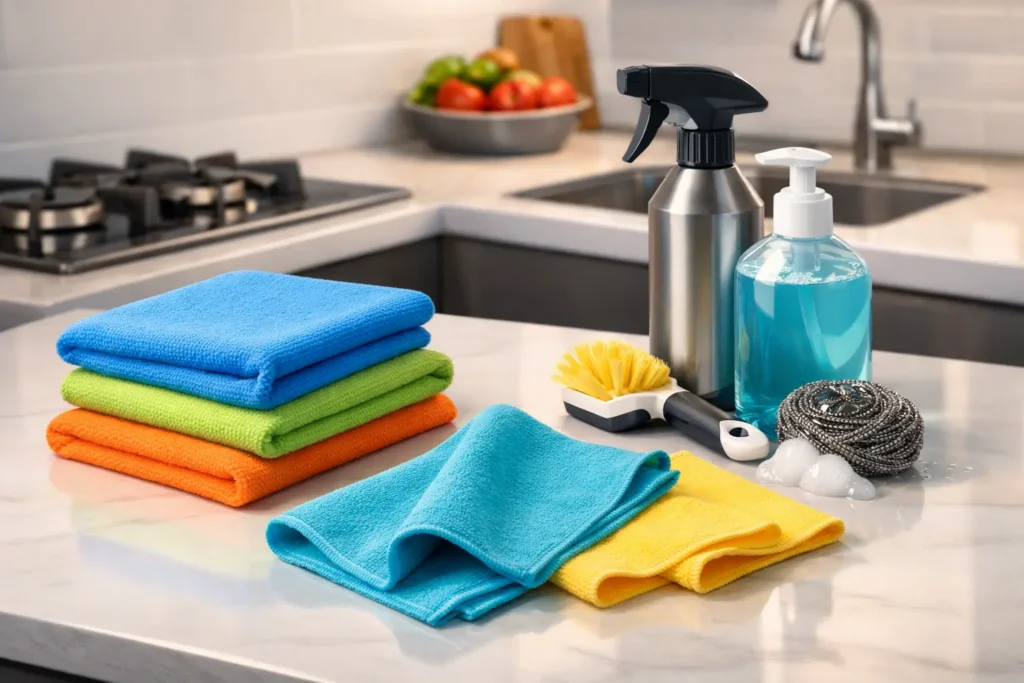
Greasy fingerprints on cabinet doors, water spots around the sink, and crumbs that somehow spread farther after one wipe – the kitchen is where cleaning tools prove their worth fast. A microfiber cloth for kitchen cleaning stands out because it does more than push mess around. It lifts grease, traps dust, absorbs spills, and helps leave surfaces looking fresh without a lot of extra effort.
That matters in a room where you clean constantly, often in a hurry, and across very different surfaces. Stainless steel needs a streak-free finish. Countertops need quick daily wipe-downs. Glass, appliances, stovetops, and tables all have their own demands. The right cloth makes those tasks easier, and the wrong one can leave lint, smear residue, or wear out too soon.
Why a microfiber cloth for kitchen cleaning works so well
Microfiber is made from extremely fine synthetic fibers that create more surface area than a standard woven cloth. In practical terms, that means better pickup. Instead of just moving moisture and debris from one place to another, microfiber can grab onto grease, dust, and food particles more effectively.
For everyday kitchen care, that gives you three clear advantages. First, you usually need less cleaning product. Second, cleanup tends to be faster because the cloth absorbs well and glides smoothly. Third, many surfaces look better afterward, especially ones that show streaks easily.
There is also a hygiene benefit when the cloth is used and maintained properly. Because microfiber captures debris efficiently, it helps remove the mess from the surface instead of spreading it across the counter. That said, no cloth stays effective forever or cleans safely if it is heavily soiled and never washed. Performance depends on both material quality and how you use it.
What to look for in a kitchen microfiber cloth
Not every microfiber cloth feels the same in hand or performs the same in the kitchen. Some are plush and soft, ideal for polishing and delicate surfaces. Others are tighter and slightly firmer, which can be better for cutting through residue on worktops or appliance doors.
Absorbency should be high on your list. In a kitchen, a cloth needs to handle splashes around the sink, condensation near cold items, and quick wipe-ups after cooking. A cloth that saturates too quickly becomes frustrating and less hygienic during longer cleaning sessions.
Durability matters just as much. Kitchen cloths are washed often, and they come into contact with oils, food residue, and repeated friction. A well-made microfiber cloth should keep its shape, softness, and cleaning power after many uses. If it starts shedding lint, losing absorbency, or feeling rough after a few washes, it is unlikely to be a good long-term choice.
Texture is another point people often overlook. For polished surfaces like stainless steel, glass cabinet panels, or glossy appliance finishes, a smoother microfiber can help reduce streaking. For tougher dried-on residue, a cloth with a little more grip may be more practical. It depends on whether your main need is daily maintenance or heavier kitchen cleanup.
Size also plays a role. Smaller cloths are easier to control for quick tasks and tight corners. Larger ones can speed up broad surface wiping. Many households do best with a few cloths in different sizes rather than trying to make one do every job.
Best uses for microfiber in the kitchen
A quality microfiber cloth is one of the most versatile tools in a kitchen. It works well for wiping countertops after meal prep, cleaning dining tables, drying around the sink, and removing smudges from refrigerators, microwaves, and oven doors.
It is especially useful on surfaces where paper towels fall short. Paper can leave lint, tear when wet, and become expensive when used every day. Microfiber offers a more durable option for recurring tasks, and it usually delivers a cleaner finish with fewer passes.
For stovetops and backsplashes, microfiber helps lift light grease before buildup becomes harder to remove. On stainless steel, it can reduce streaks when used with the right amount of moisture. On glass or shiny surfaces, it often leaves a clearer result than standard cotton cloths.
Still, there are trade-offs. For burnt-on food or very stubborn grime, a microfiber cloth may need support from a scrub sponge, scouring pad, or a suitable cleaner. The cloth is excellent for wiping, lifting, and polishing, but it is not always the right tool for aggressive scrubbing. Using the wrong cloth on a heavy mess can shorten its life.
Dry, damp, or with cleaner?
One reason microfiber is so practical is that it performs well in different ways depending on how you use it. Dry microfiber is great for picking up crumbs, dust, and light debris from counters, shelves, and small appliances. It creates quick results without much setup.
A damp cloth is often the sweet spot for kitchen cleaning. Slight moisture helps the fibers collect grease and residue more effectively while still leaving surfaces relatively dry. This works well for daily wipe-downs after cooking or before guests arrive.
When using a cleaner, less is usually more. Oversaturating a microfiber cloth with product can reduce its grip and lead to smearing, especially on shiny surfaces. A small amount applied to the cloth or directly to the surface is often enough. If your kitchen includes stone, stainless steel, wood finishes, or specialty coatings, match the cleaner to the surface.
How to use a microfiber cloth for better results
Technique makes a noticeable difference. Fold the cloth into sections so you can keep turning to a clean side as you work. This helps you clean with more control and avoids wiping fresh mess back onto the surface.
Start by removing loose debris first, especially on counters and tables. Then wipe with steady, even strokes instead of fast circular motions that can spread grease. On reflective surfaces, a final pass with a cleaner section of the cloth can improve the finish.
It also helps to assign cloths by task. One for counters, one for stainless steel, one for drying, and one for tougher jobs is a simple system that keeps cleaning more hygienic and more efficient. Color-coding can make this even easier in a busy household.
Caring for microfiber cloths the right way
If you want lasting performance, washing matters. Kitchen microfiber cloths should be cleaned regularly, especially after contact with grease, raw food areas, or heavy residue. Leaving them damp and bunched up between uses is a quick way to create odor and reduce freshness.
Wash them with mild detergent and avoid fabric softener. Softener coats the fibers and can reduce the very qualities that make microfiber effective, including absorbency and pickup power. It is also best to avoid washing them with lint-heavy fabrics like some cotton towels.
Air drying works well, though low heat can also be suitable depending on the care instructions. High heat can damage fibers over time. Once a cloth stops performing well, feels rough, or holds onto odors even after washing, it may be time to replace it.
Choosing quality over convenience
A kitchen gets cleaned every day, which makes value more important than just a low purchase price. A better microfiber cloth may cost more upfront, but if it cleans faster, lasts longer, and protects surfaces better, it often saves money and frustration over time.
That is where thoughtful product design really shows. Durable stitching, reliable absorbency, surface-safe softness, and a practical size all improve the daily experience. For brands focused on high-performance household cleaning, including PowerMax, microfiber is not just another cloth category. It is a tool that should make the job simpler, quicker, and more satisfying.
If you are replacing worn-out rags or relying too heavily on disposable wipes, upgrading to a dependable microfiber cloth can change the rhythm of kitchen cleanup. Small improvements matter in the room you use most, and the best cleaning tools are the ones that quietly make every day easier.