
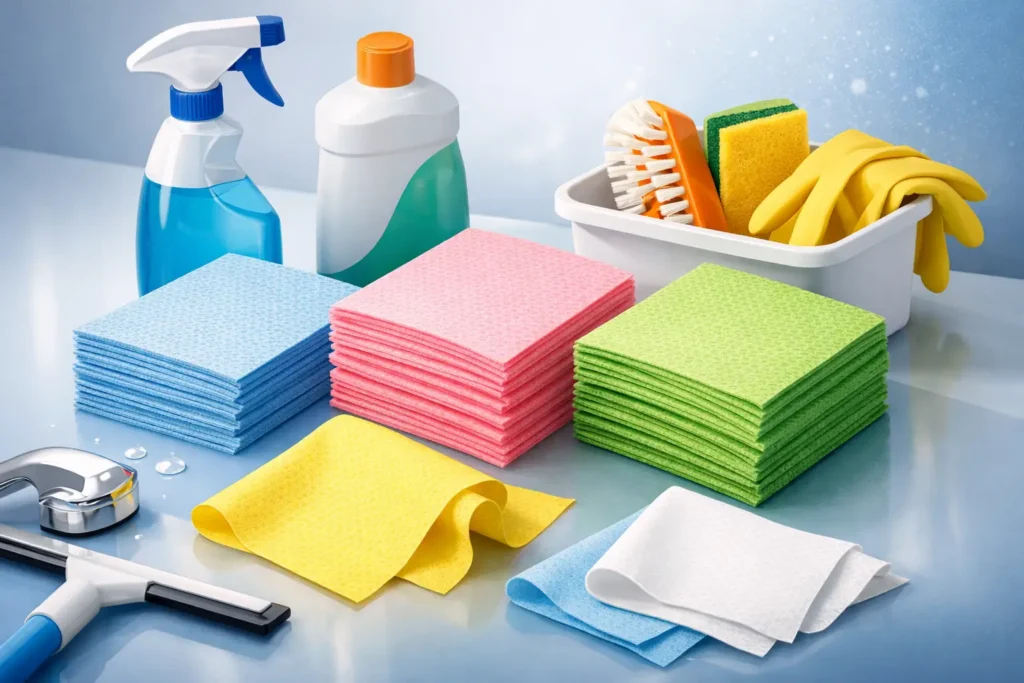
When a kitchen counter needs a quick wipe, a greasy stovetop needs more grip, or a bathroom sink needs a fresh, hygienic finish, the cloth you reach for matters. So, what are nonwoven cleaning cloths? They are cleaning cloths made from bonded fibers rather than traditional woven threads, which gives them a practical mix of absorbency, durability, flexibility, and everyday convenience.
That simple difference in construction changes how the cloth behaves in real cleaning situations. Instead of yarns woven over and under each other like a classic fabric, nonwoven materials are formed by layering fibers and bonding them through mechanical, thermal, or chemical processes. The result is a cloth designed for efficient cleaning, easy rinsing, and dependable performance across a wide range of household tasks.
What Are Nonwoven Cleaning Cloths Made Of?
Nonwoven cleaning cloths are usually made from synthetic fibers, natural fibers, or a blend of both. Common materials include polyester, viscose, polypropylene, and cellulose-based fibers. Each material brings something useful to the job.
Polyester adds strength and helps the cloth hold up through repeated use. Viscose and cellulose can improve absorbency and give the cloth a softer feel. Polypropylene is valued for being lightweight, practical, and cost-effective. In many household products, blends are used because one fiber alone may not deliver the right balance of softness, scrubbing power, and durability.
This is why two nonwoven cloths can feel very different in your hand. One may be soft and better for wiping smooth surfaces. Another may feel more textured and perform better when lifting sticky residue or tackling heavier messes. The material blend and bonding method shape the final result.
How Nonwoven Cleaning Cloths Are Different From Woven Cloths
A woven cloth is made by interlacing threads. A nonwoven cloth skips that traditional weaving step. Fibers are arranged into a web and then bonded together to create a stable sheet of material.
For everyday users, the technical process matters less than the cleaning outcome. Nonwoven cloths are often lighter, quicker-drying, and easier to engineer for specific uses. Manufacturers can adjust thickness, texture, absorbency, softness, and strength depending on whether the cloth is intended for kitchens, bathrooms, dishes, glass, or general surface care.
That flexibility is a major advantage. A woven cotton cloth may feel familiar, but it does not always deliver the same targeted performance. It may stay wet longer, trap residue differently, or lose shape over time. Nonwoven cloths are designed to solve those practical frustrations.
Why So Many Households Choose Nonwoven Cloths
The biggest reason is simple – they make routine cleaning easier. A good nonwoven cloth can absorb spills quickly, rinse out with less effort, and stay usable through repeated tasks. It can also provide a nice middle ground between a disposable wipe and a heavy reusable towel.
For busy homes, that balance matters. People want tools that are convenient but still feel substantial enough to handle real messes. Nonwoven cloths fit that need well because they are often strong enough for repeated use while remaining lightweight, flexible, and easy to store.
They are also versatile. One cloth may be used to wipe countertops, clean around sinks, freshen appliances, or assist with dishwashing prep. Depending on the texture, some can handle more delicate surfaces, while others are better for tougher cleaning jobs.
Where Nonwoven Cleaning Cloths Work Best
Nonwoven cleaning cloths are popular because they are not limited to one room. In the kitchen, they are useful for wiping counters, cabinet fronts, stovetops, backsplashes, and dining tables. Their absorbency helps with spills, and their texture can help loosen light food residue without making the task feel harder than it should.
In the bathroom, they are a practical choice for sinks, faucets, tile edges, vanities, and other frequently used surfaces. A cloth that rinses easily and dries faster can feel more hygienic between uses, especially in spaces where moisture is constant.
They also work well for general household cleaning. Dusting shelves, wiping doors, freshening utility areas, or handling quick cleanups in high-touch zones are all common uses. Some nonwoven cloths are even designed to pair well with cleaning sprays, soaps, or plain water, depending on the task.
The key point is that performance depends on the specific cloth. Soft, smooth versions are better for lighter wiping and surface care. More textured or stronger versions may be better for messier jobs. There is no single nonwoven cloth that is perfect for everything, and that is exactly why product design matters.
The Main Benefits of Nonwoven Cleaning Cloths
One of the strongest benefits is absorbency. A well-made nonwoven cloth can pick up water, spills, and diluted cleaning solution efficiently, which helps speed up daily chores. That matters when you want a clean surface without streaks, puddles, or repeated passes.
Durability is another major advantage. Many nonwoven cloths are designed to resist tearing and maintain their structure during normal household use. That does not mean every cloth is built for heavy scrubbing or extended reuse, but a quality product should handle routine wiping and rinsing without falling apart too quickly.
Surface safety is also part of their appeal. Many nonwoven cloths are soft enough for everyday surfaces and gentle enough for regular cleaning when used correctly. Of course, it still depends on the finish. A rougher cloth may not be the best choice for highly delicate materials, glossy finishes, or specialty surfaces that require extra care.
Then there is convenience. Nonwoven cloths are usually easy to handle, easy to rinse, and easy to keep within reach. For many households, that convenience is what turns cleaning from an annoying chore into a quick task that gets done right away.
Are Nonwoven Cleaning Cloths Reusable?
Many are, but not all to the same degree. This is where expectations should be realistic. Some nonwoven cloths are made for multiple uses and hold up well when rinsed and dried properly. Others are more lightweight and intended for shorter-term use.
The difference usually comes down to fiber blend, bonding quality, thickness, and intended purpose. A stronger household nonwoven cloth may serve well across repeated daily cleaning tasks. A lighter version may be best for quick cleanups, then replacement once performance drops.
If reuse matters to you, look for cloths that feel sturdy, rinse clean easily, and keep their shape after use. A cloth that stays fresher longer and resists shredding will usually offer better value in day-to-day cleaning.
What to Look for When Buying Nonwoven Cleaning Cloths
Start with the job you want the cloth to do. If you need something for frequent kitchen wipe-downs, absorbency and rinsability should be high priorities. If you want a cloth for bathroom surfaces, a quick-drying material can be especially useful. If you need help with stickier or heavier residue, texture and strength matter more.
Size also makes a difference. A cloth that is too small can feel inefficient, while one that is too large may be awkward for tighter spaces. Thickness matters too. Thicker cloths can feel more substantial and absorb more, but thinner cloths may dry faster and feel easier to rinse.
Pay attention to softness versus scrubbing ability. A cloth that is very soft may be ideal for general wiping, but it may not remove tougher residue as easily. A more textured cloth may clean faster on stubborn messes, but it is not always the right fit for delicate surfaces.
This is where smart product design stands out. Brands like PowerMax focus on matching material performance to real household needs, so shoppers can choose cloths that feel practical, durable, and satisfying to use rather than settling for one generic option.
What Are Nonwoven Cleaning Cloths Best For – And When It Depends
Nonwoven cleaning cloths are best for everyday cleaning where you want speed, control, and reliable results. They shine in routine tasks that happen often: wiping, drying, freshening, lifting spills, and cleaning common hard surfaces around the home.
Still, the best tool always depends on the task. If you need deep scrubbing on baked-on residue, a dedicated scrub sponge or scouring pad may be the better choice. If you want lint-free polishing on glass or mirrors, a microfiber cloth may perform better. If you need a simple, versatile cloth for repeated household wipe-downs, nonwoven cloths are often an excellent fit.
That is really their strength. They fill the space between specialty tools and basic rags, giving households a cleaner, more efficient option for daily use.
A good cleaning routine feels easier when every tool has a clear purpose. Nonwoven cleaning cloths earn their place because they are practical, versatile, and made for the kind of messes that show up every day.