
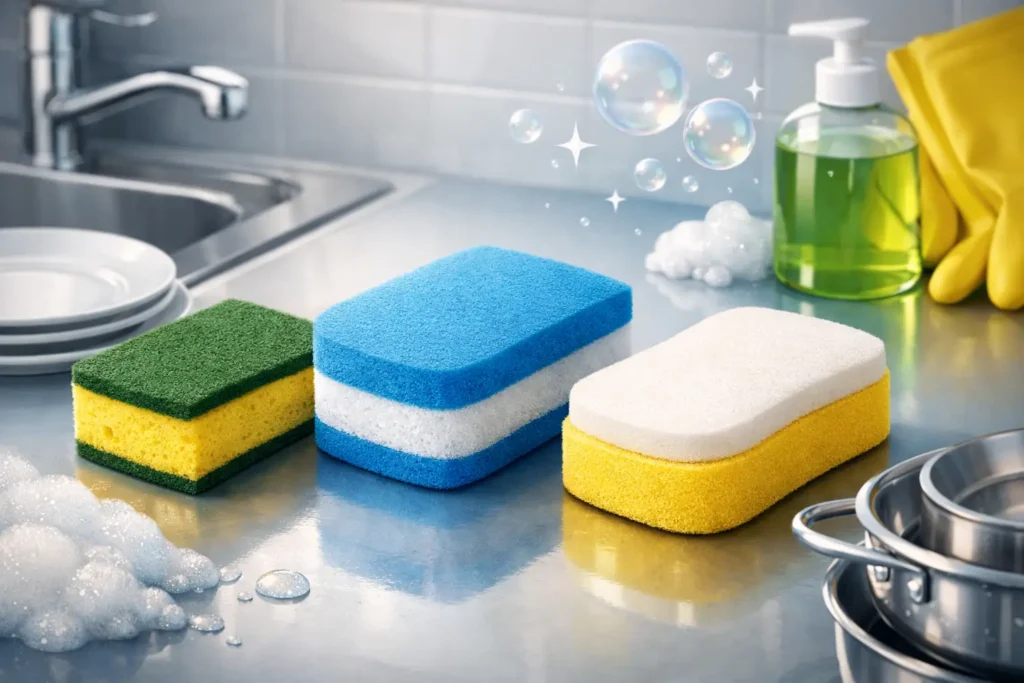
A cloudy film on a favorite glass, faint lines on a nonstick skillet, or a dull patch on a glossy plate can all start with one small mismatch: the wrong sponge. Çizmeden bulaşık süngeri seçimi means choosing a dish sponge that removes everyday food residue while treating the finish underneath with care. The best option is not always the roughest one. It is the sponge that gives you effective cleaning, reliable control, and the right level of scrubbing power for the surface in your hands.
Start With the Surface, Not the Stain
A dried-on sauce pan and a delicate wine glass may both need washing, but they do not need the same scrubbing action. This is the first rule of no-scratch dish care: match the sponge to the material before you focus on the mess.
Nonstick cookware, glazed ceramics, coated bakeware, crystal, and many painted or printed kitchen items benefit from soft, non-abrasive sponge surfaces. A gentle foam side combined with dish soap is often enough to lift grease and fresh residue without wearing down a protective coating. On these surfaces, excessive pressure can be just as damaging as an aggressive scrubber.
Stainless steel, uncoated glass bakeware, and durable pots can usually handle more cleaning power, but that does not mean every abrasive pad is a good choice. Brushed stainless steel can show visible marks when scrubbed in random directions. When cleaning it, follow the grain and use only as much pressure as needed.
The condition of the item matters, too. A new nonstick pan with an intact coating may clean easily with soft foam. A heavily baked-on pan may need soaking first, then gentle cleaning in stages. Letting warm water and dish soap loosen food is often faster than trying to force a stubborn spot away with a harsh sponge.
What Makes a Sponge Truly No-Scratch?
The label matters, but performance comes down to the sponge’s material, texture, and construction. A no-scratch sponge should feel smooth enough for delicate surfaces while still having enough structure to lift grease and food particles.
Soft foam is a dependable choice for everyday dishes because it spreads soap efficiently, absorbs water well, and rinses quickly. For cups, plates, bowls, and lightly soiled cookware, this may be all you need. A sponge with a softer scrubbing layer can add cleaning strength without the sharp, rigid fibers that may leave visible marks.
Texture is where smart choices make a real difference. A very coarse surface may remove burned residue faster, but it also increases the risk on coated or polished materials. A fine, flexible scrub layer offers more controlled cleaning for everyday kitchen jobs. It is a practical middle ground for households that wash a mix of cookware, glassware, and tableware every day.
Shape also affects surface safety. An ergonomic sponge is easier to grip, so you are less likely to press too hard or lose control around curved glasses and pan edges. A comfortable shape helps turn routine dishwashing into a more precise, less tiring task. PowerMax designs cleaning tools around this kind of practical ease, pairing comfortable handling with dependable everyday performance.
Çizmeden Bulaşık Süngeri Seçimi by Cleaning Task
One sponge can handle many jobs, but no single texture is ideal for everything. Think about what you wash most often and choose according to your real kitchen routine.
For daily plates, cups, cutlery, and food containers, choose a soft, absorbent sponge that builds a good lather and rinses clean. This helps you use less dish soap while keeping the washing process quick. A sponge that holds too much water for too long can become difficult to rinse, so look for foam that feels resilient rather than overly dense.
For nonstick pans, use the softest suitable cleaning side and avoid scouring pads unless the cookware maker specifically allows them. Soak the pan for several minutes if food is stuck. Then clean with warm, soapy water and light, circular strokes. The goal is to release residue without weakening the coating that makes the pan easy to use.
For glassware and glossy ceramic dishes, choose a clean sponge with no trapped crumbs or hard particles. Even a gentle sponge can scratch when a grain of sand, a piece of eggshell, or dried food is caught in its surface. Rinse the sponge before moving from a greasy pan to a clear glass, especially if you want spotless results.
For pots, roasting dishes, and cookware with cooked-on residue, start with patience. Fill the item with warm water and dish soap, allow the residue to soften, and then use a sponge with a more active but still surface-appropriate scrub layer. This approach protects your cookware and reduces the effort required.
A Clean Sponge Protects Better
A sponge cannot deliver no-scratch care if it is overloaded with debris. As it collects food particles and grease, its surface becomes less effective and potentially rougher against delicate items. Rinsing thoroughly after every use is a simple step that protects both your dishes and your sponge.
Squeeze out excess water and store the sponge where air can circulate. A sponge left flat in a puddle near the sink stays damp longer and may develop odor more quickly. Keeping it upright or in a holder helps it dry between uses.
Replace your dish sponge when it begins to tear, flatten permanently, hold an odor after cleaning, or feel rougher than it did when new. A worn sponge does not clean as efficiently, and it can make you compensate with more pressure. Fresh, well-maintained tools support better hygiene and kinder cleaning on your favorite kitchen items.
It also helps to separate jobs when possible. Use one sponge for dishes and cookware, and reserve a different tool for counters, the sink, or heavy-duty cleaning. This reduces the chance that abrasive residue from one task transfers to delicate dishware.
Common Mistakes That Lead to Scratches
The biggest mistake is assuming that more force means better cleaning. With most dishwashing tasks, extra pressure does not solve the problem. It can push food particles across the surface, damage coatings, and leave marks that are difficult or impossible to reverse. Let water, dish soap, and the correct sponge do more of the work.
Another common issue is using the same scrubber for every item. A sponge that works beautifully on a tough pot may be too aggressive for a nonstick skillet or decorative dinnerware. Keeping a gentle everyday sponge within easy reach makes the safer choice automatic.
Do not overlook your cleaning product, either. Some powders and highly abrasive cleaners can create scratches even when used with a soft sponge. For regular dishwashing, pair your sponge with a quality liquid dish soap and use specialized products only when the material and cleaning need call for them.
Finally, inspect new cookware and kitchenware for manufacturer care instructions. Some surfaces are more sensitive than they look. When you are unsure, test your chosen sponge on a small, less visible area with light pressure before cleaning the entire item.
Choose Confidence at the Kitchen Sink
The right dish sponge makes a visible difference: glasses stay clear, nonstick surfaces stay smoother, and daily cleanup feels less demanding. Choose a clean, absorbent sponge with the right texture for your cookware, give stuck-on food time to loosen, and replace worn tools before they lose their gentle touch. Your dishes work hard every day – a surface-safe sponge helps them look their best for longer.