
A mop that leaves streaks, splashes dirty water, or feels awkward in your hand turns a simple floor clean into a chore you start avoiding. If you’re wondering how to choose a mop set, the right answer starts with your home, your floors, and how much effort you want each cleaning session to take.
Some shoppers buy the first bucket-and-mop combo they see, then realize it is too bulky for a small apartment, too gentle for heavy kitchen messes, or too harsh for delicate flooring. A better mop set saves time, protects surfaces, and makes regular cleaning feel more manageable. That is exactly what a good cleaning tool should do.
How to choose a mop set for your home
The best mop set is not always the most expensive one or the one with the most parts. It is the one that matches your floor type, room size, and cleaning habits. If you mostly clean tile in a busy family kitchen, your needs will be very different from someone maintaining hardwood in a one-bedroom condo.
Start by thinking about where the mop will be used most often. Kitchens and bathrooms usually need stronger cleaning performance and better handling for sticky spots, grout lines, and frequent spills. Living rooms and bedrooms often call for gentler moisture control, especially if you have wood or laminate floors.
Storage matters too. A large spin mop system can be a great choice for bigger homes, but it may feel oversized if you have limited closet space. On the other hand, compact flat mop sets are easier to store and lighter to carry, though they may require more passes on heavily soiled floors.
Match the mop set to your floor type
This is the first real filter, because not every mop head or moisture level suits every surface.
Tile and stone floors
Tile is usually the most forgiving surface, especially in kitchens, bathrooms, and entryways. If you clean these areas often, a mop set with a highly absorbent head and a bucket system that helps rinse out dirt can make a visible difference. Textured tile and grout also benefit from mop fibers that can reach into uneven surfaces instead of just gliding over them.
For natural stone, be a little more careful. You want effective dirt pickup without overly aggressive materials that may wear sealants over time. A microfiber-based mop head is often a safer and more versatile option.
Hardwood floors
Hardwood needs controlled moisture. Too much water can dull the finish, seep into seams, or cause long-term damage. For these floors, choose a mop set that wrings thoroughly and leaves the mop head damp rather than wet.
Flat mops and well-designed spin systems tend to work well here because they give you better control. Soft microfiber is usually the safest pick for lifting dust and light grime without scratching.
Laminate and vinyl
Laminate also prefers low moisture, while vinyl gives you a bit more flexibility. In both cases, look for a mop set that is easy to wring and simple to maneuver around furniture. If your home has several of these surfaces, a lightweight set with washable microfiber pads often gives you the best balance of convenience and performance.
Pick the right mop head style
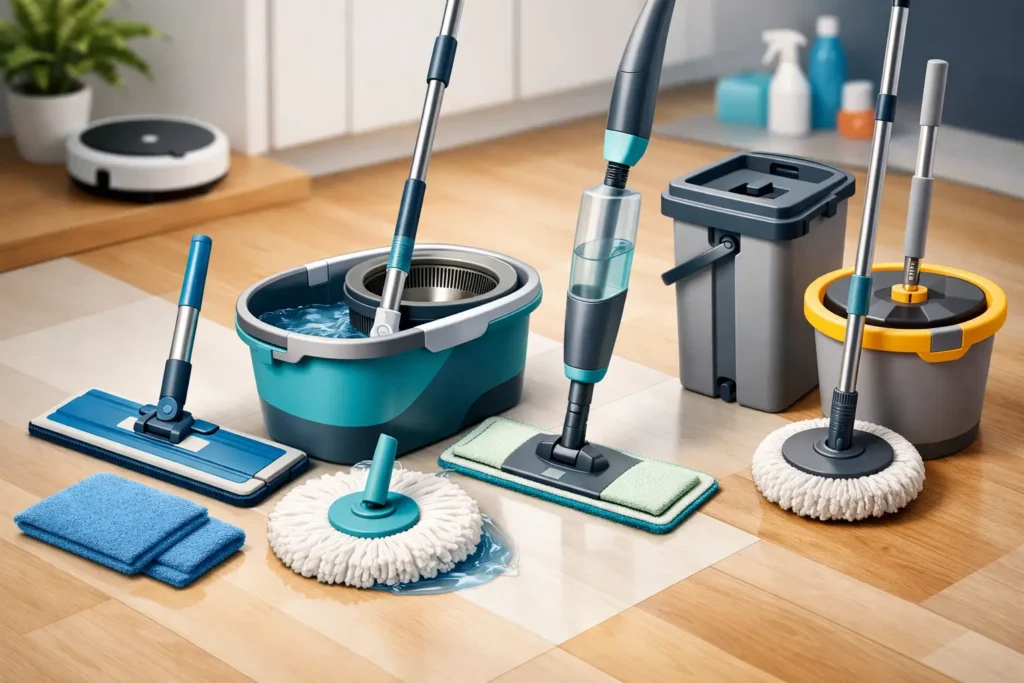
Mop sets come in a few common formats, and each one has strengths.
A string mop is familiar and can handle larger wet messes well, but it may take longer to dry and can be harder to keep looking fresh. A flat mop gives a cleaner, more controlled feel and is excellent for everyday maintenance, especially on smooth indoor floors. A spin mop sits in the middle for many households – practical, efficient, and easier to wring with less hand contact.
If you clean often and want floors to dry faster, flat or spin styles usually feel more convenient. If you are dealing with frequent spills, muddy shoes, or larger wash areas, a more absorbent mop head may be worth the extra bulk.
The material matters just as much as the shape. Microfiber is a strong all-around choice because it traps dust, lifts fine debris, and works well on many surfaces. Cotton blends can absorb a lot, but they may be heavier and slower to dry. For most households, easy-care microfiber brings the best mix of hygiene, softness, and repeat performance.
Don’t ignore the bucket system
Many people focus on the mop and overlook the bucket, even though the bucket often decides how easy the whole set is to use.
A good bucket should help you rinse effectively and reduce dirty-water spread. Spin wringer systems are popular for a reason – they remove excess water quickly and make hands-free wringing much easier. That is a major benefit if you clean often or want a more hygienic routine.
Look at the bucket size as well. A larger bucket means fewer refills, which is useful for bigger homes. But if the bucket is too heavy when full, it becomes inconvenient fast. For apartments or smaller homes, a compact design may be the smarter choice.
Handle design matters too. A sturdy carrying handle, stable base, and splash-minimizing shape all improve day-to-day use. These details sound small until you are carrying water from room to room.
Features that actually make cleaning easier
Some extra features are worth paying for. Others are just packaging language.
An adjustable handle is genuinely useful, especially in households where more than one person cleans. It improves comfort and helps you reach under tables, beds, and cabinets without straining your back. A 360-degree rotating mop head is another practical advantage because it makes corners and tight spaces easier to clean.
Machine-washable refill heads or pads also add real value. They lower replacement costs and help you keep the mop fresher between deep cleans. If a set uses proprietary refills that are hard to find, that convenience disappears quickly.
A built-in separation between clean and dirty water can also be a strong upgrade if you want a more hygienic result. It helps reduce the chance of pushing the same grime back across the floor.
How to judge quality before you buy
A mop set can look impressive in photos and still disappoint after a few weeks of use. Quality shows up in the small things.
Check the handle material first. Lightweight metal handles often feel stronger and last longer than thin plastic ones. The connection points should feel secure, not loose or wobbly. If the mop head attachment seems flimsy, it may wear out quickly under regular pressure.
Pay attention to the absorbency and thickness of the mop fibers or pads. If they are too thin, they may smear instead of clean. If they are too bulky, they may be harder to rinse and dry. The best sets strike a smart balance: enough material to lift dirt, but not so much that the mop becomes heavy and awkward.
Durability also means repeat use. A quality mop set should handle regular washing, frequent wringing, and routine movement without losing shape or effectiveness. That is where trusted design really matters. Brands that focus on practical cleaning performance, like PowerMax, tend to build around ease, durability, and everyday results rather than gimmicks.
Consider your cleaning routine, not just the product
If you mop once a week and mostly manage light dust and footprints, your ideal set may be simple, compact, and quick to grab. If you clean after kids, pets, cooking spills, or high traffic, you will need stronger absorption, easier rinsing, and a design that handles frequent use without frustration.
It also helps to think about who is using it. Older adults may prefer lighter sets with less lifting. Busy families may want faster wringing and washable refills. If speed is your priority, the easiest mop set to set up and use often is usually the better investment than a more complex system that stays in the closet.
Common mistakes when choosing a mop set
One common mistake is buying for price alone. A very cheap set may solve today’s need, but if it bends, leaks, or stops cleaning effectively after a short time, it costs more in replacements and wasted effort.
Another mistake is choosing a one-size-fits-all system without checking floor compatibility. Too much moisture on hardwood or the wrong texture on delicate surfaces can create problems instead of solving them.
It is also easy to overbuy. If you have a small home and light cleaning needs, a large commercial-style bucket may just take up space. Bigger is not always better. Better fit is better.
A simple checklist for how to choose a mop set
Before you buy, ask yourself a few practical questions. What floor types do you clean most? Do you need low-moisture mopping or heavy absorbency? How much storage space do you have? Will you wash refill heads regularly? Do you want hands-free wringing?
If the set gives you surface safety, easy handling, reliable dirt pickup, and simple maintenance, you are looking in the right direction. Those are the features that keep a mop useful long after the packaging is gone.
A good mop set should not make cleaning feel complicated. It should help you move through the job faster, with less mess and better results. Choose the one that fits your real routine, and clean floors become a lot easier to keep that way.