
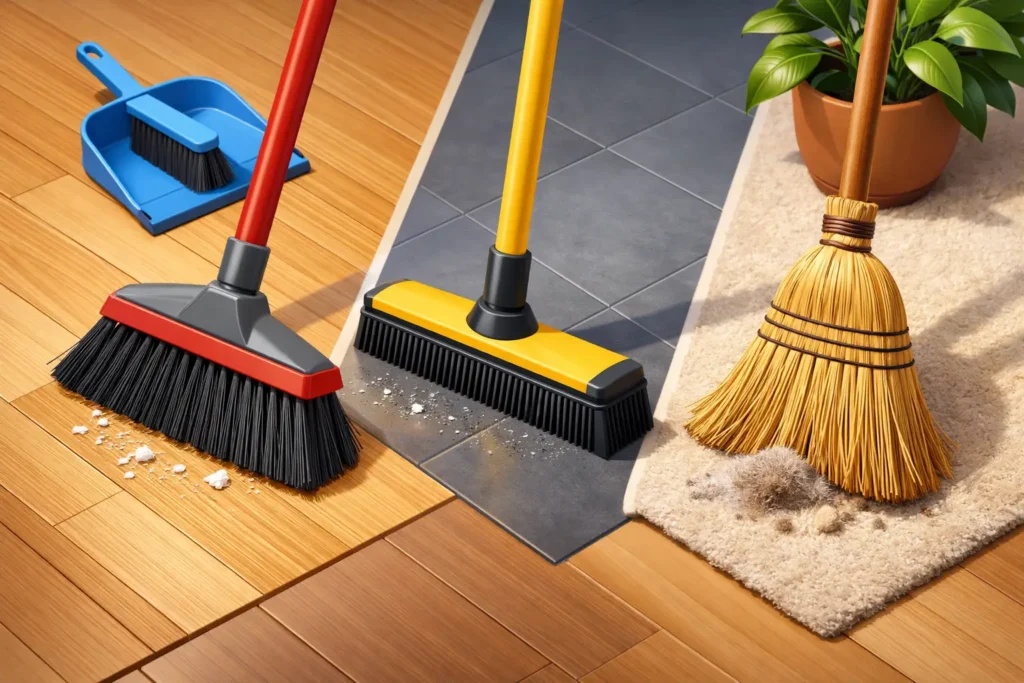
Crumbs under the kitchen table, pet hair along the baseboards, and dust in the entryway can make a clean room look unfinished fast. The best broom for indoor floors is not simply the stiffest or the biggest one. It is the broom that lifts everyday debris efficiently while staying gentle on the surfaces you walk on every day.
For most homes, a soft-bristle indoor broom with a comfortable handle and a wide, well-shaped sweeping head is the most dependable choice. But floor material, room size, and the kind of mess your household makes can change what “best” looks like. Choosing with those details in mind makes quick cleanups faster, more satisfying, and easier on your floors.
What Makes the Best Broom for Indoor Floors?
Indoor floors need a different approach than patios, garages, and sidewalks. Outdoor brooms are designed to push heavier, rougher debris. Their firm bristles can be useful on concrete, but they may scatter fine dust across smooth flooring or feel too aggressive on delicate finishes.
A quality indoor broom should collect fine particles as well as visible debris. Look for dense, soft synthetic bristles that create close contact with the floor. This helps the broom sweep up flour, dry cereal, hair, and dust instead of pushing them into corners or leaving a faint line behind after every pass.
The broom head also matters. A low-profile head can reach under cabinets, around chair legs, and beneath the edge of a sofa more easily than a bulky design. Angled bristles are especially useful for getting into corners and tracing baseboards, where dust tends to gather unnoticed.
A comfortable handle turns a routine task into a quicker one. It should feel secure in your hands, be long enough to reduce bending, and connect firmly to the broom head. A handle that flexes, loosens, or feels awkward can make even a small room feel like a bigger job.
Match Bristles to Your Floor Type
The right bristle texture protects your surfaces while improving pickup. There is no single broom that performs exactly the same on every floor, especially in homes with a mix of hard surfaces.
Hardwood and engineered wood
Soft, flagged bristles are a smart choice for wood floors. Flagged bristles have split ends that help capture fine dust and hair without harsh scraping. They are gentle on sealed hardwood and engineered wood while still handling the crumbs and tracked-in debris that collect in busy rooms.
Avoid very stiff bristles for routine sweeping. They can feel rough against the finish and often push fine dust forward instead of collecting it. Sweeping with steady, light strokes is also better than pressing down hard, which can leave debris behind the broom rather than inside its path.
Tile and stone
Tile floors can handle a slightly firmer bristle, particularly when dirt settles into grout lines. Still, an indoor broom should remain flexible enough to collect dust from the smooth tile surface. Medium-soft synthetic bristles offer a practical balance for kitchens, bathrooms, laundry rooms, and entryways.
For textured stone or deeply grouted tile, use shorter strokes in more than one direction. This gives the bristles time to reach into uneven areas instead of skimming across the top.
Laminate and vinyl
Laminate and luxury vinyl floors benefit from soft bristles that move easily without dragging grit across the finish. A lightweight broom is especially helpful here because it gives you better control. Choose one that picks up fine debris effectively so you do not need repeated passes that add time to the job.
Smooth concrete or sealed floors
Sealed concrete, polished floors, and other smooth indoor surfaces can be swept with soft to medium-soft bristles. The key is density. Closely packed bristles are better at gathering fine dust than widely spaced, rigid ones, which are more likely to leave a dusty trail.
Choose the Right Broom Head Size
A large broom head covers more floor in a single pass, making it a strong option for open-plan living areas, long hallways, and larger kitchens. It can cut down sweeping time when you are clearing light, dry debris from broad surfaces.
Smaller heads offer better control in compact spaces. They are easier to maneuver around toilets, narrow bathroom corners, dining chairs, and storage areas. If you clean a mix of large rooms and tight spaces, a medium-width broom head is often the most versatile everyday choice.
Do not judge a broom by width alone. A wide head that cannot reach close to edges may leave you with more detail work. A well-designed angled edge or pointed bristle tip can make a noticeable difference around walls and furniture.
Look for Features That Make Sweeping Easier
A broom does not need unnecessary extras, but a few thoughtful details can improve how it feels and performs. Prioritize features that solve real cleaning frustrations:
- Dense, soft bristles for fine dust, hair, and crumbs
- An angled or shaped head for corners and baseboards
- A lightweight but sturdy handle for easier everyday use
- A hanging loop or compact storage design to keep the broom off the floor
- A secure handle connection that stays tight through regular use
A matching dustpan is also worth considering. A dustpan with a rubber lip sits flush against the floor, helping you sweep debris in without leaving a stubborn line of dust behind. Built-in comb teeth can help remove hair and lint from broom bristles without touching the mess.
Common Indoor Sweeping Mistakes
Even a high-performing broom can underdeliver when the technique is working against it. One of the most common mistakes is sweeping too fast with long, forceful strokes. This often sends lightweight dust into the air or scatters crumbs farther across the room.
Use controlled strokes and pull debris toward one central collection point. Start at the edges of the room, especially near baseboards and beneath furniture, then work toward the center. For pet hair, short strokes are usually more effective because they give bristles time to gather hair rather than flicking it away.
Another mistake is using a dirty broom. Bristles can hold dust, lint, and hair, reducing pickup and transferring debris from room to room. Shake the broom outdoors when possible, remove tangled hair after use, and wash washable synthetic bristles occasionally with warm water and mild soap. Let the broom dry fully with bristles facing down or hanging freely so they keep their shape.
When a Broom Is Better Than a Vacuum
A vacuum is useful for deep cleaning and carpeted areas, but a broom has a clear place in everyday floor care. It is quick to grab, quiet to use, and ideal for dry spills that do not need a full machine. Sweeping is especially convenient after meals, while cooking, before mopping, or whenever sand, leaves, or pet food make their way indoors.
A broom also gives you more control around delicate items and tight corners. For a small mess, reaching for a lightweight broom and dustpan can be far more practical than setting up a vacuum. The best routine often uses both: sweep daily debris as needed, then vacuum or mop on your normal cleaning schedule.
A Better Everyday Cleaning Routine
Keep your indoor broom somewhere easy to reach, not hidden behind a crowded closet door. When the tool is convenient, you are more likely to handle small messes before they become a full-floor cleanup. A quick sweep of the kitchen and entryway each day can protect floors from gritty particles that get walked across the surface.
For a clean finish, sweep before you mop. Removing dry debris first prevents crumbs, hair, and dust from turning into damp streaks or getting caught in your mop pad. Pairing dependable tools with a simple routine is how homes stay fresh between deeper cleaning days.
The right broom should make this daily reset feel easy: soft enough for the floors you value, strong enough for the messes you actually make, and ready whenever the room needs a fast, satisfying refresh. PowerMax believes practical cleaning tools should deliver that kind of reliable performance, one sweep at a time.