
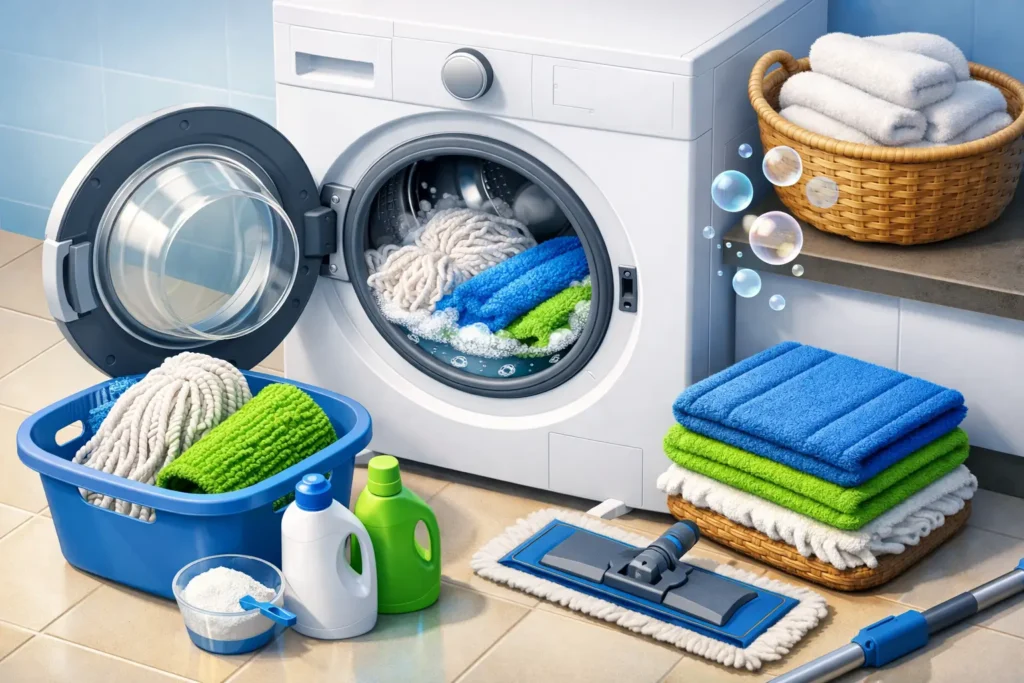
A reusable mophead can make floor care faster, more economical, and less wasteful – but only when it is properly cleaned between uses. Knowing how to wash reusable mopheads keeps them absorbent, fresh-smelling, and ready to lift dirt instead of spreading it from room to room.
The right method depends on the mophead material and how heavily soiled it is. Microfiber needs gentler care than cotton string, while a mophead used for a quick kitchen refresh will need far less attention than one used after muddy shoes, pet accidents, or a bathroom deep-clean. A few simple habits make a visible difference in both hygiene and performance.
Why washing your mophead matters
Mopheads collect more than dust. They hold fine grit, food residue, hair, grease, cleaning-product buildup, and moisture. If a damp mophead stays in a bucket or is pushed into a crowded laundry hamper, bacteria and mildew can multiply quickly. The result is the familiar sour odor that can make a freshly mopped floor smell anything but clean.
Regular washing also protects the fibers. When detergent residue and grime build up, microfiber strands lose their ability to trap particles, while cotton and blended yarns can become stiff and less absorbent. A clean, well-maintained mophead glides more smoothly and leaves a more polished floor finish.
Check the material before you wash reusable mopheads
Start with the care label or the product instructions, especially if your mop has a detachable pad, a built-in scrubber, or a hook-and-loop backing. These details determine whether it can go in the washing machine and how much heat it can handle.
Microfiber pads are common for hard floors because their fine fibers pick up dust and grime efficiently. Most are machine washable, but they should not be washed with fabric softener or exposed to high heat. Cotton string mopheads can usually handle warmer washes and heavier soil, although very hot water may shrink some blends. Sponge mop refills should generally be hand-washed, since a washer can damage the sponge or its attached hardware.
If the mophead has a plastic frame, metal clips, or a hard base that cannot be removed, hand-washing is often the safest choice. Never force an entire mop assembly into the washer unless the manufacturer specifically says it is machine safe.
Prepare the mophead for a better wash
A little preparation prevents dirt from circulating through the laundry. After mopping, hold the mophead over a trash can or outdoors and shake out loose hair, crumbs, and grit. Remove any large debris by hand while wearing gloves.
Rinse the mophead under warm running water until most of the dirty water runs clear. This is especially useful after cleaning muddy entryways or greasy kitchen floors. It also means your washing machine can focus on cleaning the fibers rather than rinsing away clumps of debris.
Wash mop pads separately from towels, clothing, and bedding. Cleaning tools carry floor soil and cleaning chemicals that do not belong with everyday laundry. If you have several washable pads, collect them for a small dedicated load.
How to wash reusable mopheads in a washing machine
For most removable microfiber, cotton, and blended-fabric mopheads, machine washing is the easiest option. Follow these steps for a clean result without unnecessary wear.
- Place the mopheads in the washing machine with other washable cleaning cloths only. Close any hook-and-loop tabs first so they do not catch lint or damage other fabrics.
- Add a small amount of quality liquid laundry detergent. Use less than you would for a full clothing load, because excess soap can stay in the fibers and reduce absorbency.
- Choose a gentle or regular cycle based on the material. Cold or warm water is best for microfiber. Cotton mopheads may tolerate warm water, and some heavily soiled styles can handle hot water if their care label allows it.
- Skip fabric softener, dryer sheets, and bleach unless the mophead instructions specifically permit them. Fabric softener coats microfiber and makes it less effective at grabbing dirt. Chlorine bleach can weaken fibers, fade color, and shorten the life of some mophead backings.
- Run an extra rinse if the mophead feels slippery or strongly scented after washing. This is a useful step when you have used concentrated floor cleaner or too much detergent.
A mild oxygen-based laundry booster can help with stubborn stains on compatible materials, but check the label first. Strong chemicals are not automatically better. The goal is clean, functional fibers that remain safe for the floors you care for.
A note on microfiber mop pads
Microfiber performs best when its tiny split fibers are open and free of residue. Washing it with lint-heavy cotton towels can leave lint behind, while softener can flatten the fibers. Keep microfiber pads with microfiber cloths or other low-lint cleaning textiles whenever possible.
For routine care, a warm wash and a small amount of detergent are usually enough. If your microfiber pad still feels greasy after washing, it may have been used on a floor with oily cooking residue. Pre-soak it in warm water with a little detergent before running the wash cycle.
Hand-washing for sponge and delicate mopheads
Hand-washing gives you more control when a mophead is delicate, attached to a frame, or unsuitable for a washing machine. Fill a sink, basin, or clean bucket with warm water and a small amount of mild detergent. Work the solution through the mophead with your hands, concentrating on visibly soiled areas.
Rinse thoroughly with clean water until there are no suds left. For a string mophead, gently squeeze from the top down to release water and dirt. Do not aggressively twist microfiber pads or sponge refills, as this can distort their shape or loosen seams.
For a mophead that needs extra freshening, soak it briefly in a diluted white vinegar solution after washing, then rinse again. This can help reduce lingering odor and mineral residue, but vinegar is not a substitute for detergent when grease and soil are present. Avoid using vinegar with chlorine bleach or other cleaning chemicals.
Remove odor without damaging the fibers
A lingering smell usually means the mophead was stored damp, not that it needs more fragrance. Wash it promptly after use and make sure it dries fully. If odor persists after a normal wash, pre-soak the mophead in warm water and detergent for 15 to 30 minutes, then wash or rinse as usual.
Avoid masking odors with heavily scented products. They can leave residue behind, particularly on microfiber, and may make it harder to tell whether the mophead is truly clean. Fresh, neutral-smelling fibers are the best sign that your cleaning tool is ready for the next job.
Dry it completely before storing
Drying is where many reusable mopheads lose their freshness. Air-drying is the safest choice for nearly every type. Hang the mophead or lay it flat in a well-ventilated area, with the fibers spread out so air can reach the center. Do not leave it bunched in a bucket, on the floor, or in a closed cabinet.
Many fabric mop pads can be tumble-dried on low heat if the label allows it. High heat can melt or damage microfiber fibers and may weaken backing materials. When in doubt, choose air-drying. It takes a little longer, but it helps preserve the mophead’s shape, absorbency, and cleaning power.
Know when a mophead should be replaced
Reusable does not mean permanent. Replace a mophead when it remains smelly after proper washing, no longer absorbs water well, leaves lint or streaks behind, or has frayed fibers, loose stitching, damaged backing, or a cracked sponge. A worn mophead cannot deliver the clean result you expect, no matter how good your floor cleaner is.
Keeping an extra washable refill on hand makes routine care easier. You can wash and dry one mophead completely while another is ready for the next spill, weekly floor clean, or last-minute visit. PowerMax cleaning tools are designed to make those everyday routines feel quicker, cleaner, and more satisfying.
A mophead that is rinsed, washed correctly, and dried in open air will reward you with better pickup and a fresher home. Give it the same care you give the floors it cleans, and every pass of the mop will work harder for you.