
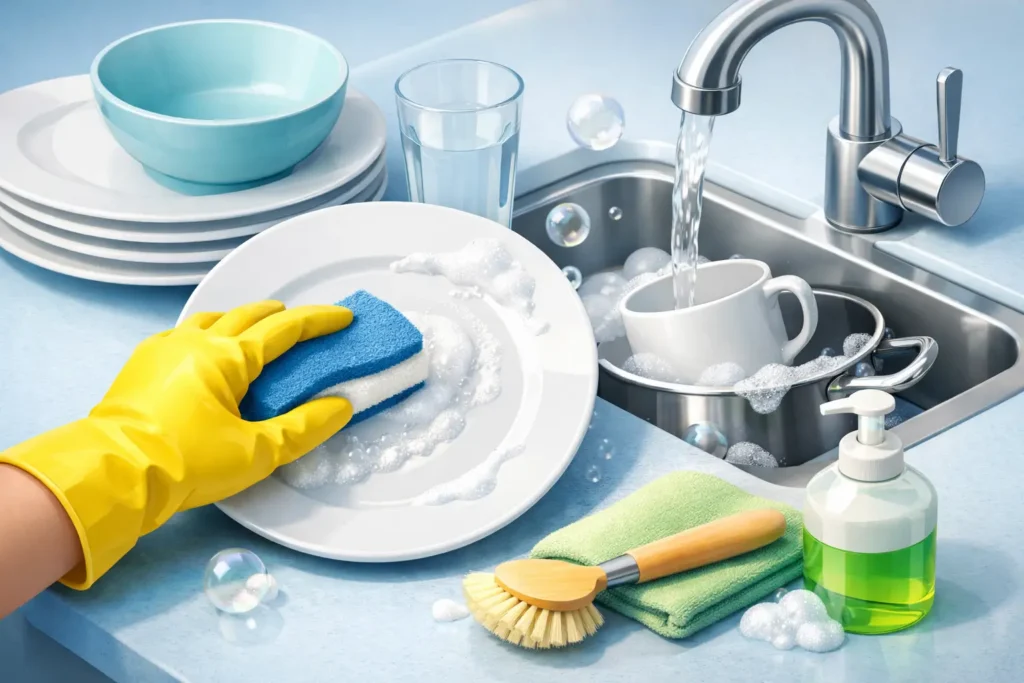
That cloudy streak on a wine glass or the dull mark on a favorite plate usually does not come from one big mistake. It comes from small habits repeated every day. If you have been wondering how to clean dishes without scratching, the good news is that better results usually come from simple changes: the right tool, the right pressure, and a little more attention to the surface in front of you.
Scratches matter for more than looks. Once a surface is marked, it can lose its shine, collect residue more easily, and wear out faster. Delicate finishes, glossy ceramics, stainless steel, nonstick cookware, and decorative pieces all need a gentler approach than many households use by default. A strong clean should still be a safe clean.
How to clean dishes without scratching starts with the right tool
The biggest cause of scratches is not always dirt. Very often, it is the cleaning tool itself. A harsh scouring pad, a worn-out sponge with trapped debris, or a stiff brush used on the wrong material can leave marks even when you are being careful.
For everyday dishwashing, a soft dish sponge or non-abrasive scrub sponge is the safest place to start. It gives you enough cleaning power for grease and food residue without grinding into the surface. Microfiber cloths can also work well for lighter jobs like glasses, serving bowls, and freshly used plates that have not had time to dry with food stuck on.
Texture matters. A sponge designed for dishwashing should lift residue while staying surface-safe. That balance is what makes a quality kitchen sponge more than a basic household item. If you use one tool for every mess, from baked-on casserole edges to delicate glassware, you are more likely to damage something. It is smarter to match the tool to the task.
A separate heavy-duty scrubber can be useful for tough cleanup, but it should stay away from polished, coated, or decorative surfaces unless the manufacturer says it is safe. Even then, test a small area first if you are unsure.
The problem is often trapped grit, not your soap
Sometimes a sponge feels soft but still scratches. The reason is simple: grit gets stuck inside it. Tiny bits of eggshell, burned crumbs, mineral particles, or hardened food residue can turn a gentle sponge into a rough one.
Before you start washing, rinse your sponge thoroughly under running water. If it looks worn, flattened, or stained with stubborn debris, replace it. A fresh, clean sponge protects dishes better and works faster. Using an old sponge to save a few more washes often costs more in the long run when it damages surfaces.
The sink itself also matters. If dishes are resting against food particles, metal utensils, or rough cookware while you wash, scratching can happen before the sponge even touches them. Give fragile items a cleaner workspace and wash them separately when possible.
Use more soak, less force
One of the easiest ways to avoid scratching is to stop fighting stuck-on food with pressure. Force is where surface damage begins. If residue is not lifting easily, the answer is usually not harder scrubbing. It is time, water, and soap.
Warm water and dish soap loosen grease and soften dried food so your sponge can do its job without scraping. Let dishes soak for a few minutes before washing, especially casseroles, mixing bowls, pans, and plates with dried sauces or starches. For very stubborn residue, refresh the water and let the item sit a little longer rather than pressing harder.
This is especially important for glossy ceramic plates, clear glass, and nonstick cookware. These surfaces can look durable, but repeated aggressive scrubbing gradually takes away their finish. A gentler method keeps them looking newer for longer.
Different dish materials need different care
Not every dish should be cleaned the same way. That is where many scratches begin.
Glass and crystal
Glass scratches more easily than many people expect, especially when stacked in the sink or rubbed with abrasive pads. Wash glasses with a soft sponge or microfiber cloth and light dish soap. Hold the item securely, but do not squeeze too hard while cleaning. If the glass has lipstick, coffee, or tea marks, soak first instead of scrubbing the stain dry.
Crystal and thin decorative glass deserve extra care. Avoid rough scrubbers completely, and keep these pieces away from metal utensils and heavier dishes during washing.
Ceramic and porcelain
Most everyday plates and bowls are fairly durable, but their glazed finish can still be marked by rough scouring pads or gritty tools. Use the soft side of a dish sponge for regular cleaning. If food is baked on, soak first and work in small circles with light pressure.
Decorative porcelain, hand-painted dishes, and pieces with metallic trim should always be treated as delicate. A soft cloth is often the better option.
Stainless steel
Stainless steel is strong, but it can show fine scratches that dull its clean appearance. Use a non-abrasive sponge and wash with the grain of the surface when visible. Circular aggressive scrubbing can leave more noticeable marks. For burnt spots, soaking is still the safer first move.
Nonstick cookware
This is one of the easiest surfaces to damage with the wrong tool. Never use harsh scouring pads, steel wool, or stiff brushes on nonstick coatings unless the cookware maker specifically approves it. A soft sponge, warm soapy water, and patience are the best combination here. Once a nonstick surface is scratched, performance often drops quickly.
Technique makes a bigger difference than most people think
Even with the right sponge, poor technique can still leave marks. Start by rinsing away loose food before you scrub. That removes abrasive particles early and gives your sponge a cleaner path across the surface.
Then wash with light, even pressure. You do not need to press hard to get a dish clean if the soap and water have had time to loosen the mess. Short, controlled motions work better than fast, forceful scrubbing. If one area resists, pause and soak again.
Be careful with stacking. Dishes rubbing against each other in a crowded sink can create scratches during washing and drying. This is common with plates, glass bowls, and mugs. Giving items a little space protects their finish and also makes washing easier.
Drying matters too. A rough towel can leave faint marks on delicate surfaces over time. A soft, clean cloth or air drying rack is usually the better choice.
When you need scrubbing power without the damage
There are times when gentle washing alone is not enough. Greasy pans, dried cheese, baked-on starches, and cooking residue need more than a quick rinse. The goal is not to avoid scrubbing altogether. The goal is to use controlled scrubbing with a tool designed for the surface.
A well-made scrub sponge can give you that middle ground: enough power to remove residue, but not the kind of harsh abrasion that leaves visible wear. That is where thoughtful design matters. PowerMax, for example, focuses on durable, surface-aware cleaning tools that make everyday jobs easier without turning routine dishwashing into guesswork.
Still, even the best tool has limits. If a dish has a delicate coating, printed design, or polished finish, always choose the least abrasive option first. You can increase cleaning strength if needed, but you cannot reverse a scratch.
Common habits that quietly damage dishes
A few habits cause problems over time because they seem harmless in the moment. Using the same scrubber for cookware and glassware is one. Another is washing with a sponge that has not been rinsed well. Scrubbing dry surfaces is also rougher than many people realize.
Dishwasher-safe does not always mean scratch-proof in handwashing, and vice versa. Some materials handle machine washing better than aggressive manual scrubbing. If an item is expensive, decorative, or sentimental, it is worth checking its care instructions rather than assuming.
It also helps to replace tools regularly. A sponge that has lost its structure or developed rough edges will not clean as safely or as efficiently. Fresh tools give better results with less effort, which is exactly what most households want from everyday cleaning.
Build a scratch-free dishwashing routine
If you want cleaner dishes and longer-lasting surfaces, consistency is what gets you there. Rinse away loose debris, soak before scrubbing, use a clean non-abrasive sponge, and match your pressure to the material. Keep tougher scrubbers for truly tough jobs, not for every plate and glass.
A good dishwashing routine should feel easy, not like a battle with every sinkful. When your tools are designed to clean effectively while staying gentle on surfaces, you spend less time correcting mistakes and more time enjoying results that actually look clean.
The best approach is simple: treat dishes according to what they are made of, not just how dirty they seem. That small shift is often all it takes to keep everyday dishware looking bright, smooth, and scratch-free for much longer.