
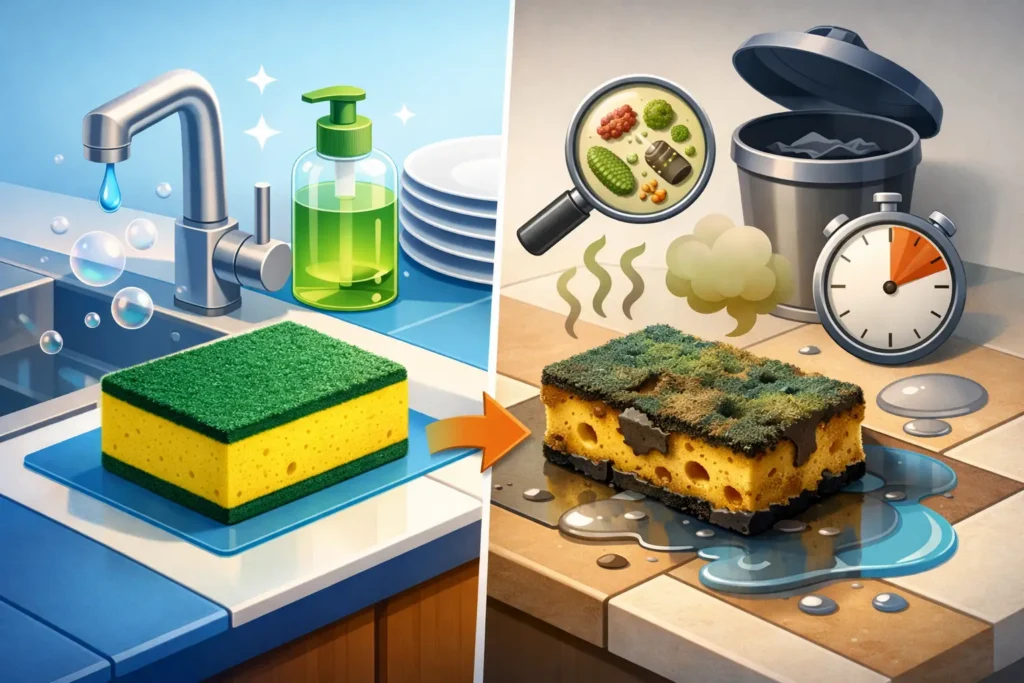
A sponge can look harmless on the edge of the sink while quietly making every dishwashing job harder. If you have searched for “mutfak süngeri ne zaman değiştirilir,” the practical answer is simple: replace it when odor, wear, or trapped food make it less hygienic and less effective. A fresh sponge is a small change that helps keep everyday kitchen cleanup quicker, cleaner, and more satisfying.
Mutfak Süngeri Ne Zaman Değiştirilir? Watch for These Signs
There is no single replacement date that works for every household. A sponge used several times a day on pots, pans, cutting boards, and countertops wears out faster than one used lightly for glasses and plates. Still, a few clear signals mean it is time to stop trying to save it and start with a new one.
1. It has a persistent unpleasant odor
A sour, musty, or stale smell is the most obvious sign. Rinsing the sponge may briefly reduce the odor, but a smell that returns after washing usually means residue and microorganisms have settled deep in the material. Dish soap alone cannot always restore a sponge that has reached this point.
Do not wait for the odor to become strong. If the sponge smells unpleasant after it has been thoroughly rinsed and allowed to dry, replace it. Your clean dishes should smell neutral and fresh, not like yesterday’s leftovers.
2. Food particles stay trapped inside
A good kitchen sponge should rinse clean easily. When crumbs, grease, coffee grounds, or bits of food remain caught in its pores, the sponge is no longer doing its job efficiently. Those trapped particles can also create odor and leave residue behind as you clean.
This is especially common after washing greasy cookware or dishes with dried-on food. Use a dedicated scrubber for heavy-duty messes when possible, then keep your dishwashing sponge for routine cleaning. Separating those tasks can help your sponge stay cleaner for longer.
3. The sponge is flattened, torn, or crumbling
A sponge does not need to be visibly dirty to be ready for replacement. Once the foam is permanently compressed, the scrub surface is peeling, or the edges start breaking apart, it loses cleaning power. It may require more pressure to remove food residue, which can make washing up feel like a bigger chore than it needs to be.
Wear also matters for surface care. A damaged abrasive layer can clean unevenly and may be less suitable for delicate cookware, glass, or coated surfaces. Replacing a worn sponge helps you get more consistent results with less effort.
4. It feels slimy after rinsing
A sponge should feel clean after a thorough rinse. If it feels slick or slimy even after you wash out the soap and debris, do not keep using it. That texture is a clear sign that the sponge needs to go.
5. It no longer creates a useful lather
When a sponge has absorbed too much grease or detergent buildup, it may stop producing a satisfying lather. You may find yourself adding more dish soap without getting cleaner dishes. Before discarding it, rinse it carefully under warm running water and squeeze it several times. If its performance does not improve, replacement is the smarter choice.
6. You used it on a high-risk kitchen mess
Some situations call for immediate replacement, even if the sponge still looks new. If it has been used to clean raw meat juices, spoiled food, a dirty drain area, or a kitchen spill that could spread contaminants, do not return it to regular dishwashing duty.
You can reserve a separate, clearly identifiable scrubber or cloth for those jobs. Keeping tools assigned to specific cleaning tasks is an easy habit that supports better hygiene without adding extra work to your routine.
7. It has passed its normal use window
For a busy household that uses a sponge daily, replacing it about once a week is a reliable rule of thumb. If you cook frequently, wash pots and pans by hand, or share the kitchen with a large family, you may need a fresh sponge sooner.
For lighter use, a sponge may last up to two weeks when it is rinsed well, squeezed dry, and stored where air can circulate. The calendar is helpful, but the condition of the sponge should always make the final decision. A sponge that smells, tears, or stays dirty should be replaced early.
Why Replacing a Kitchen Sponge Matters
A kitchen sponge is designed to lift food residue, grease, and soap from surfaces. That is exactly why it needs regular attention. Its absorbent structure can hold moisture and tiny particles, particularly when it is left wet at the bottom of the sink or tucked into a closed container.
Replacing it on time is not about chasing perfection. It is about making a simple cleaning tool work the way it should. A fresh sponge absorbs well, rinses quickly, creates an effective lather, and helps you clean dishes without spreading old residue around the kitchen.
There is also a value benefit. Trying to stretch one worn-out sponge for too long often means using more dish soap, scrubbing harder, and spending more time on everyday tasks. A dependable replacement routine keeps cleanup efficient and helps protect the surfaces you use most.
How to Help Your Sponge Last Between Replacements
Good care can improve the useful life of a sponge, but it should never be used as a reason to keep a damaged or smelly one. The goal is not to make one sponge last forever. The goal is to keep it clean and effective throughout its normal use period.
After each use, rinse the sponge thoroughly under running water until food residue and excess soap are gone. Squeeze out as much water as possible, then place it in a holder or open area where air can reach both sides. A sponge left in standing water stays damp longer and is more likely to develop odor.
For best everyday care, follow these simple habits:
- Keep the sponge out of the sink basin when you are finished washing dishes.
- Use separate tools for dishes, countertops, and heavy-duty messes whenever possible.
- Clean the sink regularly so a fresh sponge is not placed back onto a dirty surface.
- Replace the sponge immediately after cleaning up raw meat juices or spoiled food.
Sanitizing methods can be useful for a sponge that is still in good condition, but they are not a reset button. Heat, disinfecting products, or dishwasher cleaning may reduce odor temporarily, yet none of these methods can repair flattened foam, torn scrub layers, or deep-set grease. If you are questioning whether it is time for a new one, it usually is.
Choose the Right Sponge for the Job
The best replacement routine also depends on the sponge you choose. For everyday dishwashing, look for a sponge with an absorbent foam side and a durable scrub side that can handle normal food residue without being overly harsh. For nonstick pans, glassware, or delicate surfaces, use a non-scratch option and follow the cookware maker’s care instructions.
Heavy-duty pots, grills, and baked-on messes may need a dedicated scouring pad or stronger scrubber instead of your regular dish sponge. This keeps your daily sponge from wearing down too quickly and gives you better cleaning control across different surfaces. A well-chosen PowerMax scrub sponge can make that division of tasks simple, comfortable, and effective.
Color-coding is another practical option for households that want an easy visual system. For example, one color can be reserved for dishes and another for countertops. The key is consistency: once a sponge has been assigned to a tougher or less hygienic task, do not bring it back to plates, cups, and utensils.
Make Fresh Sponges Part of Your Kitchen Routine
A new kitchen sponge is one of the easiest ways to refresh the feel of your sink area. Keep a small supply on hand so you never have to debate whether an old sponge can survive one more day. Set a weekly reminder if that suits your household, or add sponges to your regular shopping list.
The right moment to replace a sponge is before it turns a simple dishwashing task into a frustrating one. When it rinses clean, dries properly, and matches the job at hand, your kitchen routine stays faster, fresher, and ready for whatever the next meal leaves behind.