
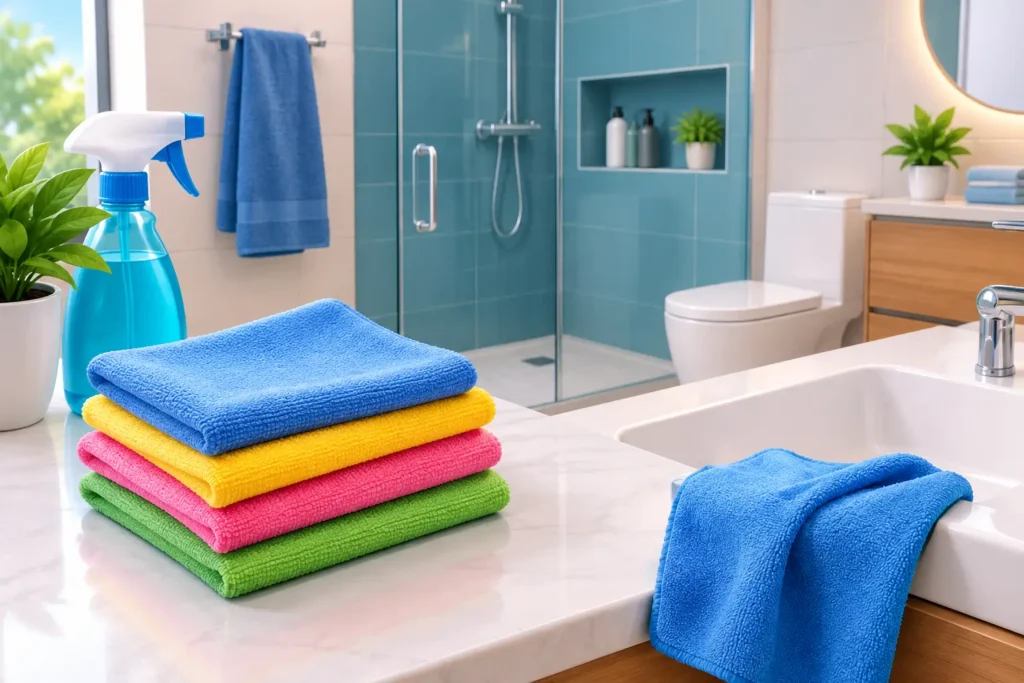
A bathroom can look clean while still holding soap film, water spots, toothpaste residue, and germs in the places hands touch most. If you have searched for “banyo temizliğinde hangi bez kullanılmalı,” the practical answer is this: use microfiber for most surfaces, reserve a separate cloth for the toilet area, and keep a stronger scrubbing tool only for stubborn buildup.
The right cloth does more than make cleaning faster. It helps protect shiny fixtures, prevents residue from being spread around, and gives every bathroom surface the care it needs. One all-purpose rag may seem convenient, but using the same cloth on the mirror, sink, shower, and toilet can create extra work and compromise hygiene.
Banyo Temizliğinde Hangi Bez Kullanılmalı?
For everyday bathroom cleaning, a quality microfiber cloth is the most dependable choice. Its fine fibers lift dust, hair, moisture, and everyday grime instead of simply pushing them across the surface. It works especially well on sinks, faucets, countertops, mirrors, shower doors, tile, and bathroom cabinets.
Microfiber is absorbent, reusable, and gentle when used correctly. A slightly damp cloth can pick up residue from the vanity and faucet, while a dry microfiber cloth is ideal for buffing mirrors and chrome to a streak-free shine. For homes that want visible results without reaching for a new disposable wipe every time, it is a smart everyday essential.
That said, microfiber is not the only cloth a bathroom needs. Areas with heavier soap scum, hard-water marks, or dried product residue may need more scrubbing power. The best setup uses different cleaning tools for different jobs, rather than expecting one cloth to handle everything.
Match the Cloth to the Bathroom Surface
Microfiber cloths for mirrors, fixtures, and daily touch-ups
Use a clean microfiber cloth for the mirror, faucet, sink, countertop, light switches, cabinet handles, and outside surfaces of the toilet tank. These areas benefit from a soft material that traps particles and leaves fewer lint fibers behind.
For mirrors and glass shower doors, avoid soaking the cloth. Too much water can leave streaks or create a hazy finish. Lightly mist the surface or use a barely damp microfiber cloth, then follow with a dry section of the cloth for a polished result.
Chrome faucets and stainless fixtures also respond well to microfiber. Wipe in one direction, then dry promptly. This simple step helps reduce water spots and keeps the bathroom looking fresh between deep cleans.
Nonwoven cloths for quick, hygienic cleaning
Nonwoven cleaning cloths are a convenient option for everyday wipe-downs and messier tasks. They are lightweight, flexible, and useful around the sink, vanity, and shower. Depending on the material and product design, they may be washable and reusable or intended for shorter-term use.
They are particularly helpful when you need a dedicated cloth for applying cleaner, wiping away toothpaste splatter, or cleaning around product bottles where residue tends to collect. A nonwoven cloth can also be a practical choice for guests’ bathrooms or quick weekly maintenance because it is easy to grab, rinse, and replace.
Choose a soft, non-abrasive option for glossy counters, coated fixtures, and delicate surfaces. If a cloth feels rough in your hand, test it in an inconspicuous area before using it on a high-shine finish.
Scrub sponges and pads for soap scum
For the bathtub, shower walls, tile grout, and soap dishes, a soft scrub sponge can make a noticeable difference. These areas often collect body oils, soap residue, and mineral deposits that a smooth cloth alone may not remove.
The key is to choose the right level of abrasion. A non-scratch scrub sponge is usually suitable for many bathroom surfaces, but always check the manufacturer’s care guidance for acrylic tubs, natural stone, polished metal, and specialty coatings. Aggressive scouring pads can scratch these materials and leave damage that is difficult to reverse.
Let your bathroom cleaner sit briefly according to its directions before scrubbing. This gives the formula time to loosen buildup, so you can clean with less pressure. Gentle, consistent scrubbing is safer and often more effective than pressing hard with a harsh pad.
A separate cloth for the toilet area
The cloth used on or around the toilet should never be used on the sink, countertop, mirror, or shower. This is the simplest rule for better bathroom hygiene. Keep a dedicated microfiber or nonwoven cloth specifically for the toilet exterior, seat, lid, base, and nearby floor.
Color coding makes this easy. For example, use one color for mirrors and fixtures, another for the shower and tub, and a clearly different color for the toilet zone. You do not need an elaborate system. You only need a routine that prevents cross-contamination when cleaning moves from one area to another.
For the inside of the toilet bowl, use a toilet brush rather than any cloth. A brush is designed to reach under the rim and clean the bowl effectively, while keeping that task separate from the rest of your bathroom tools.
What to Avoid Using in the Bathroom
Old bath towels, worn T-shirts, and random household rags can seem like budget-friendly choices, but they are often less effective than purpose-made cleaning cloths. They may leave lint on mirrors, hold too much moisture, or spread residue rather than lifting it away. Once fabric becomes stiff, heavily stained, or difficult to rinse clean, it is time to replace it.
Avoid using the abrasive side of a kitchen sponge on glossy fixtures, glass, acrylic, or polished stone unless it is specifically labeled safe for that surface. The same caution applies to steel wool and harsh scouring pads. They may remove buildup quickly, but the trade-off can be permanent scratches and dullness.
It is also best not to use one wet cloth for the entire bathroom. As the cloth becomes loaded with cleaner, hair, dirt, and moisture, its cleaning performance drops. Switch to a fresh side or a second cloth when moving from the shower to the vanity, and always keep the toilet cloth separate.
How to Keep Bathroom Cloths Clean and Effective
A good cloth only stays effective when it is cared for properly. Rinse reusable cloths thoroughly after each use to remove cleaner and visible debris. Do not leave them crumpled in the bottom of a bucket or tucked into a damp corner, where odors and bacteria can develop.
Microfiber cloths should be washed regularly, ideally after bathroom cleaning sessions. Use a mild detergent and skip fabric softener, which can coat the fibers and reduce their ability to absorb moisture and capture dirt. Dry them fully before storing them in a clean, dry place.
If your household has multiple bathrooms, keep a small set of designated cloths in each one. This saves time, helps maintain your color-coding system, and means you always have the right tool nearby when a quick cleanup is needed.
A Simple Cloth Setup for Better Bathroom Results
You do not need a crowded cleaning cabinet to achieve a cleaner bathroom. A small, reliable set is enough: soft microfiber cloths for mirrors and fixtures, nonwoven cloths for general wipe-downs, a non-scratch scrub sponge for the tub and shower, and a dedicated toilet cloth and brush.
PowerMax cleaning tools are designed around this kind of practical, surface-aware routine: the right material for the right job, with dependable performance that makes regular cleaning feel easier. When your cloths are clean, separated by task, and chosen for the surface in front of you, even a fast bathroom refresh can leave a noticeably brighter result.
The next time you clean, start with the mirror and vanity, move to the shower, and finish at the toilet with its dedicated tools. That simple order keeps clean areas cleaner and turns a routine chore into a more satisfying result.