
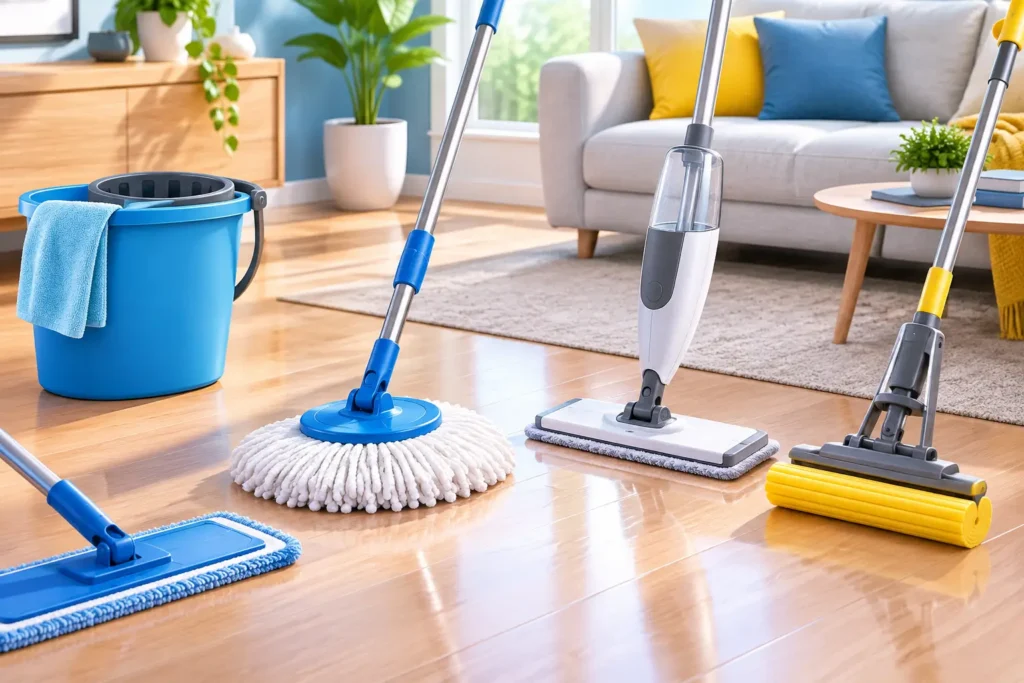
A sticky kitchen spill, muddy footprints by the door, and bathroom splashes all ask for the same thing: a clean floor without turning a quick task into an afternoon project. The right floor mops remove everyday messes efficiently while helping protect the surfaces that make your home look its best.
A mop is not a one-size-fits-all cleaning tool. Hardwood needs a light touch, tile can handle more moisture, and textured vinyl may need extra scrubbing power. Choosing well means looking beyond the handle and understanding how the mop head, water control, and material work together.
Choose Floor Mops for Your Surface
Your flooring should lead the decision. Using too much water on the wrong surface can leave streaks, dull finishes, or cause damage over time. A mop that matches the floor helps deliver a fresher result with less effort.
Hardwood and laminate floors
For sealed hardwood and laminate, a flat microfiber mop is often the smart everyday choice. Its low-profile head slides under furniture and collects fine dust, hair, and light dirt without scratching. Use it slightly damp, not soaking wet. Excess water can work into seams and edges, especially on laminate, where it may cause swelling or lifting.
Microfiber is especially useful here because its fine fibers pick up small particles rather than pushing them across the floor. For homes with pets, children, or high-traffic entryways, a washable microfiber pad keeps routine cleaning practical and surface-safe.
Tile, stone, and vinyl floors
Ceramic tile, porcelain, vinyl, and many sealed stone floors benefit from a mop with strong absorbency and enough texture to lift dried-on grime. A string mop or a microfiber mop with a thicker pad can handle larger wet areas well. If grout lines tend to collect dirt, use a brush or scrubbing tool first, then mop away loosened residue.
Natural stone deserves extra care. Check that the stone is properly sealed and choose a cleaner intended for that surface. Strong acidic products can damage finishes on marble, limestone, and other sensitive materials, no matter how good the mop may be.
Busy kitchens and bathrooms
These rooms need a mop that can deal with splashes, grease, soap residue, and frequent cleaning. A wringer mop helps control moisture, while a washable pad offers a hygienic option for quick touch-ups. Keep a separate mop head or pad for bathroom floors whenever possible. It is a simple habit that helps prevent bathroom soil from traveling into kitchen and living areas.
What Makes a Mop Work Better?
A good mop should feel easy to control, not heavy, awkward, or difficult to rinse. Performance comes from a few practical details that are worth checking before you buy.
The mop head matters first. Microfiber heads are excellent for capturing dust and everyday dirt, and they work well for damp mopping. Cotton string heads absorb plenty of liquid, making them useful for larger spills and durable hard floors. Sponge mops can be convenient for smooth floors and quick cleanups, although they may not reach uneven textures or grout as effectively.
A sturdy handle makes a difference during weekly cleaning. Look for a comfortable grip and a design that reaches under chairs, cabinets, and low furniture without forcing you to bend or strain. A mop should help you clean more efficiently, not make a simple task harder on your back and wrists.
Water control is another major factor. A built-in wringer, bucket system, or easily removable pad helps prevent oversaturating the floor. This is particularly valuable on wood and laminate, where a damp mop gives better results than a wet one.
Use Your Mop in the Right Order
Mopping works best after loose debris is removed. If you start on a dusty or sandy floor, the mop can drag particles around and leave residue behind. Sweep, vacuum, or use a dry microfiber pad before adding moisture.
Prepare your cleaning solution according to the product directions. More cleaner does not always mean a cleaner floor. Too much solution may leave a film that makes floors look cloudy or feel sticky underfoot. For many routine jobs, warm water and the right amount of floor cleaner are enough.
Start at the farthest corner of the room and work toward the exit. This simple approach prevents you from stepping across the area you have just cleaned. Move the mop in overlapping passes instead of random circles, rinsing or changing the pad whenever it becomes visibly dirty. A clean pad lifts dirt. A saturated, dirty one can spread it back across the floor.
For stubborn spots, let the cleaning solution sit briefly before wiping. Do not scrub aggressively on delicate finishes. Gentle repeated passes with a suitable pad are safer than using excessive force.
How Often Should You Mop?
The best schedule depends on how your household uses each room. Entryways, kitchens, and bathrooms typically need attention more often than bedrooms or formal living spaces. If there are pets, young children, or outdoor shoes in the home, quick cleaning between full mopping sessions can keep dirt from building up.
A practical routine may include dry cleaning high-traffic floors several times a week and damp mopping once a week. Kitchen and bathroom floors may need spot cleaning daily and a more thorough mop whenever spills, stains, or visible residue appear. The goal is not to mop on a rigid schedule. It is to keep dirt from becoming harder to remove.
Keep Mop Heads Clean and Ready
A mop cannot leave floors truly fresh if its head is holding old dirt, grease, or odor. After each use, rinse the mop head thoroughly until the water runs clear. Wring it out well and allow it to dry completely in an open, well-ventilated place. Never leave a damp mop crumpled in a bucket or tucked into a closed cabinet.
Washable microfiber pads should be cleaned regularly according to their care instructions. Avoid fabric softener, which can coat fibers and reduce their ability to pick up dust and moisture. If a mop head smells unpleasant after washing, feels worn, or no longer cleans effectively, it is time to replace it.
Watch for these signs that your mop needs attention:
- Frayed fibers, flattened pads, or a torn sponge surface
- Lingering odors after proper washing and drying
- Streaks or residue left behind on freshly cleaned floors
- A handle, connector, or wringer that no longer works securely
Replacing a worn mop head is a small upgrade that can noticeably improve cleaning results. Durable cleaning tools are designed to support your routine, but every material has a useful lifespan.
Small Habits That Keep Floors Cleaner Longer
The easiest floor to mop is one that does not collect unnecessary dirt in the first place. Place mats at exterior doors, wipe up spills promptly, and encourage family members to remove shoes when practical. These everyday choices reduce grit that can scratch hard surfaces and cut down on deep-cleaning time.
Use the right tool for the job, too. A broom or dry mop is better for crumbs and loose debris, while a damp mop is better for dried splashes and tracked-in dirt. For heavy messes, a scrubber can loosen buildup before mopping removes it. PowerMax cleaning tools are designed around this kind of practical teamwork, helping each step feel simpler and more satisfying.
A clean floor changes the feel of a room right away. Keep a dependable mop within easy reach, care for its head properly, and match your method to the surface. When the tool fits the task, fresh-looking floors become part of your regular routine, not a weekend challenge.