
A streaky mirror, lint-covered countertop, or scratched pan usually is not a cleaning-product problem. It is often a cloth problem. This cleaning cloth materials guide makes it easier to match the right material to the job, so everyday cleaning feels faster, safer, and far more satisfying.
The best cleaning cloth is not one cloth that does everything. Microfiber excels at trapping fine dust and polishing smooth surfaces. Cotton is absorbent and dependable for spills. Nonwoven cloths offer convenient, hygienic performance for daily wipe-downs. Once you know what each material does best, you can build a simple, hardworking cleaning routine for every room.
Cleaning Cloth Materials Guide: Start With the Surface
Before choosing a cloth, consider what you are cleaning and what kind of mess is on it. A dry, dusty TV stand needs a different touch than a greasy stovetop or wet bathroom sink. The right material should lift soil effectively without leaving lint, spreading residue, or damaging the finish.
For delicate surfaces such as glass, mirrors, polished fixtures, coated countertops, and stainless steel, choose a soft, non-abrasive cloth. For spills and general drying, absorbency matters most. For high-use areas like kitchen counters and bathroom sinks, convenience and easy rinsing can make a real difference.
A good rule is simple: use gentle cloths for smooth or delicate finishes, absorbent cloths for liquid messes, and stronger scrubbing tools only when stuck-on grime calls for them.
Microfiber Cloths for Dust, Shine, and Detail Cleaning
Microfiber is one of the most versatile materials in a home cleaning cabinet. Made from extremely fine synthetic fibers, it creates a large surface area that picks up dust, hair, crumbs, and oily residue more effectively than many traditional fabrics. It can often clean well with water alone, especially on lightly soiled surfaces.
Best uses for microfiber
Microfiber cloths are an excellent choice for glass, mirrors, stainless steel, electronics, finished wood, sealed counters, and everyday dusting. A dry microfiber cloth attracts fine particles, while a lightly damp one helps lift fingerprints and smudges. For a polished, streak-free finish, use a separate dry cloth for the final buff.
Microfiber is also useful for bathroom fixtures. It reaches around faucets and handles easily, helping leave chrome and other smooth finishes bright without harsh scrubbing.
The trade-off
Microfiber performs best when it is kept clean. Fabric softener and dryer sheets can coat the fibers, reducing their ability to absorb and grab dirt. Wash microfiber separately or with other lint-free items, and avoid high heat when drying. It is also smart to reserve separate cloths for the kitchen, bathroom, and general dusting to avoid transferring grease or bacteria between spaces.
Cotton Cloths for Absorbency and Everyday Spills
Cotton has earned its place in household cleaning because it is familiar, soft, and highly absorbent. It is especially useful when you need to soak up water quickly, dry dishes, wipe a wet counter, or handle a larger spill.
A cotton cleaning cloth can feel substantial in your hand and is easy to rinse during use. For many households, it is a practical choice for routine tasks that do not require a lint-free finish.
Where cotton works best
Use cotton for drying dishes, blotting spills, wiping tables, cleaning inside cabinets, and general household wipe-downs. It can also work well with cleaning sprays on durable surfaces such as tile, laminate, and sealed countertops.
What to watch for
Cotton may leave lint behind on mirrors, windows, and glossy black appliances. It can also hold onto moisture longer than microfiber, which means it needs to be rinsed thoroughly and dried fully after use. A damp cloth left in a pile can develop unpleasant odors and become less hygienic.
For the best results, keep cotton cloths for absorbent tasks and switch to microfiber when a clear, polished finish matters.
Nonwoven Cloths for Quick, Hygienic Wipe-Downs
Nonwoven cleaning cloths are made by bonding fibers together rather than weaving or knitting them like traditional fabric. This construction gives them a light, flexible feel and makes them a convenient option for frequent household cleaning.
Many nonwoven cloths are designed to rinse easily, dry quickly, and handle daily jobs without feeling bulky. They are particularly useful for kitchen counters, dining tables, sinks, cabinet fronts, and bathroom surfaces where quick, consistent cleaning is the goal.
Why nonwoven cloths fit busy routines
When you are wiping up a sauce splash, cleaning the sink after brushing teeth, or refreshing a countertop before guests arrive, a nonwoven cloth offers easy control and practical absorbency. It is often less likely to feel heavy when wet, and it can be a useful middle ground between disposable paper towels and thicker reusable cloths.
The key is to replace the cloth when it becomes worn, stained, or difficult to rinse clean. Reusable does not mean forever. Timely replacement supports better hygiene and better cleaning results.
Cellulose and Sponge Cloths for Wet Jobs
Cellulose-based cloths and sponge cloths are made for moisture-heavy work. They absorb a generous amount of liquid and can be especially helpful around sinks, stovetops, and bathroom counters. Their sponge-like texture makes them effective for wiping up spills before they spread.
Use these cloths for rinsing dishes, cleaning wet worktops, soaking up drips around a faucet, and wiping down durable kitchen surfaces. They are a practical choice when a thin microfiber cloth does not provide enough absorbency.
Because these cloths stay wet during use, rinse them well after cleaning and leave them open to air-dry. Replace them promptly if they develop an odor or begin to break down. Hygiene is part of performance.
Choosing the Right Cloth for Kitchen Cleaning
Kitchens bring together grease, food residue, moisture, and polished surfaces, so one material rarely covers every task. A microfiber cloth is ideal for appliance fronts, stainless steel, and smooth counters. A nonwoven cloth works well for fast daily wipe-downs. A cellulose or sponge cloth is better for wet spills and sink-area cleanup.
For baked-on food or greasy cookware, pair the cloth with the right scouring sponge or pad rather than pressing harder with a soft cloth. Using the correct tool protects surfaces and saves time. PowerMax cleaning tools are designed around this kind of practical match: a gentler material for surface care and a more durable scrubber when the job truly needs extra power.
Choosing the Right Cloth for Bathroom Cleaning
Bathrooms need a balance of softness, absorbency, and hygiene. Microfiber is a strong choice for mirrors, faucets, shower doors, and polished fixtures because it helps remove water spots and toothpaste splashes without leaving lint. Nonwoven cloths are convenient for sinks, counters, toilet exteriors, and quick daily refreshes.
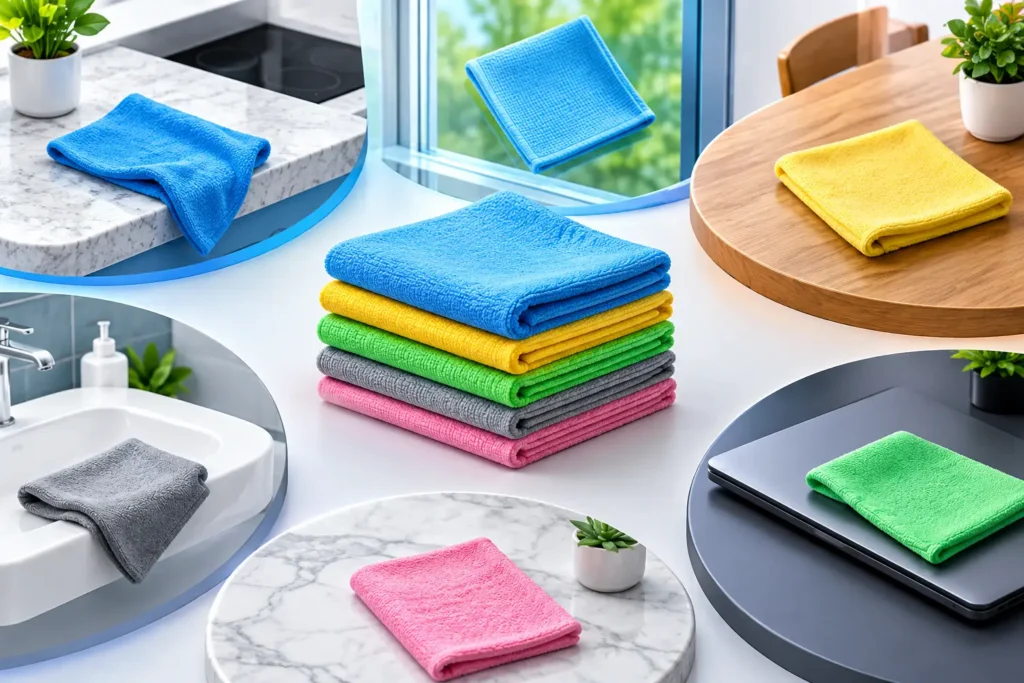
Keep bathroom cloths separate from kitchen cloths, even if they look identical. Color-coding makes this easy. For example, use one color for kitchen surfaces, another for bathrooms, and a third for dusting. This small habit helps prevent cross-contamination and makes your routine easier to organize.
How to Care for Cleaning Cloths So They Last
The material you choose matters, but care determines how well it keeps working. Rinse cloths after each use until the water runs clear, then hang them open to dry. Do not leave damp cloths bunched in the sink, on a counter, or at the bottom of a cleaning caddy.
Wash reusable cloths regularly according to their care instructions. For microfiber, skip fabric softener. For cotton and nonwoven cloths, check for stains, lingering odor, or thinning material. If a cloth no longer rinses clean or leaves residue behind, it is time to replace it.
It also helps to keep more than one cloth on hand for each major area of the home. That way, you always have a clean option ready instead of reusing a cloth that has already handled another mess.
The right cloth turns small cleaning jobs into quick wins. Choose the material that fits the surface, keep it clean between uses, and let every wipe leave your home looking fresher than before.