
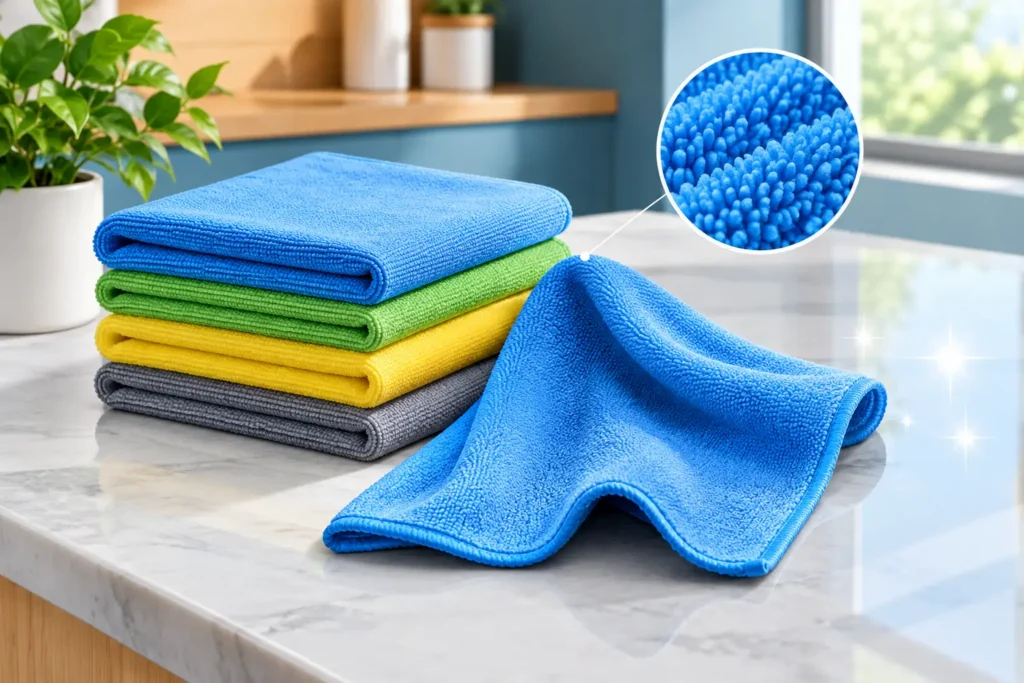
A streaky mirror, a dusty countertop, and a greasy stovetop do not need three different cleaning tools. The right microfiber cloths can handle all three with less effort, less product, and a noticeably cleaner finish. Their fine fibers lift dust, absorb spills, and hold onto grime instead of simply pushing it across the surface.
For busy households, that versatility matters. A good cloth helps you move from quick daily touch-ups to deeper weekly cleaning without reaching for disposable wipes every time. The key is choosing the right type, using it correctly, and giving it the care that keeps it performing wash after wash.
Why microfiber cloths clean so effectively
Microfiber is made from extremely fine synthetic fibers, commonly polyester and polyamide. Those fibers are split into tiny strands that create more surface area than a traditional cotton cloth. That structure helps the cloth grab dust, crumbs, oils, and moisture with impressive control.
On dry surfaces, microfiber creates a light static charge that attracts loose dust and hair. Used slightly damp, it loosens stuck-on dirt and absorbs water without leaving a heavy, soaked trail behind. That is why one cloth can work well on kitchen counters, bathroom fixtures, glass, stainless steel, and everyday furniture dusting.
The benefit is not that microfiber replaces every cleaning product. Grease, soap scum, and disinfecting needs may still call for the right cleaner. But microfiber helps that cleaner work more efficiently because it keeps dirt contained in the cloth rather than spreading it around.
Choose the right cloth for the job
Not all microfiber cloths feel or perform the same. Thickness, weave, pile height, and edge construction affect where each cloth shines. Choosing by task protects surfaces and makes cleaning faster.
Plush cloths for dusting and delicate surfaces
Soft, thicker microfiber cloths are a smart choice for dusting furniture, wiping electronics, polishing finished wood, and cleaning delicate surfaces. Their fluffy pile traps particles gently, helping reduce the risk of dragging grit across a surface. Use them dry for dusting or barely damp for fingerprints and light marks.
For screens, always turn off the device first and use a clean, dry or lightly damp cloth. Do not spray cleaner directly onto a screen. Excess moisture can run into openings and create more trouble than the smudge you were trying to remove.
Flat-weave cloths for glass and shine
A smooth, flat-weave microfiber cloth is ideal for mirrors, windows, chrome, and stainless steel. It leaves less lint behind and delivers the polished finish people expect on reflective surfaces. Start with a clean damp cloth to remove residue, then follow with a dry cloth to buff away remaining moisture.
If glass still looks streaky, the issue is often too much cleaner, not the cloth. Spray lightly, work in small sections, and switch to a fresh side of the cloth before it becomes saturated.
Textured cloths for kitchen and bathroom buildup
Textured microfiber cloths provide extra grip for sinks, stovetops, tile, tubs, and shower walls. They are useful when food residue, toothpaste splashes, or light soap scum needs more than a gentle wipe. For stubborn buildup, pair the cloth with an appropriate surface-safe cleaner and allow the cleaner a moment to work before wiping.
A microfiber cloth should not be used as a substitute for a dedicated scrubber on burned-on food or heavy mineral deposits. For those tougher jobs, use a suitable scouring pad or sponge first, then finish with microfiber for a clean, polished result.
How to use microfiber cloths without spreading dirt
The simplest habit makes a big difference: fold the cloth into quarters. This gives you up to eight usable cleaning sides. Wipe with one section, then refold to a clean section as it picks up soil. You get a more hygienic clean and avoid transferring kitchen grease back onto a freshly wiped counter.
Use dry microfiber for dust, loose debris, and final polishing. Use it damp, not dripping wet, for routine cleaning. A damp cloth has enough moisture to lift dirt while still drying quickly and leaving less residue behind. If you use a cleaning spray, apply only what the surface needs.
Work from cleaner areas toward dirtier ones. In the kitchen, start with cabinet fronts and counters before moving to the sink and stovetop. In the bathroom, clean the mirror and vanity before tackling the toilet exterior and floor edges. This simple order helps keep germs and grime where they belong: out of the areas you have already cleaned.
Color coding is also an easy way to prevent cross-contamination, especially in homes with several people sharing cleaning duties. Assign cloth colors consistently:
- Blue for glass, mirrors, and dusting
- Green for kitchen counters and appliances
- Yellow for bathroom sinks and fixtures
- Red for toilet-area cleaning only
The colors themselves do not clean better. The system does. When every cloth has a clear purpose, it is easier to keep food-prep areas separate from bathroom cleaning tasks.
Surface safety: where care matters most
Microfiber is gentle, but any cloth can scratch when it holds grit. Before wiping a glossy countertop, glass cooktop, painted surface, or stainless steel appliance, shake out the cloth and check that it is free of crumbs or hardened debris. A clean cloth is the first rule of surface-safe cleaning.
For stainless steel, wipe in the direction of the grain rather than against it. This gives a more even finish and helps avoid visible wipe marks. For natural stone, use a cloth with water or a stone-safe cleaner. Acidic homemade mixtures can damage some stone finishes, even when the cloth itself is perfectly safe.
On wood, use minimal moisture. A lightly damp cloth is usually enough for everyday dust and fingerprints, but standing water can affect finishes and seams. When in doubt, test your cleaner and method in a hidden spot first.
Washing microfiber cloths the right way
Microfiber delivers its best results when its fibers stay open and clean. Fabric softener, dryer sheets, heavy detergent residue, and high heat can coat or damage the fibers, reducing absorbency and pickup power. A cloth that suddenly smears instead of cleans often needs a better wash routine.
Wash microfiber separately from cotton towels, fleece, and other lint-producing fabrics. Cotton lint can lodge in the fine fibers and leave streaks on glass or polished surfaces. Use warm water, a small amount of liquid detergent, and an extra rinse if your machine offers one. Avoid bleach unless the product care label specifically allows it.
Air drying is a dependable option. If you use a dryer, choose low heat and skip dryer sheets completely. High heat can melt or stiffen synthetic fibers, while softener leaves a coating that makes the cloth less effective. Once dry, store cloths in a clean drawer or container so they are ready when a spill or cleaning task appears.
A microfiber cloth does not last forever, but quality cloths can handle many washes with proper care. Retire a cloth from delicate cleaning when it becomes rough, heavily stained, loses absorbency, or starts leaving lint. It can still have a useful second life for messy chores like wiping outdoor furniture, cleaning trash cans, or tackling muddy shoes.
Build a simpler cleaning routine
A small, well-organized set of microfiber cloths can reduce clutter in your cleaning cabinet. Keep a few plush cloths for dusting, several flat-weave cloths for glass and polishing, and textured options for kitchen and bathroom cleanup. Add the right mop, scrub sponge, or brush when the job calls for more scrubbing power.
PowerMax cleaning tools are designed around this practical idea: use the tool that fits the task, protect the surface, and get visible results without making routine cleaning complicated. When your cloths are clean, color-coded, and easy to reach, a five-minute refresh feels genuinely manageable.
Keep a fresh microfiber cloth where messes happen most – under the kitchen sink, in the bathroom cabinet, and near your everyday cleaning supplies. That small bit of preparation turns spills, fingerprints, and sudden guests into easy moments instead of another chore waiting for later.