
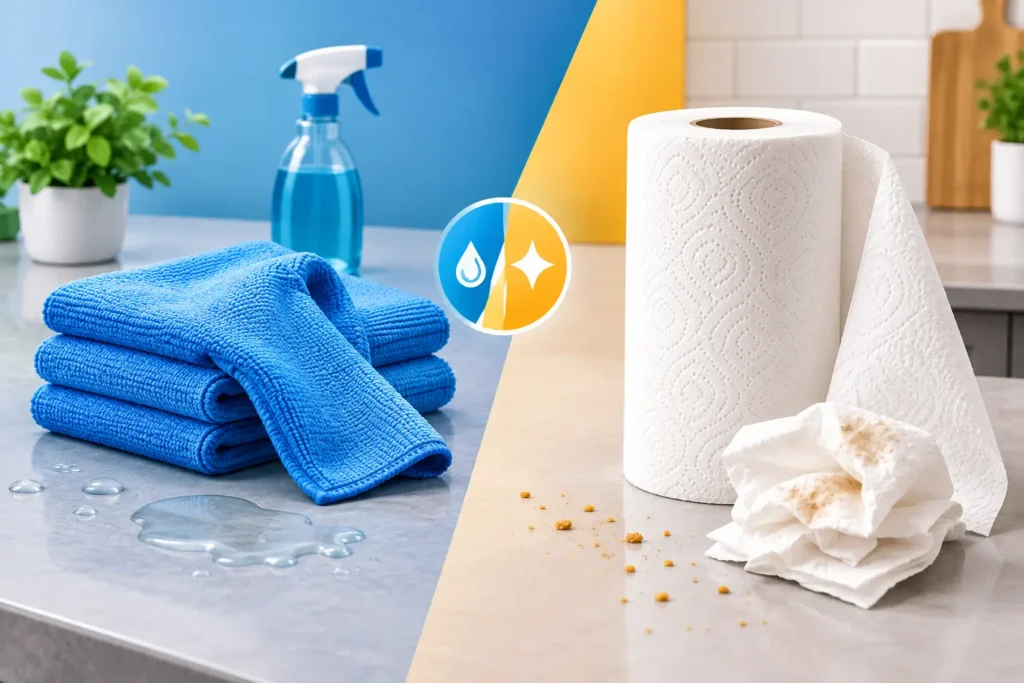
A spilled drink on the counter may look like a paper towel job. A greasy stovetop, wet bathroom vanity, or streaky mirror asks for something more capable. The wiper versus paper towels decision comes down to the mess, the surface, and whether you need a quick one-time pickup or dependable cleaning power.
Paper towels are familiar, convenient, and useful in the right moment. Household wipers bring durability, absorbency, and control to everyday cleaning tasks that need more than a thin disposable sheet. Knowing when to reach for each one helps you clean faster, use less product, and get the finish you want.
Wiper Versus Paper Towels: The Core Difference
Paper towels are disposable sheets designed for fast, light cleanup. They are easy to grab for a small spill, food residue, or a task where throwing the material away immediately feels most hygienic. Their convenience is their biggest advantage.
Wipers are usually made from stronger nonwoven material, engineered for repeated wiping during a cleaning session. Depending on the style, they can be more absorbent, more tear-resistant, and less likely to leave lint behind. They are designed to hold up when wet, work with cleaning sprays, and cover larger areas without falling apart in your hand.
That difference matters when a mess has grease, moisture, soap residue, or dirt that needs to be lifted rather than simply blotted. A paper towel can handle the first pass, but it may tear, pill, or require several sheets before the surface is truly clean. A quality wiper gives you more control from the first wipe to the final dry finish.
When Paper Towels Make Sense
Paper towels earn their place in a well-stocked home. For small, contained messes, they offer quick cleanup with no washing or storage afterward. Use them to blot fresh spills, catch bacon grease before it goes down the drain, or pick up crumbs and food scraps from a counter.
They are also a practical choice for particularly unpleasant one-time tasks. If you are cleaning up raw meat juices, pet accidents, or a substance you would rather discard immediately, disposable paper can simplify the process. Use a fresh sheet, clean the area with the appropriate product, and throw the used material away.
The trade-off is performance under pressure. A thin paper towel can become saturated quickly. Scrubbing with it often causes tearing, and rough surfaces can shred it. Paper towels may also leave fibers on dark glass, glossy fixtures, mirrors, and electronics. When you need a streak-free or lint-free result, they are not always the best finishing tool.
Why a Wiper Works Harder for Everyday Cleaning
A wiper is made for the jobs that make paper towels disappear too quickly. Its stronger structure lets you wipe, rinse, fold, and keep working during the same cleaning task. That is especially helpful in kitchens and bathrooms, where water, soap, grease, and cleaner often show up together.
For a kitchen counter after meal prep, a wiper can collect crumbs, loosen stuck-on splashes with cleaner, and dry the surface with fewer replacements. On a stovetop, it helps distribute degreaser evenly and lift residue without instantly breaking down. In the bathroom, a durable wiper makes it easier to clean a sink, faucet, vanity, and surrounding surfaces in one efficient routine.
Absorbency is another major benefit. A good household wiper holds more liquid than a single paper towel sheet, which makes it useful for wet countertops, drips around the sink, and everyday spills. Rather than pressing down with a stack of paper, you can use a folded wiper to absorb liquid in a controlled way.
Surface safety also deserves attention. The right non-abrasive wiper can clean finished counters, sealed surfaces, stainless steel, ceramic, and glass when used with a suitable cleaning product. Always follow the care guidance for delicate materials such as natural stone, unsealed wood, or high-gloss finishes. The cleaning tool should support the surface, not create extra work with scratches or haze.
Choose by Task, Not Habit
The best choice is rarely one product for every mess. Start with the job in front of you. For a quick coffee splash or a small amount of cooking grease, paper towels may be the simplest answer. For cleaning an entire countertop, wiping cabinet fronts, drying dishes, or refreshing the bathroom, a wiper is usually the more efficient tool.
Think about how much moisture and friction the task involves. More moisture calls for higher absorbency. More rubbing calls for greater strength. More surface area calls for a material that stays intact and keeps performing. A wiper is especially useful when all three are true.
Hygiene is equally important. Use separate wipers for different zones of the home. Keep one for kitchen counters and dining surfaces, another for bathroom cleaning, and avoid moving a used bathroom wiper into food-preparation areas. After use, rinse reusable styles thoroughly and allow them to dry completely. Replace disposable wipers when they are heavily soiled or no longer effective.
Cost, Waste, and Everyday Value
The lowest price per package does not always mean the lowest cost per cleanup. If a job requires six or seven paper towel sheets because each one tears or becomes soaked, the roll runs out quickly. A stronger wiper can reduce the number of materials needed for larger cleaning tasks.
Paper towels still provide value for quick disposal and small messes. The goal is not to eliminate them from every cabinet. It is to avoid using them by default for jobs better suited to a stronger cleaning material.
For households trying to reduce unnecessary waste, reserve paper towels for tasks where disposability offers a clear hygiene or convenience benefit. Choose durable wipers for routine wiping, drying, and surface cleaning. This simple change can make weekly cleaning feel more organized without making it more complicated.
Get Better Results With the Right Technique
Even the best cleaning tool performs better with a smart approach. Fold a wiper into quarters before you begin. This gives you multiple clean sides and helps you avoid spreading dirt across a surface. Work from cleaner areas toward dirtier ones, especially in kitchens and bathrooms.
Use enough cleaning solution to loosen residue, but do not soak the entire surface. Let the product sit briefly when dealing with dried splashes or grease, then wipe with steady pressure. For a polished final result on glass, faucets, or stainless steel, finish with a clean, dry section of the wiper.
Avoid using the same wiper for every product without rinsing it. Mixing cleaners can leave residue and is not always safe. If you switch from a degreaser to a bathroom cleaner, use a fresh wiper or rinse and dry the one you have. Small habits like these protect surfaces and help your cleaning products perform as intended.
Build a Smarter Cleaning Kit
A practical home cleaning kit does not need to be crowded. It needs the right tool for the right job. Keep paper towels within easy reach for quick disposable cleanup, and add reliable wipers for the regular tasks that require strength and absorbency.
Pair wipers with microfiber cloths for dusting and polishing, sponges for dishwashing, and surface-appropriate scrubbers for stuck-on residue. This gives each tool a clear purpose and helps prevent unnecessary wear on delicate finishes. PowerMax cleaning tools are designed around that simple idea: effective materials for the real messes households handle every day.
The next time you face a wet counter or a greasy stovetop, pause before pulling half a roll from the holder. Choose paper towels when quick disposal is the priority, and choose a wiper when the job deserves lasting strength, better absorbency, and a cleaner final wipe.