
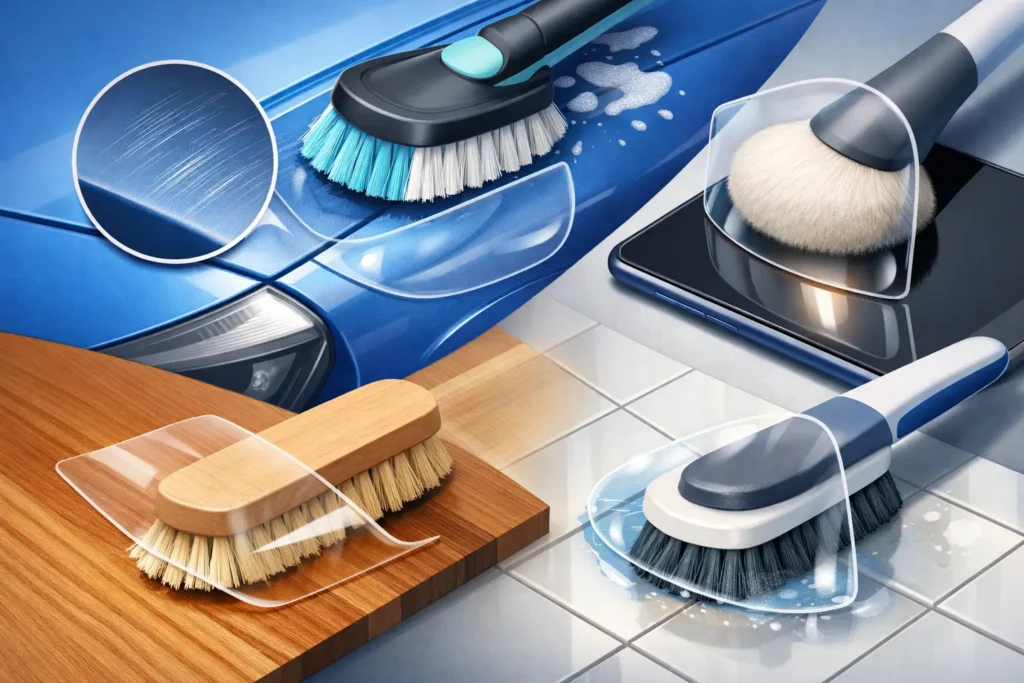
A brush can remove baked-on food from a pan or soap scum from tile in minutes – but the wrong one can leave damage that lasts much longer. So, can brushes scratch? Yes, they can. Whether they do depends on the bristle material, the surface you are cleaning, the cleaner you use, and how much pressure you apply.
The good news is that you do not need to avoid brushes altogether. You simply need to match the tool to the task. A well-chosen brush makes cleaning faster, reaches corners that sponges miss, and helps protect the finish you worked hard to keep looking good.
Can Brushes Scratch Delicate Surfaces?
Any brush has the potential to scratch if its bristles are harder than the surface or if grit gets trapped in the brush. Even a soft brush can become abrasive when it holds sand, dried food, mineral deposits, or a harsh powder cleaner.
Scratches happen when tiny hard particles drag across a finish. This is why a brush that seems gentle on a clean glass stovetop may leave marks if it has picked up crumbs or debris. Pressure matters, too. Scrubbing harder does not always clean better. On coated, polished, or glossy surfaces, it often creates dull spots before it removes the stain.
A brush is most likely to cause damage on nonstick cookware, acrylic, polished metal, glass, high-gloss plastic, painted surfaces, and delicate natural stone. These materials benefit from a softer touch and a tool designed for non-scratch cleaning.
What Makes One Brush Safer Than Another?
The word “brush” covers a wide range of cleaning tools. A stiff grout brush and a soft dish brush should not be used interchangeably. Bristle stiffness is the first factor to consider, but it is not the only one.
Soft nylon bristles are a reliable everyday choice for dishes, sealed countertops, sinks, and many bathroom surfaces. They flex under pressure, helping lift residue without aggressively scraping the finish. Medium bristles provide more cleaning power for textured sinks, shower floors, and durable tile. Stiff synthetic bristles are best reserved for tough, durable areas such as grout lines, outdoor furniture, utility sinks, and certain floor surfaces.
Natural fibers can vary more in stiffness and are not always the gentlest option. Wire brushes are in a separate category altogether. They are effective for rust, grill grates, and heavy-duty projects, but they can quickly damage household finishes. Keep them away from nonstick coatings, glass, chrome, stainless steel appliances, and painted surfaces.
The shape and condition of the brush matter as well. Split, flattened, or bent bristles can catch against a surface instead of gliding over it. A clean, well-rinsed brush with intact bristles is safer and more effective than an old brush that has collected grit.
Match the Brush to the Cleaning Job
For everyday dishwashing, choose soft bristles and let warm water plus dish soap loosen food first. A good dish brush is excellent for plates, glassware, ceramic bowls, and durable pots. For a nonstick pan, however, use a soft sponge or non-scratch pad for stuck-on food, especially if the coating is already worn. A brush may be fine for light washing, but it should never be used with force.
In the bathroom, medium bristles can work beautifully on ceramic tile, porcelain tubs, and sealed shower floors. They give you more control around drains, fixtures, and grout lines than a flat sponge. Avoid stiff brushes on acrylic tubs, fiberglass shower pans, and glossy fixtures. These surfaces can develop fine scratches that make them look cloudy and give soap residue more places to cling.
For kitchens, a brush is useful on stainless steel sinks, textured cutting boards, and durable cooktops, but technique is essential. On stainless steel, scrub in the direction of the grain rather than across it. On glass and ceramic cooktops, remove loose crumbs first, then use a soft cloth or a cleaner made for the surface. A brush is rarely the best first tool for a smooth cooktop.
Floors require the same care. Soft floor brushes can lift dust and debris from sealed wood, vinyl, laminate, and tile when used gently. Stiff broom bristles are better for garages, patios, and rough outdoor surfaces. Never treat a delicate floor like concrete: gritty debris and aggressive brushing can wear down protective coatings over time.
The Cleaner You Pair With a Brush Matters
A surface-safe brush can still become risky when paired with an abrasive cleaner. Scouring powders, gritty pastes, and cleaners containing harsh particles add friction. On a durable porcelain sink, that combination may be appropriate. On a polished faucet, glass shower door, or nonstick skillet, it can leave visible marks.
Start with the least aggressive approach: warm water, a suitable liquid cleaner, and a soft or medium brush. Give the cleaner time to work before you scrub. This simple pause softens grease, food residue, and soap scum, so you can clean with less force.
When a stain remains, increase cleaning time before increasing pressure. Reapply your cleaner, let it sit according to its directions, and work in small circles with a light hand. This protects the surface while still delivering the fresh, clean result you want.
How to Brush Without Leaving Marks
Safe brushing is less about elbow grease and more about a consistent routine. First, rinse the brush before use and inspect it for trapped particles. If you have cleaned a greasy grill pan, muddy shoe tray, or gritty sink with it, do not move straight to glassware or a delicate countertop.
Next, wet the surface and the brush. Lubrication reduces friction and helps bristles move more smoothly. Use light, controlled pressure instead of pressing down with your full hand. Let the bristle tips do the work.
Work from cleaner areas toward dirtier areas, and rinse often. If the brush begins to feel rough or starts dragging, stop and rinse it. That resistance may be dried residue or grit, not a stain that needs more force.
After cleaning, rinse away loosened debris and dry the surface with a clean microfiber cloth where appropriate. Drying is especially helpful on stainless steel, glass, and chrome because it prevents water spots from hiding the true condition of the finish.
When a Sponge or Cloth Is the Better Choice
Brushes are not the answer to every mess. A microfiber cloth is a smarter choice for mirrors, windows, screens, polished fixtures, appliance fronts, and other smooth surfaces where a streak-free finish matters. Its fine fibers capture dust and absorb moisture without the bristle pressure that can create marks.
A non-scratch sponge is often better for nonstick cookware, delicate glassware, and smooth kitchen surfaces. It provides broad, gentle contact and can lift residue without concentrating force in small bristle tips. For heavy-duty jobs, a scouring pad may be useful, but only on surfaces that clearly tolerate abrasion.
This is where a complete cleaning toolkit pays off. PowerMax tools are designed around real household tasks, making it easier to choose a gentle option for delicate finishes and a stronger one for stubborn messes. The right tool should make cleaning feel simpler, not leave you second-guessing the result.
A Quick Test Before You Commit
If you are unsure whether a brush is safe, test it in a hidden area first. Use water and a small amount of your usual cleaner, then make a few light passes. Rinse, dry, and check the surface from different angles under good light.
If you see dullness, fine lines, or a change in shine, stop using that brush on the surface. Choose softer bristles, reduce pressure, or switch to a microfiber cloth or non-scratch sponge. A small test takes less than a minute and can prevent a much bigger cleaning problem.
A brush should leave your home cleaner, not more complicated. Keep it clean, choose the right bristle strength, and give cleaners time to work. With that approach, you can tackle everyday messes confidently while keeping the surfaces throughout your home looking their best.