
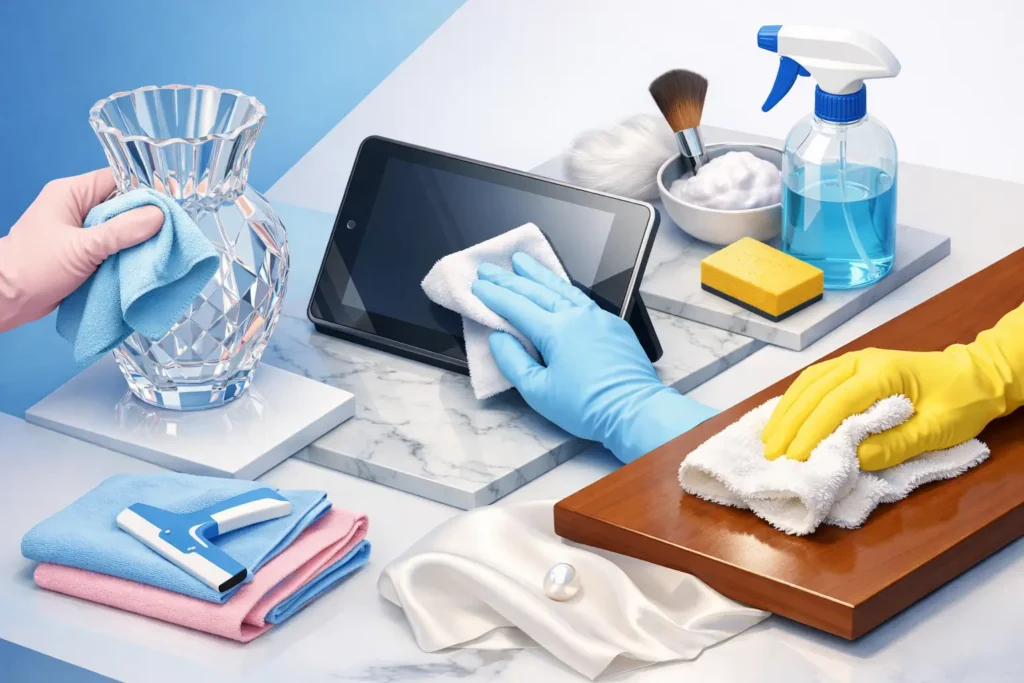
A beautiful countertop, glossy cooktop, or clear shower door can lose its finish in a few rushed minutes. The right guide to cleaning delicate surfaces starts with one simple rule: remove soil without turning your cleaning tool or product into the source of damage. With a gentler approach and the right materials, you can keep high-touch surfaces hygienic, streak-free, and looking their best.
Why Delicate Surfaces Need a Different Approach
Delicate does not always mean fragile. It means the surface has a finish, coating, or structure that can be scratched, dulled, etched, stained, or weakened by the wrong cleaner. Glass can show abrasive marks. Natural stone can react to acids. Stainless steel can become streaky or scratched, while coated cookware and polished fixtures can lose their smooth appearance.
The biggest mistake is treating every mess as a scrubbing job. Most everyday residue responds better to moisture, time, and controlled wiping than force. Let a suitable cleaner or warm water soften dried food, soap residue, or fingerprints first. Then lift the soil away with a clean, soft cloth.
This approach may take an extra minute, but it protects the finish you paid for. It also helps tools last longer because you are not forcing them through heavy buildup on every task.
Guide to Cleaning Delicate Surfaces: Start With the Surface
Before choosing a cloth, sponge, or cleaner, identify what you are cleaning. Similar-looking surfaces can need very different care.
Glass, mirrors, and glossy panels
Glass is hard, but it is not immune to scratches. Dust, sand, and dried particles can drag across it when wiped with a dry or rough material. Start by removing loose debris with a soft microfiber cloth. Then use a glass-safe cleaner or a lightly damp cloth and wipe from top to bottom.
For mirrors and glossy appliance panels, spray the cleaner onto the cloth rather than directly onto the surface. This helps prevent liquid from collecting around edges, seams, and controls. Finish with a dry section of microfiber to remove streaks.
Stainless steel and chrome
Stainless steel is popular because it looks clean and modern, yet it easily reveals water spots, fingerprints, and circular scrub marks. Wipe in the direction of the grain, not across it. A soft microfiber cloth with warm water and mild dish soap is usually enough for routine care.
Rinse away soap residue with a clean damp cloth, then dry immediately. Leaving water to air-dry can create spots, especially in areas with hard water. For chrome fixtures, gentle wiping and thorough drying protect the shine without relying on harsh abrasives.
Natural stone and engineered stone
Marble, limestone, travertine, and some other natural stones are sensitive to acidic products. Vinegar, lemon-based cleaners, and many bathroom descalers can etch the surface, leaving dull or pale marks. Even a small spill can cause damage if it sits too long.
Use a pH-neutral cleaner made for stone, or warm water with a small amount of mild dish soap for everyday wiping. Blot spills instead of rubbing them across the counter. Engineered stone is often more resistant, but it still benefits from nonabrasive tools and prompt cleanup.
Nonstick cookware, ceramic finishes, and coated surfaces
Nonstick pans and coated baking dishes need soft contact. Metal scouring pads, harsh powders, and sharp utensils can damage the coating and shorten the life of the item. Soak stuck-on food in warm, soapy water before washing. A soft dishwashing sponge can then remove residue with less pressure.
If food remains after soaking, repeat the soak rather than escalating immediately to a rougher scrubber. For durable, uncoated cookware, a stronger tool may be appropriate. For coated cookware, patience is the safer choice.
Wood, painted finishes, and laminate
Wood and painted furniture do not respond well to excess moisture. A dripping cloth can leave water marks, swell seams, or damage the finish over time. Use a cloth that is lightly damp, not wet, and dry the surface after cleaning.
Avoid abrasive pads on painted cabinets, laminate tables, and finished wood. Grease near cabinet handles can usually be lifted with mild soapy water and a microfiber cloth. Test any new cleaner on an inconspicuous spot when the finish is old, hand-painted, or unknown.
Choose Tools That Clean Without Scratching
A clean tool is just as important as a surface-safe tool. A soft cloth can become abrasive when it is loaded with grit, dried food, or cleaning residue. Rinse frequently while working, and switch to a fresh cloth when the one in your hand starts to look dirty.
Microfiber cloths are a reliable choice for glass, fixtures, appliances, finished furniture, and everyday countertop care. Their fine fibers pick up dust and moisture efficiently, helping you clean with less product and less repeated wiping. Use separate cloths for kitchen grease, bathroom cleaning, and glass if possible. This reduces the risk of moving oily residue or gritty particles from one room to another.
Soft nonwoven cloths work well for quick wipe-downs and controlled cleaning around detailed surfaces. For dishes and cookware, select a sponge or pad based on the material, not just the size of the mess. A gentle sponge is ideal for nonstick coatings and glassware, while a tougher scouring option belongs on surfaces specifically designed to handle it.
PowerMax cleaning tools make it easier to match the task to the surface, so daily cleaning can feel more controlled, efficient, and satisfying.
Use Cleaner Sparingly and Give It Time to Work
More cleaner does not always create a better result. Too much product can leave a film on glass, stainless steel, and glossy finishes. It can also require extra rinsing, which increases the chance of water marks or moisture damage.
Apply a small amount first. For sticky residue, let the cleaner sit briefly according to its label directions, then wipe with a soft cloth. The short wait allows the product to loosen grime so you do not need to scrub aggressively.
Never mix cleaning products. Mixing formulas can create irritating fumes or reduce performance. If you are switching products, rinse the surface and your tool thoroughly first.
A Safe Method for Everyday Messes
For most delicate surfaces, use the same simple sequence: remove loose debris, apply a mild cleaner or warm water, allow residue to soften, wipe gently, rinse away any cleaner, and dry with a fresh cloth. The final drying step is what often separates a surface that is clean from one that truly looks polished.
Use light pressure at first. If the mark does not lift, pause and identify it. Is it grease, mineral scale, adhesive, food residue, or a scratch? Each needs a different response. Scrubbing harder may solve a temporary mess but create permanent wear.
Hard-water buildup is a good example. On glass doors and chrome, it can look like dirt but may be mineral residue. A cleaner designed for that specific issue may be needed. Check that it is safe for the surrounding material, especially if stone tile or natural-stone countertops are nearby.
Small Habits That Preserve the Finish
Surface protection is often about what happens between major cleaning sessions. Wipe spills quickly on stone and wood. Dry the sink and faucet after heavy use to reduce water spotting. Place trivets under hot cookware and use cutting boards instead of cutting directly on countertops.
Keep rough scouring tools stored separately from gentle cloths and sponges. This prevents someone from grabbing the wrong tool during a busy cleanup. It also makes your routine faster: when every tool has a clear purpose, you can clean with confidence instead of guessing.
Finally, remember that labels matter. Follow the care instructions from the surface manufacturer, particularly for specialty finishes, sealed stone, coated appliances, and new cookware. When in doubt, test a cleaner and tool in a hidden area first.
The best results come from cleaning early, choosing a tool with intention, and letting gentle care do the work. Your home’s most delicate surfaces do not need harsh treatment to look flawless – they need the right touch, every time.