
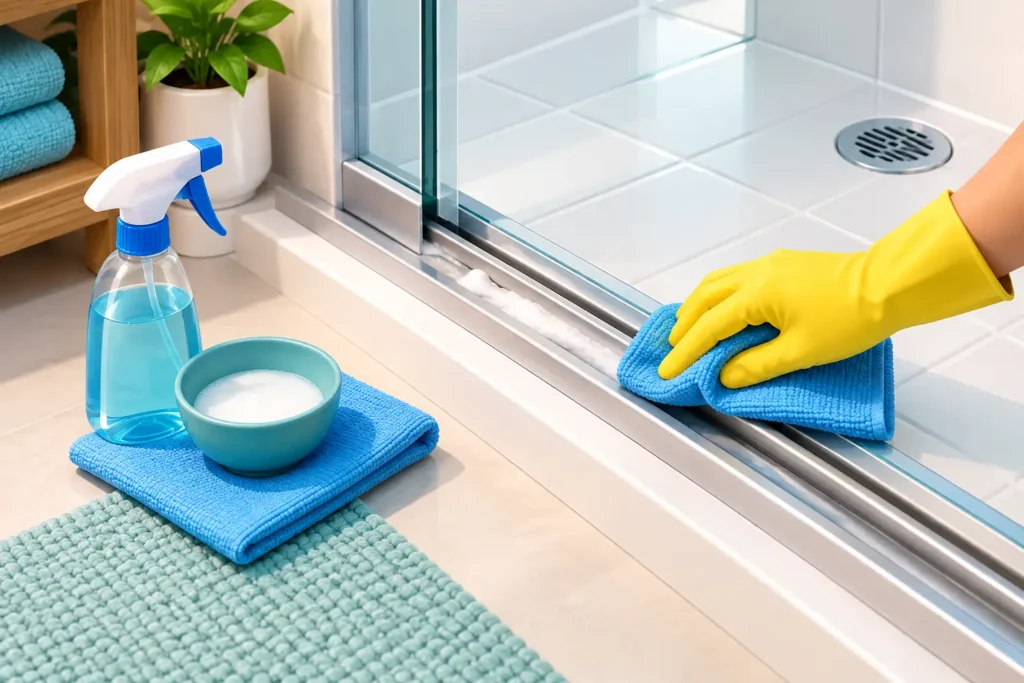
That dark, gritty line beneath a sliding shower door is more than a cosmetic problem. Shower tracks collect standing water, shed hair, soap residue, body oils, and mineral deposits in a narrow space that is easy to overlook. Knowing how to clean shower tracks properly helps keep the door gliding smoothly, makes the bathroom feel fresher, and stops grime from becoming a stubborn, baked-on layer.
The good news is that you do not need aggressive chemicals or endless scrubbing. A few dependable cleaning tools, the right cleaner for the buildup, and a little patience can bring the track back to a clean, polished finish.
What You Need to Clean Shower Tracks
Start with a dry microfiber cloth or absorbent nonwoven cloth, a soft scrub sponge, an old toothbrush or small detail brush, warm water, dish soap, white vinegar, and a small spray bottle. Paper towels or a clean cloth are useful for soaking up dirty water from the channel.
For extra-heavy buildup, keep baking soda nearby. It creates a gentle paste that helps loosen mineral scale and soap scum without the rough abrasion of steel wool or highly abrasive scouring powders. Use it carefully, especially on coated metal tracks, painted finishes, or plastic frames.
Avoid sharp tools such as knives, razor blades, or metal picks. They may seem effective in tight corners, but they can scratch aluminum, damage protective coatings, and create places where residue collects even faster.
How to Clean Shower Tracks Step by Step
Remove loose hair and debris first
Open the shower door fully so you can reach as much of the track as possible. Use a dry cloth, tissue, or vacuum attachment to lift out hair, dust, and loose grit. This small first step matters: if you add water before removing debris, it turns into a dirty paste that is harder to wipe away.
Pay close attention to the corners and drainage holes. Many shower tracks are designed with small openings that allow water to escape. When these are blocked by hair or soap residue, water sits in the channel longer and encourages mildew and mineral buildup.
Wash away everyday soap film
Mix a few drops of dish soap into warm water. Wet a soft sponge or microfiber cloth, then wipe along the entire track, including the raised rails where the door rollers travel. A soft, durable sponge gives you enough cleaning power for grime without being harsh on common shower-door materials.
Use a detail brush or old toothbrush to work into grooves, corners, and around the door guides. Move in short back-and-forth strokes rather than pressing hard. The goal is to lift residue, not grind it into the surface.
Wipe away the loosened soil with a clean damp cloth. If the water in the track looks gray or cloudy, rinse and wipe again before moving on. Leaving dirty cleaner behind can create a dull film as it dries.
Use vinegar for mineral deposits
White vinegar is a practical option when you see chalky white residue, crusty spots, or dull mineral scale. Fill a spray bottle with equal parts white vinegar and warm water, then spray the affected parts of the track. Let it sit for about 10 to 15 minutes so it can soften the deposits.
For vertical edges or stubborn corners, soak a folded paper towel or cloth in the vinegar solution and press it along the buildup. This keeps the cleaner in contact with the surface instead of letting it run away immediately.
Scrub gently with your soft brush, then wipe clean with warm water. Dry the track with a microfiber cloth to reveal the finish and prevent new water spots.
Vinegar is usually suitable for many glass, metal, and plastic shower-door tracks, but it depends on the material and finish. Do not use acidic cleaners on natural stone surrounding the shower, and check the door manufacturer’s care instructions if the frame has a specialty coating. Never mix vinegar with bleach or any chlorine-based bathroom cleaner.
Tackle thick grime with a baking soda paste
When soap scum and minerals have formed a stubborn crust, make a paste with baking soda and a small amount of water. It should be thick enough to stay where you apply it. Spread a thin layer over the buildup and leave it for 10 minutes.
Then, use a damp soft scrub sponge or brush to loosen the residue. You do not need heavy pressure. Let the paste and the cleaning tool do the work, adding a few drops of warm water if it starts to dry out.
Wipe away the paste completely, rinse with a clean damp cloth, and dry the area. If a dark stain remains, it may be mildew discoloration rather than surface dirt. Repeat the cleaning process once before reaching for a stronger bathroom product.
Clean the door edges and rollers
A spotless track can become dirty quickly if the lower edge of the shower door is still coated in residue. Wipe the bottom frame, rubber sweep, and reachable roller areas with warm soapy water. Use a cloth instead of flooding these components, since excess water can sit inside the frame.
If the door drags after cleaning, inspect the track for hardened scale or debris near the rollers. Do not apply oil, cooking spray, or greasy lubricant to shower tracks. These products attract dust and grime. If lubrication is needed, use only a manufacturer-approved product and apply it sparingly after the track is fully clean and dry.
How Often Should You Clean Shower Door Tracks?
For most households, a quick wipe once a week and a deeper clean every month keeps shower tracks under control. Bathrooms with hard water, multiple daily showers, or poor ventilation may need attention more often.
The easiest routine is to wipe standing water from the track after cleaning the shower glass. It takes less than a minute, but it removes the moisture that feeds mineral deposits and mildew. A quality microfiber cloth is ideal because it absorbs water efficiently and leaves fewer streaks behind.
Common Mistakes That Make Shower Tracks Harder to Clean
The biggest mistake is waiting until the track looks black or feels gritty. By then, layers of soap, minerals, and moisture have had time to bond to the surface. Regular light cleaning is faster and gentler than an occasional deep scrub.
Another common issue is using a rough scouring pad on aluminum or plastic. Heavy-duty abrasion may remove grime quickly, but it can leave fine scratches that dull the track and trap future residue. Choose a non-scratch sponge for routine work, and reserve stronger tools only for surfaces that are clearly designed to handle them.
It also helps to avoid pouring large amounts of cleaner directly into the channel. Excess liquid can overwhelm clogged drain holes and leave residue behind. Apply cleaner with a spray bottle, cloth, or sponge so you stay in control of where it goes.
Keep the Track Cleaner Between Deep Cleans
Good ventilation makes a real difference. Run the bathroom exhaust fan during showers and for several minutes afterward, or open a window when practical. Less lingering humidity means less opportunity for mildew to develop around the track.
After showering, slide the door open and closed once to move excess water toward the drainage points. Then use a squeegee or cloth on the glass and give the bottom track a quick wipe. This simple habit is especially useful in hard-water areas, where dried droplets quickly turn into cloudy mineral spots.
For a reliable bathroom-cleaning setup, keep a microfiber cloth, soft sponge, and small brush within reach. PowerMax cleaning tools are designed to make these everyday touch-ups easier, with dependable materials that help you clean thoroughly while treating household surfaces with care.
A clean shower track is one of those small details that changes how the whole bathroom looks and feels. Give it a few focused minutes before grime takes hold, and each deep clean becomes quicker, easier, and far more satisfying.