
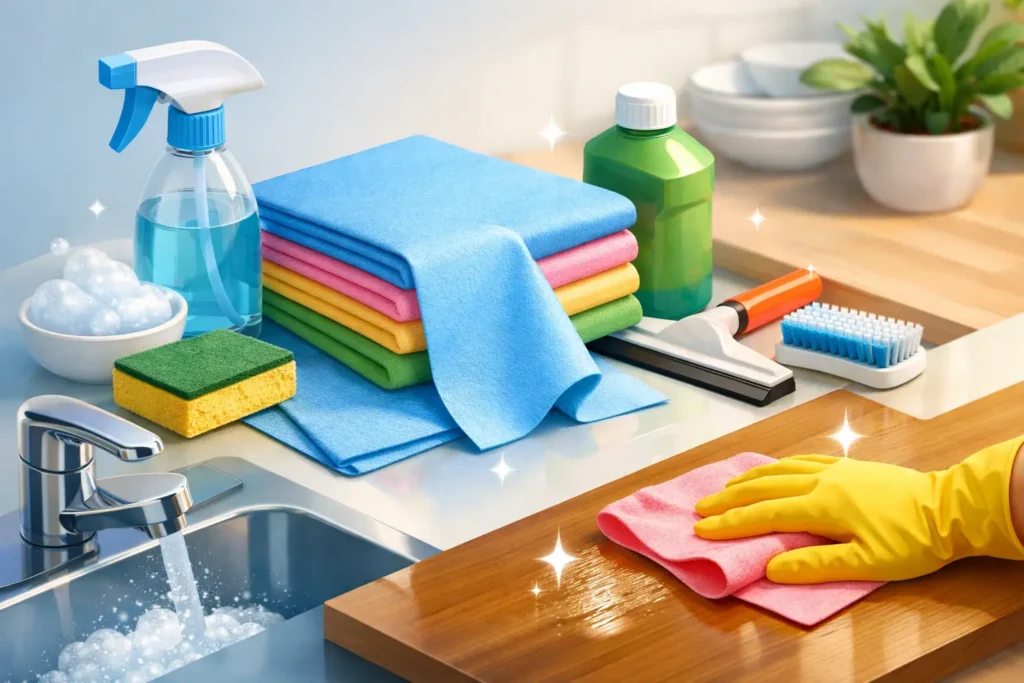
A spilled coffee ring on the counter, soap residue around the sink, or greasy fingerprints on cabinet doors should not require a cabinet full of cleaning tools. Often searched as nonwoven temizlik bezi avantajları, the benefits of nonwoven cleaning cloths come down to practical performance: they absorb quickly, lift everyday messes efficiently, and help make routine cleaning feel less like a chore.
For busy households, the right cloth can make a visible difference. Nonwoven cloths are designed to handle common kitchen, bathroom, and general surface-cleaning tasks with a soft, dependable texture that supports clean results without unnecessary effort.
What Makes a Nonwoven Cleaning Cloth Different?
Unlike a traditionally woven fabric, a nonwoven cleaning cloth is made by bonding fibers together through mechanical, thermal, or chemical processes. This creates a lightweight sheet-like material with a consistent texture and useful cleaning properties.
The result is a cloth that can be soft yet strong, absorbent without feeling overly bulky, and easy to use on many common household surfaces. Depending on its fiber blend and thickness, a nonwoven cloth may be intended for repeated use or convenient disposal after demanding tasks. That flexibility is one reason it has become a practical choice for daily home care.
Nonwoven Cleaning Cloth Advantages for Daily Cleaning
Fast absorption for everyday spills
One of the most noticeable advantages is absorbency. A quality nonwoven cloth can quickly take in water, diluted cleaner, food spills, and light grease, helping you respond before a small mess spreads across the counter or floor.
This is especially helpful in kitchens, where quick wipe-ups protect surfaces and keep prep areas looking tidy. For wet tasks, choose a cloth with enough weight and density to hold moisture without breaking down too soon. A very thin cloth can be convenient for a fast one-time wipe, but it may not be the best choice for larger spills.
Effective cleaning with less effort
Nonwoven materials provide an even surface that helps collect dust, crumbs, residue, and everyday grime. When paired with the right household cleaner, the cloth distributes moisture evenly and helps lift soils instead of simply moving them around.
For routine maintenance, this means fewer passes over the same area. Wipe countertops after cooking, refresh the bathroom vanity, clean appliance exteriors, or remove light marks from tables with a cloth that feels controlled in your hand. Small efficiencies add up when cleaning is part of the daily routine.
Surface-friendly performance
A soft nonwoven cloth is often a smart option for surfaces that should not be scrubbed aggressively. Think painted cabinets, stainless steel appliances, glass tables, finished wood, and many bathroom fixtures. The material can clean gently while reducing the risk associated with rough scouring pads or abrasive fibers.
Surface safety still depends on the cleaning product and the finish being cleaned. Always test a cleaner and cloth combination on a less visible spot first, especially on natural stone, unsealed wood, high-gloss finishes, or specialty coatings. A gentle cloth does not make every chemical safe for every surface.
Low lint for a cleaner finish
No one wants to finish wiping a mirror and find fibers left behind in the light. Many nonwoven cloths are designed for low-lint performance, making them useful for glass, mirrors, chrome, and polished surfaces.
For the best streak-free appearance, use a clean cloth rather than one already saturated with grease or heavy dirt. Use a separate cloth for glass if possible, and avoid overapplying cleaner. Too much liquid can create streaks regardless of the cloth you choose.
Convenient hygiene control
Cleaning cloths come into contact with food residue, bathroom soils, and household bacteria. Nonwoven options support a simple hygiene routine because they are easy to assign by task, color, or room. Use one cloth for the kitchen counter, another for the bathroom sink, and keep floor-cleaning wipes separate from food-prep areas.
Some nonwoven cloths are intended for short-term or single-use applications, which can be helpful after handling raw meat spills, pet accidents, or particularly dirty bathroom cleaning jobs. Reusable versions can be rinsed and dried between uses when they remain in good condition. The right approach depends on the mess, the cloth type, and your household hygiene preferences.
Lightweight but durable handling
A good cleaning cloth needs to feel light enough for quick daily jobs but strong enough not to tear as soon as it gets wet. This balance is a major reason households choose nonwoven materials. They are easy to fold, grip, rinse, and store without taking up much space.
Durability varies between products. Thicker, multi-use nonwoven cloths are better suited to repeated wiping and rinsing, while lighter versions work well for short cleaning sessions or jobs where disposal is more practical. Matching the cloth to the task helps avoid waste and improves value.
Where Nonwoven Cloths Work Best
Nonwoven cleaning cloths are versatile, but they are not meant to replace every cleaning tool. Their best role is everyday wiping, absorbing, polishing, and light-to-medium soil removal.
In the kitchen, use them for counters, stovetop splatters, refrigerator shelves, dining tables, and appliance fronts. For greasy cookware or baked-on food, pair a nonwoven cloth with a dedicated scrub sponge or scouring pad rather than forcing a soft cloth to do heavy-duty work.
In the bathroom, they are ideal for sinks, faucets, vanity tops, toilet exteriors, and quick shower touch-ups. A fresh cloth can help keep high-touch areas looking clean between deeper cleaning sessions.
Around the rest of the home, use them to dust shelves, wipe coffee tables, refresh door handles, clean window sills, and remove light smudges from electronics exteriors. For screens, follow the device manufacturer’s cleaning instructions and use minimal moisture.
How to Choose the Right Nonwoven Cloth
The best nonwoven cloth is not always the thickest or the least expensive. Consider how you plan to use it. For frequent kitchen and bathroom cleaning, look for an absorbent, durable cloth that can handle rinsing. For quick cleanup after messy tasks, a lighter disposable option may make more sense.
Texture matters, too. A smooth cloth is typically better for delicate and shiny surfaces, while a lightly textured option may offer more pickup power for everyday residue. If you regularly clean glass and mirrors, prioritize low-lint performance. If you need help with sticky or greasy messes, choose a cloth that holds its structure when wet.
PowerMax cleaning tools are designed around this kind of task-based thinking: use a surface-safe cloth for wiping and finishing, then reach for a sponge, scrubber, or mop when the job needs more targeted power.
Simple Care Habits That Improve Results
A cloth performs best when it starts clean. Rinse reusable nonwoven cloths thoroughly after use, squeeze out excess water, and let them dry in an open, well-ventilated area. Leaving a damp cloth bunched up near the sink can lead to odors and reduce its useful life.
Replace the cloth when it begins to smell, tear, lose absorbency, or hold visible soil that does not rinse away. For food-contact surfaces, follow your normal sanitizing routine after cleaning. Wiping removes residue, while sanitizing addresses germs when the situation calls for it.
Keep a small supply accessible where messes happen most. A dry stack under the kitchen sink, a cloth near the bathroom vanity, and a fresh option in the laundry area can make quick cleanup much easier to maintain.
A well-chosen nonwoven cloth gives everyday cleaning a simpler rhythm: wipe the spill, refresh the surface, rinse or replace when needed, and move on with your day.