
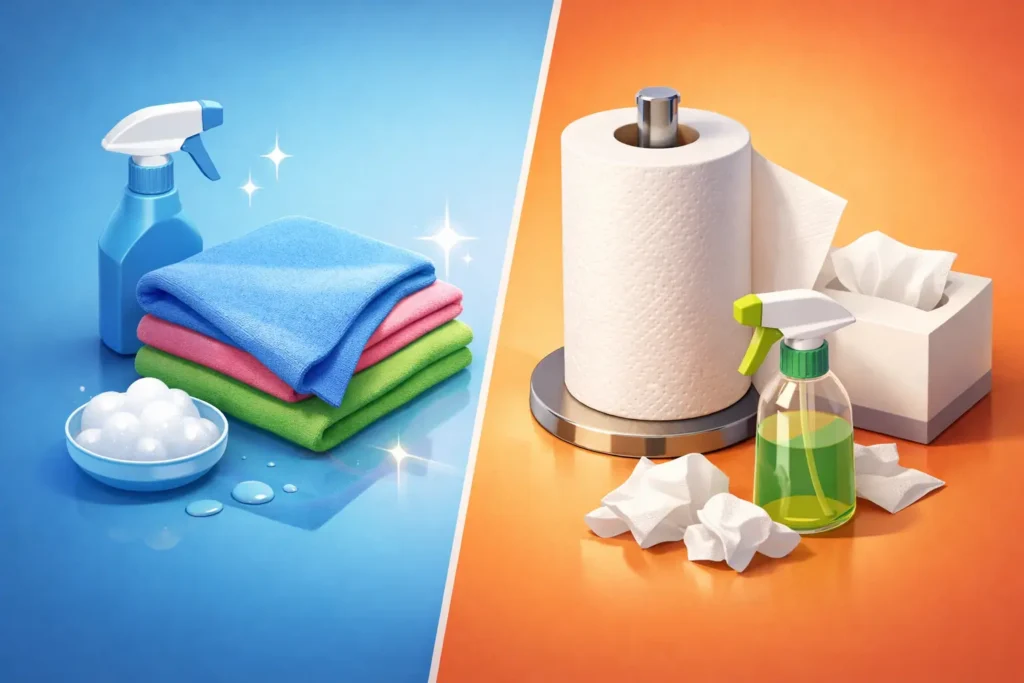
A spilled coffee ring on the counter, fingerprints on the bathroom mirror, grease near the stove – these small messes call for fast decisions. The question “mikrofiber bez mi kağıt havlu mu?” is not really about choosing one cleaning staple forever. It is about using the right tool for the surface, the mess, and the level of hygiene you need at that moment.
A quality microfiber cloth can make routine cleaning faster, more polished, and more cost-effective over time. Paper towels shine when convenience and one-time use matter most. Knowing the difference helps you avoid wasting products, leaving streaks behind, or using a delicate cloth on a mess that is better thrown away.
Mikrofiber Bez mi, Kağıt Havlu mu? Start With the Job
Microfiber cloths are designed to lift and trap dust, oils, moisture, and fine particles. Their dense, split fibers create more contact with a surface than an ordinary cotton rag, which is why they can deliver a clear finish with less product. For everyday wipe-downs, they are often the stronger choice.
Paper towels absorb quickly and can be discarded immediately. That makes them especially useful for raw meat juices, pet accidents, greasy splatters, and any cleanup where you do not want to wash and reuse the material afterward. The practical answer is simple: choose microfiber for repeatable surface care and paper towels for contained, disposable cleanup.
Neither option replaces the other in a well-organized home. A small supply of both lets you clean confidently without treating every spill the same way.
When a Microfiber Cloth Delivers Better Results
Microfiber is a smart everyday choice for homes that need dependable cleaning across several rooms. With the proper cloth and technique, it picks up dust and residue rather than simply pushing it around. It also works effectively with water alone for many light cleaning tasks, helping you use less spray cleaner.
Mirrors, Glass, and Stainless Steel
Paper towels can leave lint behind on glass, dark appliance doors, and polished fixtures. A clean, dry microfiber cloth is usually better for buffing away streaks and restoring shine. For bathroom mirrors and kitchen stainless steel, lightly dampen one side of the cloth to clean, then use the dry side to polish.
The key word is clean. A microfiber cloth that has already collected grease or fabric softener residue may smear instead of shine. Keep a dedicated cloth for glass and high-gloss finishes so it stays free from kitchen oils.
Dusting Furniture and Electronics
Fine dust clings to microfiber fibers, making the cloth effective on shelves, blinds, tables, TV stands, and other dry surfaces. Use it dry for light dusting or barely damp for a more thorough wipe. This reduces the need for disposable sheets and helps prevent dust from becoming airborne again.
For electronics, never spray liquid directly onto a screen or device. Instead, use a soft, dry microfiber cloth with gentle pressure. It is a safer approach for delicate finishes and helps preserve a clear, scratch-free appearance.
Kitchen Counters and Everyday Spills
For crumbs, water spots, coffee drips, and routine countertop cleaning, microfiber offers speed without constant paper towel use. Rinse the cloth often while cleaning larger areas so the fibers can continue collecting dirt effectively.
Use a separate cloth for food-prep zones and another for general kitchen cleaning. Color-coding cloths is an easy habit that supports better hygiene: one color for counters, one for appliances, and another for bathrooms. The goal is not to make cleaning complicated. It is to prevent yesterday’s bathroom residue from ending up near today’s lunch prep.
Floors, Cabinets, and High-Touch Areas
Microfiber mop pads and cloths work well on sealed wood, laminate, tile, vinyl, and other hard surfaces when used according to the floor manufacturer’s care recommendations. Their low-profile fibers collect dust and hair efficiently, while a lightly damp pad can lift everyday marks.
They are also excellent for cabinet handles, light switches, door handles, and remote controls. These areas benefit from frequent cleaning, but they rarely require a fresh paper towel for every pass. A clean cloth and suitable surface cleaner usually provide an efficient result.
When Paper Towels Are the Smarter Choice
Paper towels earn their place when the mess is unpleasant, highly greasy, or likely to contaminate a reusable cloth. Convenience is not a weakness when it helps you clean safely and move on quickly.
Raw Food Spills and Kitchen Contamination
If chicken juice leaks in the refrigerator or raw meat touches the counter, paper towels are the practical first step. Use them to contain and remove the visible spill, discard them, and then clean and sanitize the surface according to the product directions. This approach avoids putting contamination into a reusable cloth that may not be washed immediately.
The same logic applies to spoiled food leaks, sticky refrigerator spills, and grease-heavy messes around a roasting pan. Paper towels handle the first, messiest stage well. Once the area is clear, a fresh microfiber cloth can be used for the final wipe if needed.
Grease, Oil, and Wax-Based Residue
A microfiber cloth can absorb some oil, but heavy grease is difficult to fully remove from the fibers. Blot cooking oil, bacon grease, or excess butter with paper towels first. Never pour hot grease into a drain, and never toss grease-soaked paper towels near a heat source.
For candles, shoe polish, thick sauces, or other waxy residues, paper towels can remove the bulk of the material before a suitable cleaner handles what remains. This protects your reusable cloths and makes laundry easier.
Bathroom Messes and Quick Disposal
Paper towels are a sensible choice for toilet-area cleanup, hair dye, nail polish remover, or other bathroom messes you would rather not send through the washing machine. They also work well for drying small areas where a disposable wipe feels more hygienic, such as a public-facing guest bathroom.
For regular sink, faucet, mirror, and countertop care, however, microfiber remains the more economical option. Save paper towels for the jobs where disposal provides a genuine benefit.
The Cost and Waste Question
One paper towel may seem inexpensive, but repeated use adds up quickly. A durable microfiber cloth can be washed and reused many times, making it a strong value for routine dusting, polishing, and surface cleaning. Households that reach for paper towels for every small drip often go through rolls faster than expected.
That does not mean you should force a microfiber cloth into every job. Using a washable cloth for raw food spills or heavily soiled bathroom cleanup may create extra laundry and hygiene concerns. The best way to reduce waste is not to eliminate paper towels completely. It is to reserve them for situations where their one-time-use design truly helps.
For microfiber cloths to last, wash them separately or with other lint-free items. Skip fabric softener and dryer sheets, which can coat the fibers and reduce absorbency. Use a mild detergent, avoid very high heat, and let the cloth dry completely before storing it. Proper care keeps the fibers effective and helps each cloth deliver better value.
Choose the Right Cloth for the Surface
Not all microfiber cloths are made for the same task. A plush cloth is useful for dusting and gentle buffing, while a tighter weave can be better for glass and smooth surfaces. Textured microfiber may help with stuck-on residue, but it should still be used carefully on delicate finishes.
For scrubbing jobs, choose a surface-safe sponge, scrub pad, or cleaning tool instead of turning a microfiber cloth into a heavy-duty scouring pad. A cloth works best when it can lift and hold soil. Burned-on food, grout buildup, and stubborn soap scum often need more targeted tools.
A complete cleaning setup makes the choice easier: microfiber cloths for daily care, paper towels for disposable cleanup, and task-specific sponges or brushes for tougher work. PowerMax cleaning tools are designed around that same practical idea – matching the tool to the task for cleaner surfaces with less effort.
A Simple Rule for Everyday Cleaning
Reach for microfiber when you want a reusable, low-lint cloth for dust, light spills, polishing, counters, fixtures, glass, and routine surface care. Reach for paper towels when you need to blot grease, contain contamination, remove a mess you do not want to wash, or dispose of residue immediately.
The most satisfying clean is not about using more products. It comes from choosing the tool that leaves the surface fresh, protects your home, and makes the next cleanup even easier.