
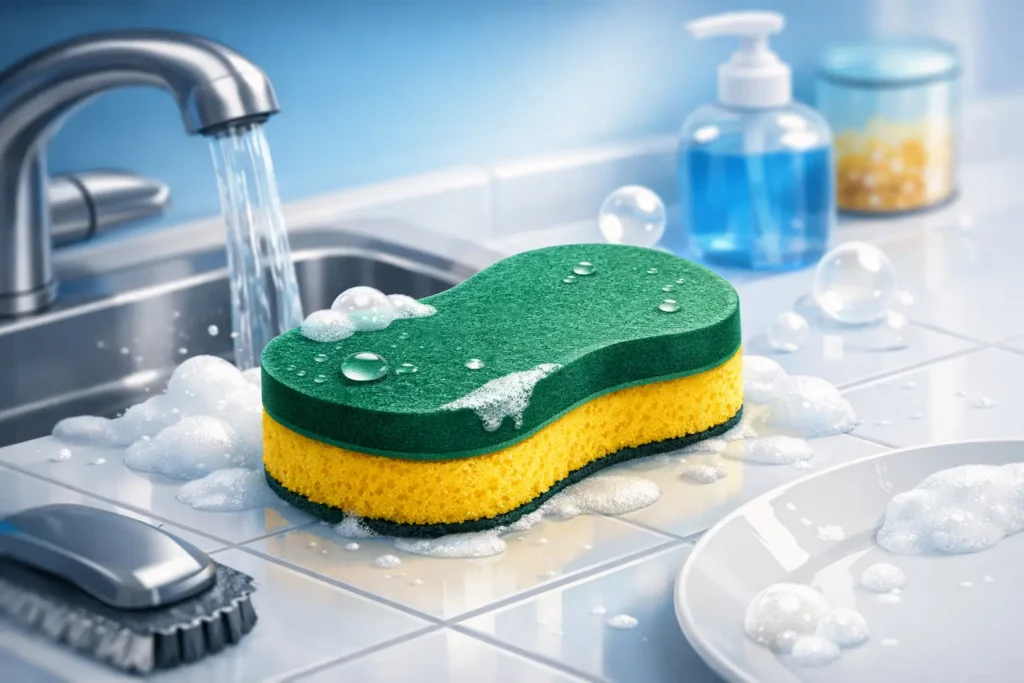
A sponge that slips from your hand halfway through a baked-on pan is more than a small annoyance. It slows the job, wastes cleaning product, and can leave your fingers sore after a busy cleanup. An ergonomic scrub sponge is designed to change that everyday experience with a shape that sits comfortably in your hand and gives you better control where it counts.
For kitchens, bathrooms, and the small cleaning jobs that add up during the week, a well-designed sponge can make a noticeable difference. The goal is simple: less effort, better contact with the surface, and satisfying results without treating every dish or countertop like a heavy-duty project.
What Makes an Ergonomic Scrub Sponge Different?
Traditional rectangular sponges can work well for broad wiping, but they are not always easy to hold when wet or soapy. An ergonomic scrub sponge is shaped around the way your hand naturally grips, presses, and moves. Curved edges, a contoured center, or a finger-friendly profile can help keep the sponge stable in your palm.
That added control matters when you are cleaning a narrow glass, working around a faucet, or scrubbing the corners of a casserole dish. Instead of squeezing a flat sponge tightly to keep it from folding or sliding, you can guide the sponge with a more relaxed grip.
The result is not just comfort. Better grip can also improve cleaning efficiency because more of the scrubbing surface stays in contact with the mess. You spend less time readjusting the sponge and more time removing residue.
Easier Cleaning Starts With a Better Grip
Your hand does a lot during routine cleaning. It holds, twists, presses, reaches, and rinses – often several times in one task. A sponge with an easy-to-hold shape helps distribute that work more comfortably, especially during longer kitchen cleanup sessions.
An ergonomic design is particularly helpful for people who find repetitive scrubbing uncomfortable. It does not replace good cleaning habits or eliminate every tough job, but it can reduce the need to pinch a sponge between your fingertips. That is a practical advantage when washing cookware after dinner, cleaning sink edges, or refreshing bathroom fixtures.
A secure grip also helps when water and dish soap make surfaces slick. When the sponge is easier to control, you are less likely to drop it into a dirty sink or knock over a delicate item while trying to scrub around it.
Better Reach for Corners, Curves, and Tight Spaces
The hardest areas to clean are rarely the largest ones. Grease collects around pan handles, residue settles at the base of drinking glasses, and grime hides along sink rims and tile edges. A thoughtfully shaped scrub sponge can help you reach these areas without switching tools every few minutes.
Kitchen use
In the kitchen, use the broader side of the sponge for plates, countertops, and larger cookware. A narrower end or contoured edge can be useful for the inside corners of food containers, around blender parts, and along the seams of reusable water bottles. Always check the manufacturer’s care guidance for specialty cookware, especially nonstick, coated, or polished surfaces.
For cooked-on food, let the pan soak first. Even the best scrubbing surface works more effectively when residue has time to soften. Then use steady pressure rather than aggressive force. This approach protects both your cookware and the sponge.
Bathroom use
Bathrooms benefit from control just as much as kitchens do. An ergonomic sponge can make it easier to clean around faucets, soap holders, shower shelves, and sink drains. For soap scum or toothpaste residue, apply a suitable cleaner, allow it to work as directed, and scrub with a surface-appropriate side of the sponge.
Keep kitchen and bathroom sponges separate. It is a simple habit that supports a more hygienic cleaning routine and prevents cross-contamination between rooms.
Choose the Right Scrubbing Surface
Ergonomic shape is only one part of a high-performing sponge. The material and scrub layer determine how the sponge handles different jobs. A soft foam side is useful for wiping, lathering, and gentle everyday cleaning. A more textured scrub side can help lift food residue, grease, and stubborn marks.
The right choice depends on the surface. Delicate glassware, nonstick pans, glossy finishes, and certain appliance exteriors need gentler care. Heavier-duty scouring material may be a better fit for durable pots, oven-safe bakeware, grills, or hard-wearing utility surfaces, provided the surface can tolerate it.
When unsure, test a small hidden area first. Surface safety should always come before speed. A sponge that removes a mark but leaves visible scratches has not delivered a better clean.
Make Your Sponge Last Longer
A durable sponge should support more than one quick task, but every sponge needs proper care. Rinse it thoroughly after each use to remove food particles, cleaner residue, and loosened grime. Squeeze out excess water and store it where air can circulate rather than leaving it at the bottom of a wet sink.
Replace your sponge when it develops an odor that does not rinse away, begins to break down, or no longer cleans effectively. The timing varies based on how often you use it and what you clean with it. A sponge used daily on greasy pans will naturally wear faster than one reserved for light countertop cleanup.
To get the most from each sponge, avoid using it for every task in the home. Reserve a dedicated scrub sponge for dishwashing and kitchen surfaces, and use separate cloths, pads, or brushes for floors, toilets, and heavy-duty jobs. This keeps your cleaning tools more hygienic and helps each one perform as intended.
Small Design Details Can Improve the Routine
Cleaning tools do not have to be boring to be practical. A distinctive shape, comfortable contour, or playful visual detail can make a routine product easier to recognize and more enjoyable to use. That matters in a busy home, where the tools you reach for most should feel dependable from the first use to the last.
PowerMax brings this idea to life with its Teddy Boo Scrub Sponge, combining an easy-to-hold shape with a temperature-responsive foam feature. It is a reminder that smart cleaning design can be functional and fun at the same time.
When an Ergonomic Sponge Is Worth It
If you mostly wipe down surfaces with a cloth and only occasionally wash a plate, a basic sponge may be enough. But an ergonomic option is especially worthwhile when you do frequent dishwashing, clean several rooms each week, or regularly tackle cookware and tight spaces.
It is also a strong choice for households that want one reliable tool for everyday messes without sacrificing comfort. The best sponge is not necessarily the roughest or the thickest. It is the one that feels secure in your hand, suits the surfaces you clean, rinses well, and consistently helps you finish the job with less hassle.
A better grip may sound like a small upgrade, but small upgrades are what make household routines feel more manageable. Choose a sponge that works with your hand, treat each surface with the right level of care, and let your cleaning tools make the next task feel a little lighter.