
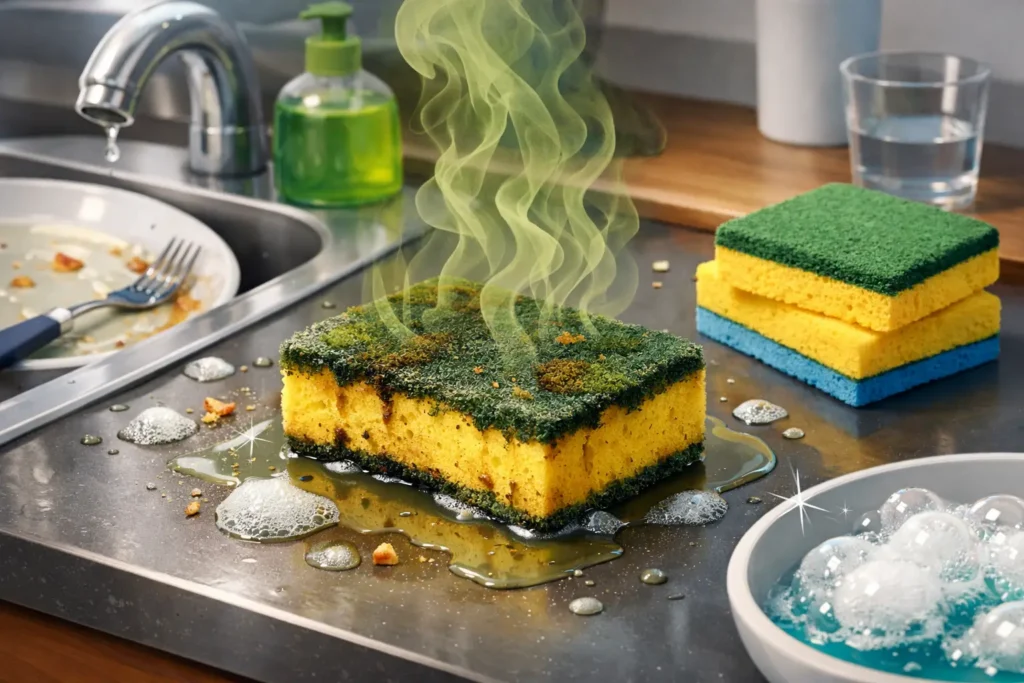
That sour, musty smell that appears when you wet a sponge is a clear signal from one of the busiest tools in your kitchen. Why do dish sponges smell? Usually, it is because food residue, grease, moisture, and warmth create an ideal place for odor-causing microbes to build up. The good news is that a few simple habits can keep your sink area fresher and make dishwashing feel much more pleasant.
Why Do Dish Sponges Smell So Fast?
A sponge has a porous structure designed to hold water and lift away messes. That same structure also catches tiny particles of food, cooking oil, dairy, meat juices, and soap residue. Even when a sponge looks clean, those particles can remain deep inside its fibers and foam.
Once the sponge stays damp near the sink, bacteria and other microorganisms can feed on that trapped residue. As they grow, they produce the unpleasant sour or stale odor you notice when the sponge gets wet. A warm kitchen, a sponge left in a puddle, or a tightly closed sponge holder can make the problem happen faster.
The smell does not always mean your kitchen is dirty or that you have done something wrong. Sponges simply work hard. They touch plates, pans, counters, and spills every day, so they need regular care just like dish towels, cloths, and brushes.
The Main Causes of Sponge Odor
Food particles are the biggest culprit. A sponge used on a greasy skillet, a cutting board with food residue, or a dish with dried sauce can collect much more than it appears to. Rinsing removes some debris, but not always all of it.
Moisture is the second factor. Microbes need water to thrive, and a sponge that never gets the chance to dry will develop odor much sooner than one that is rinsed, squeezed, and stored with good airflow. Leaving it flat in the bottom of the sink is one of the fastest ways to create a smelly sponge.
Using one sponge for every kitchen job can also shorten its fresh life. Wiping raw meat juices, scrubbing a food-encrusted pan, cleaning the sink drain, and washing everyday glasses with the same sponge transfers more residue and germs between tasks. A dedicated scrubber for heavy messes and a separate cloth or sponge for lighter dishwashing can make a noticeable difference.
Finally, an old or damaged sponge can hold odor more stubbornly. As foam breaks down and fibers become worn, more debris gets trapped inside. At that point, cleaning may reduce the smell temporarily, but replacement is usually the more hygienic and convenient choice.
How to Keep a Dish Sponge From Smelling
The most effective routine starts right after you finish washing dishes. Rinse the sponge thoroughly under hot running water, working the water through the sponge to flush out soap, grease, and loose food particles. Then squeeze it firmly several times until it is as dry as possible.
Do not leave the sponge sitting inside the sink or pressed against a wet dishcloth. Place it on a holder, rack, or other clean spot where air can circulate around it. The goal is not to make it perfectly dry in minutes. It is to help it dry between uses rather than staying wet around the clock.
If you have just scrubbed a particularly greasy pan or cleaned up raw food residue, consider using a fresh sponge, a disposable wipe, or a task-specific scrubber instead of returning the same sponge to regular dish duty. This small choice helps reduce odor buildup and limits cross-contamination.
Clean the Sponge Regularly
A quick rinse is essential, but regular deeper cleaning helps extend freshness. Follow the care directions for your specific sponge, because foam, scouring fibers, and specialty materials can respond differently to heat and cleaning products.
For many dishwasher-safe sponges, placing them on the top rack during a normal hot wash cycle can help remove residue. Let the sponge dry completely afterward. If the manufacturer permits a disinfecting soak, use the recommended dilution and never mix cleaning products. Bleach, ammonia, vinegar, and other cleaners should not be combined.
Avoid relying on microwaving as your default sponge-cleaning method. It can heat unevenly, damage some materials, and create a fire risk if the sponge is too dry or contains metallic fibers. A dishwasher-safe cleaning method or replacing a tired sponge is a more dependable option for most households.
When Should You Replace a Dish Sponge?
There is no single replacement schedule that works for every home. A sponge used several times a day in a busy family kitchen will wear out faster than one used lightly by a single person. Still, most everyday dish sponges should be replaced about every one to two weeks, or sooner when they show clear signs of wear.
Replace the sponge immediately if it has a persistent odor after cleaning, looks discolored, feels slimy, begins to crumble, or has been used to clean up raw meat or poultry juices. These are practical signs that the sponge is no longer delivering the clean, fresh performance you want.
It is also smart to keep extra sponges on hand. When a sponge reaches the end of its dishwashing life, it may still be useful for a less sensitive job, such as cleaning a trash can, outdoor furniture, or a utility area. Just do not return it to food-contact surfaces after that.
Better Sponge Habits for a Fresher Kitchen
The right tool can make daily cleaning easier. For delicate dishes, glassware, and nonstick cookware, choose a soft, surface-safe sponge that cleans without harsh scratching. For baked-on food and tougher cookware, use a durable scrub sponge designed for heavier-duty messes. Matching the sponge to the task helps prevent unnecessary wear and keeps residue from building up in one all-purpose tool.
A well-designed sponge should also be comfortable to grip and easy to rinse. PowerMax cleaning tools are made to support efficient everyday care, helping households move from quick dishwashing to tougher scrubbing with confidence. Whether you prefer a soft sponge, a scouring pad, or a specialized scrubber, using the right option for the surface can help protect both your cookware and your cleaning routine.
Keep your sponge holder clean, too. A fresh sponge placed on a dirty, wet holder will pick up odor-causing residue again. Wipe the holder regularly and check that water can drain away instead of collecting beneath the sponge.
Can a Smelly Sponge Make Dishes Dirty?
A smelly sponge is not automatically proof that every dish you wash is unsafe, especially if dishes are washed thoroughly with detergent and rinsed well. However, a strong odor is a useful reminder that the sponge has accumulated residue and should be cleaned or replaced. It is not worth trying to get a few more days from a sponge that feels slimy or smells unpleasant.
For items that come into direct contact with food, such as cutting boards, baby bottles, utensils, and countertops, fresh tools and good cleaning habits matter even more. Use hot, soapy water as appropriate for the item, clean your sponge or cloth afterward, and allow tools to dry fully.
A clean-smelling sponge is one of those small details that makes the whole kitchen feel better. Rinse it well, let it breathe, replace it before it breaks down, and enjoy the simple satisfaction of reaching for a fresh, ready-to-work cleaning tool.