
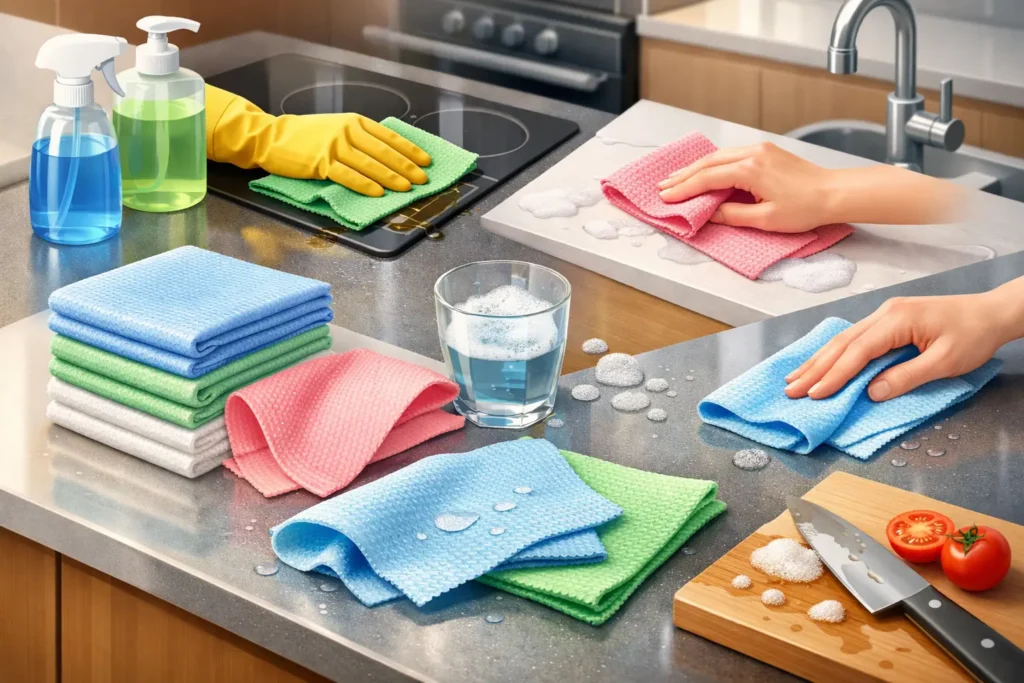
A wet counter after breakfast, a splash of sauce by the stove, a sink full of dishes – kitchen messes do not wait for a convenient moment. The best reusable kitchen wipers make these small jobs faster, cleaner, and less wasteful than reaching for a new paper towel every time. The right wiper should absorb quickly, rinse easily, and stay dependable through repeated daily use.
A reusable wiper is not a one-size-fits-all tool. The cloth that shines glasses may not be the best choice for wiping up a greasy pan. Choosing by material, texture, and task helps keep your kitchen cleaner while getting more value from every wiper in your drawer.
What Makes the Best Reusable Kitchen Wipers?
A high-performing kitchen wiper does more than move moisture around. It should pick up spills efficiently, release dirt when rinsed, and remain comfortable to hold when wet. Durability matters too. A wiper that frays, loses shape, or starts smelling unpleasant after a few uses is not saving time or money.
Look first at absorbency. For countertop spills, dishwater drips, and damp tables, a wiper needs to hold enough liquid without becoming instantly saturated. Next, consider its cleaning power. Some surfaces need a smooth, gentle material, while dried food and greasy residue may benefit from a more textured cloth.
Size makes a practical difference. Smaller wipers are easy to rinse and wring out for quick jobs. Larger cloths cover more area when drying dishes, cleaning cabinet fronts, or wiping a dining table. Keeping a few sizes on hand makes routine cleanup feel much more organized.
Choose the Right Material for the Job
Microfiber for streak-free finishing
Microfiber kitchen wipers are a smart option for smooth surfaces, including stainless steel, glass cooktops, shiny faucets, and appliance doors. Their fine fibers lift light dust, fingerprints, and moisture rather than simply pushing them across the surface. Used dry, they are useful for polishing. Used slightly damp, they leave a clean finish with less water.
Microfiber performs best when it is kept free from heavy grease. If you use it on an oily stovetop, rinse it promptly and wash it thoroughly before using it on glass or stainless steel again. Avoid fabric softener during laundering, since it can coat the fibers and reduce absorbency.
Cellulose for thirsty everyday spills
Cellulose-based wipers are especially useful around the sink and countertop because they absorb water quickly and wring out with ease. They are a reliable choice for soaking up spilled drinks, drying a wet work area, or wiping condensation from produce containers.
These wipers are often soft enough for most common kitchen surfaces. However, because they hold a lot of moisture, they need to be rinsed and dried properly after use. Leaving any wet cloth bunched up near the sink creates the conditions that cause stale odors.
Nonwoven wipers for versatile cleaning
Nonwoven kitchen wipers offer a practical balance of softness, strength, and everyday convenience. They can handle light cleaning, dish drying, surface wiping, and quick touch-ups without feeling overly bulky. Many households prefer this style as an all-purpose option because it is easy to fold, store, and replace when the time comes.
For value-conscious shoppers, a durable nonwoven wiper can be a dependable workhorse. Use separate colors for separate tasks when possible: one for counters, one for dishes, and one for messier jobs such as the stovetop. This simple habit helps reduce cross-contamination without adding steps to your routine.
Textured wipers for stuck-on residue
Not every kitchen mess needs a scrubber, but dried sauce, food splatters, and greasy prep areas sometimes need more than a smooth cloth. A wiper with a gentle textured side can add extra cleaning action while remaining suitable for regular use.
The trade-off is surface safety. For delicate finishes, nonstick cookware, polished stone, or high-gloss appliances, choose a soft side first and use minimal pressure. Test an unfamiliar wiper on an inconspicuous spot if you are unsure. Effective cleaning should never come at the cost of scratches.
Match Your Wiper to Your Kitchen Routine
The best reusable kitchen wipers are the ones you will actually use correctly. A household that cooks several meals a day may need a small rotation of cloths: one for dishes, one for counters, and one reserved for spills or floor splashes. A smaller household may be perfectly served by a few versatile wipers washed frequently.
For dish drying, choose a soft, absorbent wiper with enough surface area to dry plates and glasses without leaving lint behind. For food-prep cleanup, a quick-rinsing cellulose or nonwoven cloth keeps the counter clear between chopping, mixing, and cooking. For appliance care, microfiber is often the better choice because it helps create a polished, streak-free finish.
Do not use the same wiper for raw-food cleanup and clean dish drying. Even a quality reusable cloth needs clear boundaries. When wiping areas that have touched raw meat, poultry, seafood, or eggs, wash the wiper immediately using a suitable laundry setting and detergent. For a major spill, use a dedicated cloth and clean the area according to your household food-safety routine.
Keep Reusable Wipers Fresh and Ready
Good care extends the life of your kitchen wipers and keeps them pleasant to use. After each task, rinse away food particles and cleaning product residue. Wring the cloth out well, then hang it open to dry. Airflow is the simplest defense against musty smells.
Wash wipers regularly, especially those used around the sink and food-prep areas. Follow the care instructions for the material, since heat and bleach can be helpful for some cloths but may shorten the life of others. A clean cloth should feel fresh, absorb water easily, and have no lingering odor after washing.
Replace a reusable wiper when it no longer rinses clean, remains smelly after laundering, becomes thin or rough, or starts leaving lint and residue behind. Reusable does not mean permanent. Replacing worn tools at the right time protects both cleaning performance and surface care.
Build a Smarter Wiper Set
A practical kitchen setup does not require a crowded cabinet. Start with a few absorbent all-purpose wipers, add microfiber cloths for delicate and shiny surfaces, and keep one textured option for tougher messes. This gives you the flexibility to clean efficiently without using the wrong tool for the job.
PowerMax cleaning tools are designed around this kind of everyday convenience: dependable materials, task-focused performance, and simple solutions that help make each wipe count. Choosing quality reusable wipers means less frustration with soggy cloths, fewer disposable towels used for routine spills, and a kitchen that is easier to keep ready for whatever comes next.
The most useful wiper is the one within reach, clean enough to trust, and suited to the surface in front of you. Set up a small rotation, let each cloth dry fully, and your next kitchen cleanup will feel like a quick reset rather than another chore.