
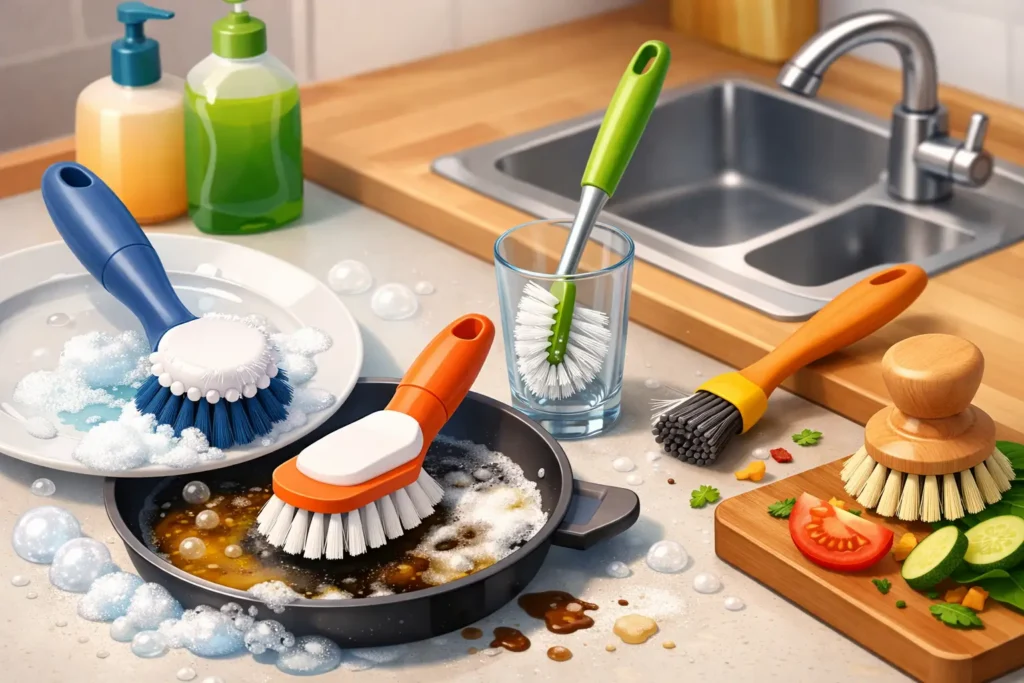
A brush that is too soft leaves baked-on food behind. One that is too aggressive can scratch a favorite pan or dull a glossy cooktop. The best kitchen cleaning brushes give you the control to handle both jobs confidently, turning everyday cleanup into a faster, more satisfying routine.
For a kitchen that looks clean and feels hygienic, one brush rarely does it all. Grease around the stove, residue in a bottle, crumbs along a grout line, and food on dishes each call for a slightly different shape, bristle strength, and reach. Choosing with the task in mind helps protect surfaces while delivering visible results.
Why Kitchen Cleaning Brushes Earn Their Space
Sponges and cloths are essential for many kitchen jobs, but brushes bring focused scrubbing power where flat cleaning tools cannot reach. Their bristles work into grooves, corners, seams, and textured surfaces, lifting soil without requiring excessive pressure. That means less time repeating the same motion over a stubborn spot.
A well-designed brush also keeps hands farther from grease, food residue, and hot dishwater. Handles improve grip and leverage, while compact heads make it easier to clean close to the sink drain, around faucet bases, and inside cookware. It is a simple upgrade that can make routine cleaning feel more controlled.
The right choice depends on what you clean most often. A household that cooks daily may need a dependable dish brush and a tougher scrub brush. Someone who uses reusable bottles, coffee tumblers, or narrow vases will get more value from a long, slim bottle brush. Building a small set around real kitchen habits is more useful than buying several versions of the same tool.
Choose the Right Brush for Each Kitchen Task
Dish and cookware brushes
A dish brush is the everyday workhorse for plates, bowls, utensils, and food containers. Look for bristles that are firm enough to lift dried food but flexible enough to follow the curves of a glass or bowl. A comfortable, non-slip handle matters more than it may seem, especially when dishes are wet and soapy.
For cookware, always match the brush to the finish. Softer bristles are a safer choice for nonstick pans, glazed ceramic, and delicate glass bakeware. Firmer bristles can work well on stainless steel pots, roasting pans, and oven-safe glass with stuck-on residue. When in doubt, test a small hidden area and let warm water and dish soap do some of the work before scrubbing harder.
Sink and drain-area brushes
The sink handles constant contact with food particles, soap film, and moisture, so it benefits from a brush reserved just for that area. A compact scrub brush with a sturdy grip can clean the basin, rim, drain surround, and overflow opening more effectively than a dish sponge alone.
Pay attention to the corners where the sink meets the countertop. These narrow lines can collect grime that is easy to miss during a quick wipe. A smaller brush head gives better access without splashing cleaner across the counter. For stainless steel sinks, scrub in the direction of the grain for a more polished finish.
Bottle and narrow-space brushes
Water bottles, baby bottles, reusable straws, blender parts, thermoses, and travel mugs need more than a quick rinse. Their narrow openings can trap residue and odors, particularly around lids, threads, and silicone seals. A bottle brush with a long handle reaches the bottom without forcing your hand into the container.
Use gentle pressure with warm soapy water, then rinse thoroughly. For parts with tight grooves, a detail brush is especially useful. The goal is not just a cleaner-looking bottle but a surface free from the film that can build up when moisture and residue stay behind.
Detail brushes for seams and edges
Small kitchen details make a big difference in how fresh the room feels. Think of the seams around a cooktop, the edge of a cutting board, appliance buttons, refrigerator shelf tracks, and the grooves on a can opener. A detail brush is made for these precise jobs.
Choose bristles that are firm but not sharp or abrasive. You want them to loosen debris, not damage seals, printed markings, or protective coatings. Pair the brush with a suitable cleaner, use short controlled strokes, and wipe away loosened dirt with a clean microfiber cloth.
Bristle Strength Matters More Than You Think
Brushes are often described as soft, medium, or stiff, but the best option is not always the toughest one. Stiff bristles remove heavy residue efficiently, yet they can leave marks on sensitive surfaces. Soft bristles are surface-safe and useful for daily care, but may not be enough for a burnt roasting dish. Medium bristles are often the most versatile choice for general kitchen cleanup.
It also depends on the material being cleaned. Nonstick cookware, polished metal, painted appliance finishes, and acrylic surfaces need a gentle touch. Cast iron, uncoated stainless steel, and durable grill accessories can usually handle more scrubbing, although even these materials benefit from the right technique.
Let time, water temperature, and cleaning solution reduce the effort before you reach for maximum force. Soaking a pan for a few minutes can release baked-on food and prevent unnecessary wear on both the brush and the surface. Effective cleaning is not about scrubbing harder. It is about using the right tool at the right moment.
Smart Features That Make Cleaning Easier
A kitchen brush should feel secure and practical in the hand. Ergonomic handles reduce strain during repetitive tasks, while textured grips help prevent slipping. A built-in hanging loop or stand is also a useful feature because it allows air to circulate around the brush after use.
Brush head shape matters too. Rounded heads fit inside cups and bowls, flat heads cover broad sink surfaces, and angled heads reach corners with less wrist twisting. Replaceable heads can reduce waste for some brush styles, while a compact shape can be easier to store in smaller kitchens.
PowerMax cleaning tools are designed around this kind of everyday convenience: durable materials, task-focused shapes, and dependable performance that helps households get a cleaner result with less hassle. The best feature is always the one that solves a real problem in your own kitchen.
How to Keep Brushes Clean and Ready
A brush cannot clean well if it is holding onto old food particles and soap residue. Rinse it thoroughly after every use, paying attention to the base of the bristles where debris can settle. Shake off excess water and store it upright or hanging in a place with good airflow.
Avoid leaving a wet brush flat in the bottom of the sink or in a closed container. Moisture needs a chance to evaporate. If the brush has been used on raw meat residue or a particularly messy task, wash it carefully according to the product care instructions before using it again on dishes or food-contact areas.
Replace a brush when bristles become bent, flattened, discolored, or difficult to rinse clean. An unpleasant odor that remains after washing is another clear signal. Durability is valuable, but keeping a worn-out tool too long can work against the hygiene you are trying to maintain.
A Simple Kitchen Brush Routine That Works
Keep an everyday dish brush close to the sink for dishes and containers. Reserve a separate scrub brush for the sink and tougher, non-food-contact surfaces. Use a bottle brush and detail brush as needed for narrow openings and hard-to-reach edges. This small division prevents cross-use and keeps each tool effective for its intended job.
Once a week, give attention to the spots that do not get cleaned during daily dishwashing: the cooktop edges, faucet base, refrigerator handles, appliance seams, and sink drain area. A few focused minutes can stop grease and residue from turning into a bigger cleaning project later.
The right kitchen brush is not just another item by the sink. It is a practical way to make every wipe, scrub, and rinse more effective, so the kitchen is ready for the next meal, the next guest, or simply a calmer end to the day.