
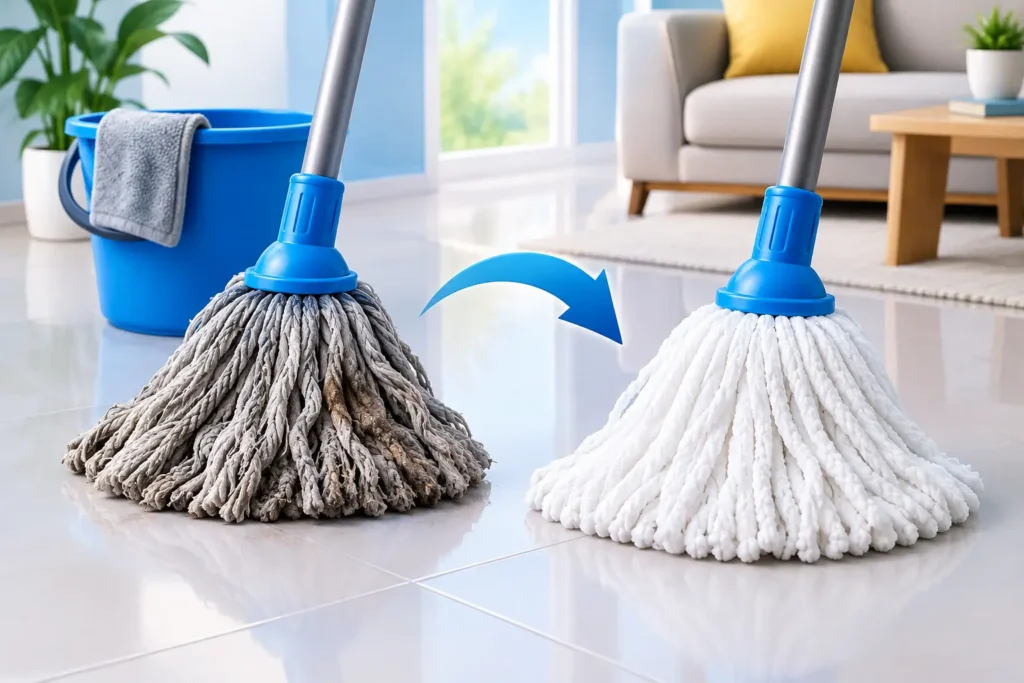
A mop can look harmless sitting in the corner, yet an overused mophead may spread yesterday’s grime right back across your floor. Knowing when to replace mopheads helps keep cleaning efficient, reduces unpleasant odors, and gives every room the fresh finish you expect.
A mophead does not need to be falling apart before it needs attention. Fibers gradually lose their ability to lift dirt, absorb spills, and release debris during rinsing. Replacing it at the right time is a simple upgrade that can make routine floor care faster, easier, and more hygienic.
When to Replace Mopheads: The Clear Warning Signs
The most obvious sign is visible wear. If strands are thinning, fraying, flattening, or coming loose, the mophead has less surface area to collect dirt. A flattened cotton or microfiber mop may still get wet, but it will not clean as evenly or reach into small floor textures as effectively.
Odor is another reliable signal. A musty smell that remains after thorough washing and complete drying usually means soil, detergent residue, or bacteria have built up deep in the fibers. Adding more cleaner may temporarily mask the scent, but it will not restore the mophead’s performance. A fresh replacement is the better choice.
Watch what happens during use, too. If you need several passes to remove everyday marks, if the mop leaves streaks, or if it pushes debris rather than picking it up, the fibers may be worn or overloaded. On hard floors, that can mean more effort with less satisfying results.
Replace a mophead promptly when it has been used to clean up something especially unsanitary, such as sewage backup, pet waste, raw-meat spills, or mold-contaminated water. Even if it looks intact afterward, replacement provides greater peace of mind than trying to sanitize heavily contaminated fibers at home.
How Long Does a Mophead Usually Last?
There is no single replacement schedule for every household. The right timing depends on the mop material, how often you clean, the size of your home, and what your floors regularly face. A busy family kitchen with pets will wear through a mophead faster than a lightly used apartment floor.
For many homes, a regularly used mophead lasts around three to six months when it is rinsed, washed, and dried correctly. Weekly mopping in lower-traffic rooms may allow it to last longer. Daily cleaning, frequent muddy entryways, greasy kitchen floors, and homes with shedding pets can shorten that timeline considerably.
Microfiber mop pads often last through many machine washes, but only while their fibers remain soft, absorbent, and effective. Once microfiber feels rough, becomes permanently stained, loses its grip on dust, or leaves lint behind, it is time to change it. Avoid fabric softener when laundering microfiber, since it can coat the fibers and reduce their cleaning power.
String and cotton mopheads can absorb plenty of water, which makes them useful for larger wet-cleaning jobs. Their trade-off is longer drying time. If they stay damp between uses, they are more likely to develop odors and wear out early. A spare mophead makes it easier to let one dry completely before the next cleaning session.
Replace Earlier in High-Traffic Areas
Not every floor places the same demand on your mop. Entryways collect outdoor dirt, salt, sand, and moisture. Kitchens pick up crumbs, grease, and sticky spills. Bathrooms require closer attention because moisture and residue can build up quickly.
Consider using separate mopheads or washable pads for the kitchen and bathroom. This practical habit helps prevent transferring bathroom residue onto food-prep areas and keeps each cleaning task more targeted. Labeling spare pads or storing them in separate areas makes the routine easy to maintain.
If you mop several surfaces, choose a mophead that matches the job. Smooth microfiber is a smart choice for sealed hardwood, laminate, vinyl, and tile because it picks up fine dust with minimal water. More textured or heavy-duty floor cleaning may call for a sturdier mop design. Using the right tool protects the surface and prevents unnecessary wear on the mophead.
Keep Your Mophead Performing Longer
Good care will not make a worn mophead new again, but it can help a quality one perform well for longer. The key is to remove dirt quickly and never store the mop wet and folded into a bucket.
After each use, rinse the mophead thoroughly until the water runs clear. If it is machine washable, follow the care instructions and wash it separately from lint-producing towels or clothing. Use the recommended detergent amount rather than overloading the wash with soap, which can leave residue behind.
Drying matters just as much as washing. Hang the mophead in a well-ventilated place or lay washable pads flat to dry completely. Avoid leaving it in a closed bucket, on a damp floor, or pressed against a wall where air cannot circulate. A dry mophead is less likely to smell and more ready for the next job.
A simple replacement rotation can also help. Keep one or two backup mopheads on hand, especially if you clean frequently. You will never need to use a damp, dirty mop because the only one you own is still drying. This small bit of preparation supports a cleaner home with far less frustration.
Why Old Mopheads Can Work Against Your Cleaning Routine
A tired mophead does more than make chores feel harder. It can leave fine particles behind, spread residue across the floor, and create dull-looking streaks that make a freshly cleaned room appear unfinished. On delicate surfaces, trapped grit can also increase the risk of dragging abrasive particles across the finish.
There is a value consideration, too. Extending the life of a mophead makes sense when it is still clean, absorbent, and structurally sound. But holding onto one that no longer performs often means using more water, more floor cleaner, and more time to get the same result. Timely replacement helps your cleaning products work as intended.
PowerMax cleaning tools are designed to make everyday care feel more dependable, from quick spill cleanup to full-floor refreshes. Pairing a reliable mop with a clean, well-maintained replacement head gives you the control to handle both with confidence.
A Simple Check Before You Mop
Before filling the bucket or attaching a pad, take ten seconds to inspect the mophead. Check for odor, loose fibers, permanent discoloration, poor absorbency, and debris that remains after washing. If two or more of these signs are present, do not spend the next half hour trying to make an exhausted mophead work.
A clean mophead is one of those small household details that changes the result you see under the light. Replace it before performance drops too far, and your floors can look cleaner, feel fresher, and stay ready for everything home life brings.