
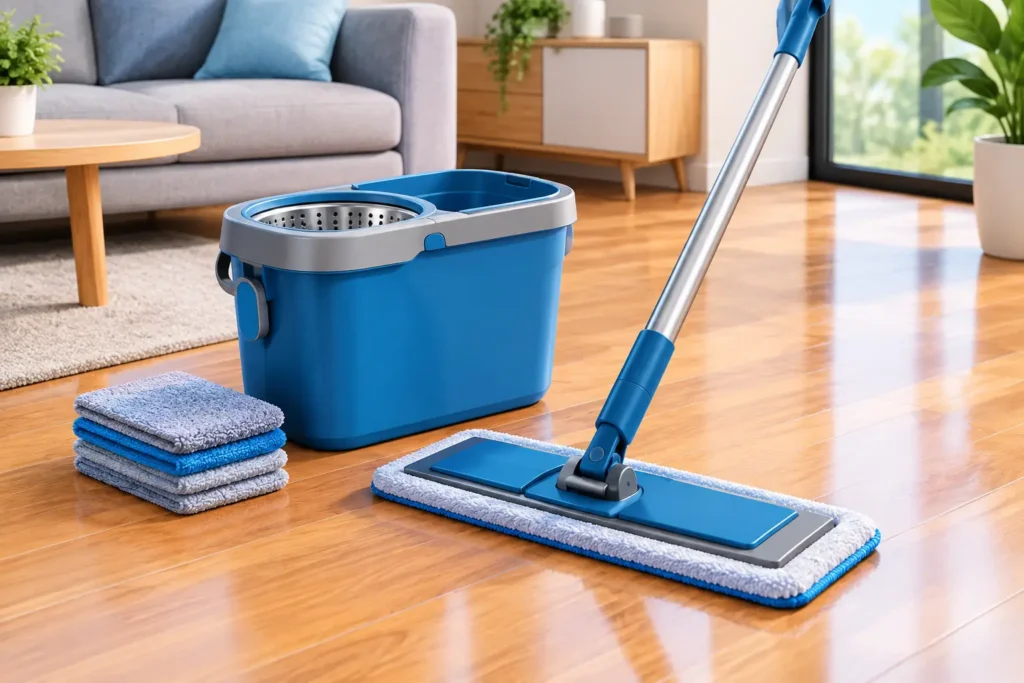
A mop can look perfectly fine in the store, then become frustrating the first time it leaves streaks across a kitchen floor or demands three bucket refills to clean one room. This mop set review focuses on what separates a useful everyday floor-cleaning set from one that creates more work than it saves.
For most homes, the best choice is not necessarily the biggest bucket, the flashiest handle, or the lowest price. It is the set that picks up everyday dirt efficiently, protects your flooring, rinses clean with minimal effort, and holds up through regular use. Those details make the difference between a chore that drags on and a floor that feels fresh in minutes.
What a Good Mop Set Should Do
A complete mop set should simplify the entire job: wetting the mop, cleaning the floor, rinsing away dirty water, and storing everything neatly afterward. If even one of those stages is awkward, the set can quickly end up pushed into a closet.
Start with cleaning performance. A quality mop head should lift dust, crumbs, dried splashes, and light grime without simply moving it around. Microfiber is a strong choice for routine cleaning because its fine fibers capture particles effectively and work well with water or a floor-safe cleaner. It is especially useful in homes with tile, vinyl, sealed wood, laminate, and other hard surfaces that benefit from controlled moisture.
Absorbency matters too, but more is not always better. A mop that holds too much water can leave floors overly wet, increasing drying time and creating a poor fit for laminate or wood. The right balance is a mop head that stays damp enough to clean while allowing you to control how much water reaches the surface.
The handle should feel secure and comfortable, not flimsy or difficult to maneuver. A swivel head makes a real difference around table legs, along baseboards, and under low furniture. It helps the mop follow the floor instead of forcing you to twist your wrist or repeatedly reposition the bucket.
Mop Set Review: The Features That Matter Most
A bucket designed for clean water control
The bucket is more than an accessory. It determines how easy it is to keep cleaning instead of spreading dirty water from one area to another. Look for a stable bucket with enough capacity for your space, but not so much that it becomes heavy and awkward to carry when full.
A built-in wringing system can be particularly helpful for busy households. It lets you remove excess water quickly and consistently, which is valuable when cleaning moisture-sensitive floors. Manual wringers are simple and dependable, while spin or foot-pedal systems can reduce bending and hand strain. The better option depends on your routine: a compact manual design may suit a small apartment, while a hands-free system can be a welcome upgrade for frequent whole-home cleaning.
Some sets separate clean and dirty water, while others use one main reservoir. A two-water design can help maintain a fresher rinse during larger jobs, especially after muddy entryways, kitchen spills, or bathroom cleaning. However, it may take up more storage space. For quick weekly floor care, a well-designed single-bucket system may be all you need.
A mop head that is easy to wash and replace
Reusable mop pads and detachable microfiber heads offer practical long-term value. Instead of discarding a cleaning pad after every use, you can wash it and use it again. This can reduce household waste and make it easier to keep a fresh mop head ready for the next cleanup.
Check whether the mop head is machine washable and whether replacement heads are readily available. Even durable microfiber eventually wears down after repeated washing and heavy use. A replaceable head extends the life of the entire set and helps maintain reliable cleaning results.
The attachment method should also be straightforward. If changing the pad requires excessive force, complicated clips, or several small parts, it is less likely to feel convenient on a busy day. A secure but simple connection gives you the confidence to clean quickly without stopping to adjust the mop.
Floor safety for every room
A mop set should work with your floors, not against them. Tile and sealed stone can generally handle a wetter mop and more frequent scrubbing. Laminate, luxury vinyl, and sealed hardwood usually need a lightly damp mop with no standing water left behind. The ability to wring the mop thoroughly is essential for protecting these surfaces.
For textured tile or grout lines, a mop head with enough surface contact can capture dirt without snagging. For smooth kitchen floors, a flat microfiber pad often glides easily and leaves a polished-looking finish. If your home has several flooring types, choose a versatile set that lets you adjust moisture levels rather than buying separate tools for every room.
Avoid abrasive scrubbers on delicate flooring unless the manufacturer specifically recommends them. Tough messes may need a targeted spot-cleaning tool first, followed by a damp mop to finish the surface evenly.
Where Mop Sets Can Fall Short
No single mop set is perfect for every cleaning task. Recognizing the trade-offs helps you buy for your actual home rather than for a product photo.
Compact sets are easy to store and carry, but their smaller buckets may require more water changes in a large house. Larger sets hold more water and can make whole-floor cleaning more efficient, yet they need more closet or laundry-room space. A spin system can feel effortless during use, but it may include more moving parts than a basic wringer bucket.
Flat mops are excellent for everyday dust, spills, and smooth hard floors, but they may need extra attention on deeply textured surfaces. String-style mop heads can hold more water and handle larger wet messes, though they can take longer to dry and may be harder to clean thoroughly. The best design depends on your home’s floor types, storage space, and how often you mop.
Also consider the weight of the bucket when it is full. A set may feel light in the aisle but become difficult to move once water is added. A sturdy handle, balanced shape, and manageable capacity matter more than oversized dimensions.
How to Get Better Results From Any Mop Set
Even a high-performing mop works better with a simple routine. Sweep, vacuum, or use a dry microfiber pad first to remove loose dust, hair, and crumbs. Mopping over dry debris can turn small particles into streaks and leave the floor looking dull.
Use only the amount of cleaner recommended for your floor type. Adding extra solution does not necessarily improve cleaning power. In fact, too much product can leave a film that attracts dirt or makes the surface feel sticky underfoot. For most routine cleaning, clean water and a small amount of compatible floor cleaner are enough.
Work from the farthest part of the room toward the exit. This keeps you from walking across wet areas and gives the floor time to dry naturally. Rinse the mop head when the water becomes visibly cloudy, especially after cleaning kitchens, bathrooms, or entrances where soil builds up quickly.
Afterward, wash or rinse the mop head thoroughly and allow it to dry completely. Storing a damp mop head inside a closed bucket can lead to unpleasant odors and reduce its freshness for the next use. A clean, dry mop is not just more pleasant to use. It is also better for hygienic floor care.
The Best Value Is the Set You Will Actually Use
A strong mop set earns its place by making regular floor care easier. It should feel comfortable in your hand, remove everyday messes without repeated passes, and give you control over water on different surfaces. Durable materials and washable microfiber heads add value over time, while thoughtful bucket features can make a noticeable difference during weekly cleaning.
PowerMax cleaning tools are designed around that same practical goal: dependable performance that helps everyday households clean with confidence. When choosing any mop set, focus on the features that match your space and routine, then keep the mop head clean and ready. Fresh-looking floors are much easier to maintain when the tool itself makes the job feel simple.