
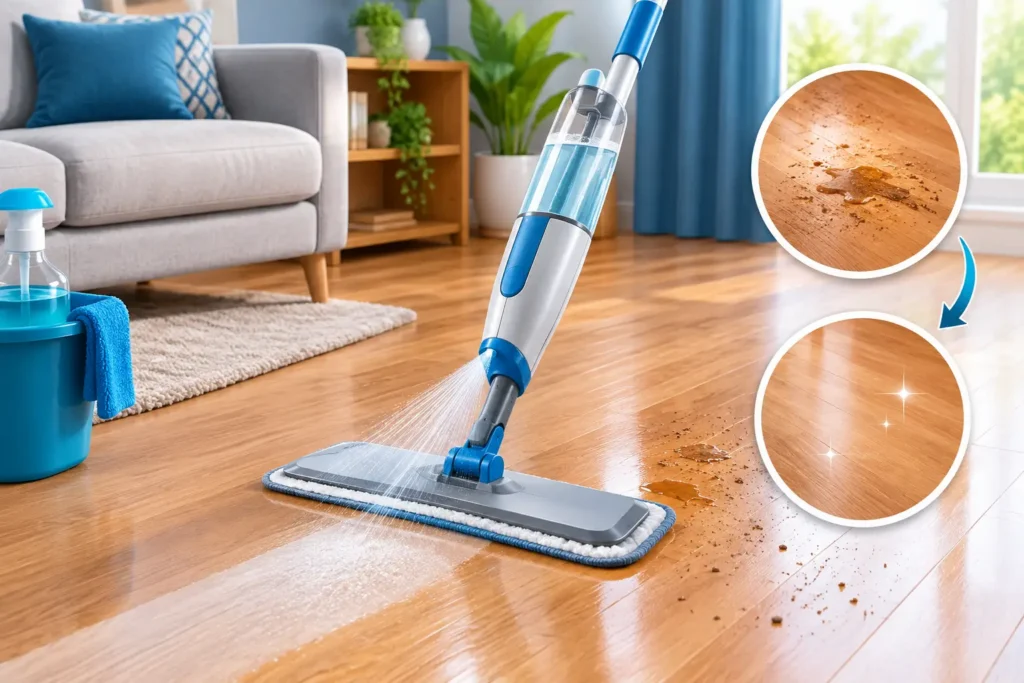
A spray mop earns its place when the kitchen floor needs attention now – not after you find a bucket, fill it, wring out a mop, and clean up the setup afterward. This spray mop review focuses on what makes these everyday tools genuinely useful: even spray coverage, absorbent pads, comfortable handling, and safe results on the floors you live with every day.
For quick spills, tracked-in dirt, pet paw marks, and the regular film that builds up in busy rooms, a good spray mop can make floor care feel far more manageable. But not every model performs the same. The best choice depends on your floor type, how much space you clean, and whether you value washable pads, disposable refills, or a little of both.
Spray Mop Review: The Features That Matter
A spray mop is designed for light to moderate floor cleaning. Instead of carrying a bucket, you fill a built-in refillable tank with water or a floor-safe cleaning solution, then use a trigger or button to mist the floor as you mop. The format is simple, but small design details determine whether cleaning feels fast and satisfying or frustrating.
Spray control should be even and easy
The spray system is the heart of the mop. A consistent, wide mist moistens the floor without leaving puddles behind. Too little spray can make you press harder and use more passes. Too much can leave streaks, slow drying time, and create unnecessary moisture on sensitive flooring.
Look for a trigger that feels comfortable in your hand and responds without sticking. A clear or translucent tank is also helpful because you can see when the solution is running low. For everyday cleaning, a moderate-capacity tank is usually the sweet spot: enough liquid for several rooms, without making the handle feel heavy.
The pad decides how much dirt you actually lift
A mop can spray perfectly and still disappoint if the pad only pushes dirt around. Microfiber pads are a strong choice because their fine fibers capture dust, crumbs, hair, and everyday grime while holding moisture evenly across the cleaning surface.
Thicker pads generally offer more absorbency and a little more cushioning over textured flooring. A pad with a denser center can be especially useful for dried splashes near the stove, muddy marks in entryways, or bathroom residue. The trade-off is that a very thick pad may take longer to dry after washing.
Washable pads are a practical option for households that mop frequently. They reduce refill waste and can deliver dependable performance when cared for properly. Rinse away loose debris after use, wash according to the care instructions, and avoid fabric softener, which can coat microfiber fibers and reduce their ability to pick up dirt.
Disposable pads can be convenient for a particularly messy cleanup, such as raw-food spills or a muddy pet accident. They are not necessarily the best fit for every routine, but they can provide an extra-hygienic option when you want a fresh pad for a specific task.
A flexible head reaches where dirt hides
Kitchen cabinets, dining chairs, sofas, and bathroom vanities all create the same cleaning challenge: grime collects just beyond the reach of a rigid mop. A low-profile head with a pivoting joint makes it easier to glide under furniture and turn around tight corners.
A wider mop head covers open areas more quickly, while a narrower head offers better control in compact rooms. If your home has a mix of large living spaces and tight bathrooms, a medium-width head is often the most versatile choice. It gives you enough coverage for weekly floor care without feeling oversized around fixtures and furniture.
Which Floors Can a Spray Mop Clean?
Spray mops are ideal for sealed hard floors, including ceramic tile, vinyl, linoleum, laminate, and many sealed hardwood surfaces. The key word is sealed. The surface needs a protective finish that can tolerate a small amount of moisture and an appropriate cleaning solution.
For tile and vinyl, a spray mop is an easy match. These floors can handle regular damp cleaning, and microfiber pads are excellent at lifting the fine dust that a broom may leave behind. Use just enough solution to loosen residue, then make overlapping passes for an even finish.
Laminate and sealed wood need a lighter touch. Keep the spray setting minimal, avoid soaking the floor, and never let liquid sit in seams or along edges. Excess moisture can cause swelling, dullness, or finish damage over time. A quick-drying microfiber pad and a cleaner labeled for the specific floor are the safer approach.
Natural stone requires special attention. Some stone surfaces can be damaged by acidic or harsh products, even if the mop itself is gentle. Use a stone-safe cleaner, follow the flooring manufacturer’s guidance, and test a new product in an inconspicuous area first.
A spray mop is not a replacement for deep cleaning every situation. Thick, sticky spills, construction dust, heavy grease, or neglected grout may require a targeted cleaner, a scrub brush, or a more thorough wash. Think of the spray mop as the tool that keeps everyday mess from becoming a weekend project.
How to Get a Streak-Free Finish
Streaks are usually caused by one of three things: too much cleaning solution, a dirty pad, or residue already sitting on the floor. The answer is rarely to spray more product.
Start by sweeping or vacuuming loose grit. This matters most in entryways and kitchens, where small particles can drag beneath the pad and leave faint lines. Then use a light, controlled spray and work in small sections. Move the mop in smooth overlapping passes instead of scrubbing the same spot repeatedly.
If the floor still looks cloudy after drying, rinse the pad thoroughly and reduce the amount of cleaner in the tank next time. Many concentrated products work best when diluted exactly as directed. More solution may seem like a stronger clean, but it can leave behind the film that causes dullness and streaking.
For a stubborn spot, pause and let a small amount of floor-safe solution sit briefly before wiping it away. Do not saturate the area, especially on laminate or wood. A clean microfiber cloth can help with localized marks that need a little extra attention.
Comfort and Durability Make a Daily Difference
A spray mop should feel balanced from the first pass to the last. A lightweight frame reduces fatigue, while a secure handle gives you control when working around chair legs and baseboards. If several people in the home use the mop, an adjustable or comfortably sized handle can make a noticeable difference.
Durability matters just as much as convenience. Check that the tank locks securely into place, the trigger mechanism moves smoothly, and the pad attachment stays firm when wet. A pad that peels away at the corners or a tank that drips can turn a time-saving tool into a source of irritation.
It also helps to choose a mop with readily available replacement pads. The frame may last for years, but pads are the working part of the system. Keeping at least one clean spare on hand means you can switch pads mid-clean rather than spreading kitchen grime into the bathroom.
Is a Spray Mop Worth It?
For most households, yes – especially when the goal is to clean hard floors more often with less effort. It is quicker to set up than a bucket mop, easier to store, and more controlled than pouring cleaner directly onto the floor. That convenience encourages regular maintenance, which is often the difference between floors that look consistently fresh and floors that need intensive cleaning later.
The right model is not always the one with the largest tank or the most accessories. Choose a spray mop with reliable spray control, a washable microfiber pad, a maneuverable head, and materials suited to your floors. PowerMax cleaning tools are designed around that same practical idea: dependable performance should make routine care easier, not add steps.
Keep the tank clean, wash pads promptly, use floor-appropriate solution, and let the mop handle the small messes before they settle in. A clean floor is easier to maintain when the tool you reach for is ready to work.