
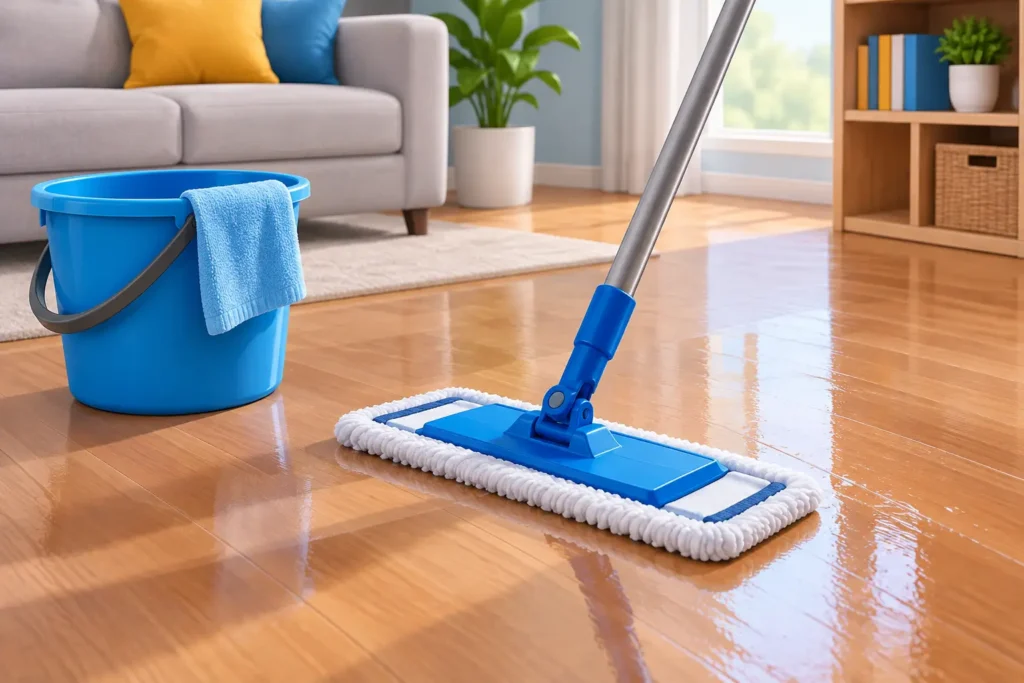
That freshly mopped floor should feel clean underfoot, not tacky enough to grab socks or leave footprints behind. If you are wondering, why do floors feel sticky even after you have cleaned them, the answer is usually not that your floor is still dirty. More often, it is a layer of leftover product, loosened grime, or moisture that did not dry the right way.
The good news is that a sticky floor is usually easy to fix. Once you identify the cause, a simple reset and a few smarter cleaning habits can bring back the smooth, fresh finish you expected.
Why do floors feel sticky after mopping?
Mopping removes dirt, but the water and cleaning solution left behind matter just as much as the scrubbing itself. Most sticky-floor problems come down to one of a few common cleaning mistakes.
Too much cleaning product
Using extra floor cleaner may seem like a shortcut to a deeper clean, but concentrated formulas do not work better when overused. They can leave a thin film that dries tacky and attracts more dust, hair, and crumbs. The result is a floor that feels dirty again far too soon.
Always follow the dilution instructions on the bottle. If a cleaner is designed for a bucket of water, adding a generous pour directly to a small amount of water can create residue on tile, vinyl, laminate, and sealed wood.
Dirty mop water spreading grime
A mop can only clean effectively while its water is clean. Once the water turns gray or cloudy, it may be moving grease and soil across the floor instead of lifting it away. This is especially common in kitchens, entryways, and homes with pets.
For larger areas, change the water when it looks dirty rather than waiting until the job is finished. Rinsing the mop head thoroughly between uses also prevents old residue from returning to the floor.
A mop head that needs washing
Microfiber and cotton mop heads hold onto grease, detergent, and fine debris. If they are not washed well after cleaning, they can leave a streaky, sticky film the next time you mop.
Wash reusable mop pads according to their care instructions, ideally without fabric softener. Fabric softener coats fibers and reduces their ability to absorb water and pick up dirt. Let the pad dry fully before storing it to prevent odor and bacteria buildup.
Grease or food residue on the floor
Kitchen floors often feel sticky because of cooking oils, small food spills, syrup, juice, and tracked-in residue. Plain water may spread oily messes instead of cutting through them. A floor can look clean from across the room while still feeling tacky under bare feet.
Use a floor-safe cleaner that is suited to grease, then follow with a clean-water rinse if the product instructions recommend it. Give extra attention to the space near the stove, trash can, refrigerator, and dining table, where invisible buildup is common.
Cleaner left to dry on the surface
Spraying too much product directly onto the floor or allowing cleaner to sit too long can create streaks and residue. This is particularly likely on glossy tile, luxury vinyl plank, and laminate, where even a light film is easy to feel and see.
Work in small sections. Apply cleaner sparingly to a mop pad or cloth when possible, clean the area, and avoid soaking the surface. A lightly damp mop is usually more effective than a dripping-wet one.
How to remove sticky residue from floors
The best approach is a gentle reset. Avoid reaching for harsh abrasives or strong solvents, which can dull finishes, damage protective coatings, or make the problem worse.
Start by vacuuming or sweeping thoroughly. Loose crumbs, sand, and hair can turn into a grimy paste when water is added. Use a clean broom, soft brush, or dry microfiber wiper to collect dry debris before you mop.
Next, fill a bucket with warm water and use only a small amount of the right floor cleaner. Mop with a freshly washed pad, wringing it out well so it is damp rather than saturated. For a floor that feels sticky from excess cleaner, make a second pass with clean water only. This rinse is often the step that restores a smooth finish.
Dry the floor with a clean microfiber cloth or allow plenty of airflow so moisture does not linger. A quality microfiber cloth helps lift remaining moisture and fine residue without scratching delicate surfaces. PowerMax microfiber cleaning tools are designed to make that final wipe faster and more satisfying, especially on floors that show streaks easily.
Match the fix to your floor type
Not every floor should be cleaned the same way. The safest method depends on the material and its finish.
Tile and ceramic floors
Tile is durable, but textured tile and grout lines can hold onto cleaner and kitchen grease. Use a neutral, floor-safe cleaner and rinse well. If the tackiness is concentrated in grout or near cooking areas, use a soft scrub brush on the grout lines, then wipe away the loosened soil with clean water.
Avoid leaving pools of water in grout, particularly if it is unsealed. Moisture can carry loosened dirt back into the porous surface.
Vinyl and luxury vinyl plank
Vinyl floors can develop a sticky feel when coated with soap, waxy products, or cleaners that are not made for vinyl. Use a pH-neutral product and a soft microfiber mop. Do not use abrasive scouring pads, steam mops unless the manufacturer permits them, or polish products that leave a shine coating.
If the floor remains tacky after cleaning, rinse with clean water and buff dry. A simple rinse can remove the leftover film without stressing the surface.
Laminate floors
Laminate needs very little moisture. Too much water can get into seams, cause swelling, and leave streaks that feel sticky underfoot. Use a barely damp microfiber mop and dry the floor promptly.
Skip oil soaps, waxes, and thick multi-surface products unless the flooring manufacturer specifically approves them. The goal is a clean surface, not a coated one.
Sealed hardwood floors
Hardwood floors need special care because the finish protects the wood beneath it. Use a cleaner labeled for sealed hardwood and avoid soaking the floor. A damp mop, cleaned in the direction of the wood grain, is usually enough for routine maintenance.
Never use vinegar, harsh degreasers, or abrasive pads on hardwood without checking your flooring manufacturer’s guidance. While vinegar is often suggested as a home remedy, its acidity can be a poor fit for some finishes.
How to prevent sticky floors next time
The simplest prevention strategy is to clean with less product and cleaner tools. Measure rather than guess when adding solution to water, and start with the minimum recommended amount. You can always clean a second time, but removing excess residue adds work.
Keep a separate mop pad for kitchen floors if cooking grease is a regular issue. Wash pads after each heavy-duty cleaning session, and replace them when the fibers look flattened, stained, or less absorbent. A worn-out mop head cannot deliver the clean, smooth result you want.
It also helps to handle spills quickly. Wiping up juice, grease, sauce, and pet accidents before they dry prevents the stubborn buildup that turns a routine mop into a bigger project. Place mats at exterior doors and in front of the sink or stove to reduce tracked-in dirt and everyday splashes.
Finally, remember that more water is not always better. A well-wrung mop, fresh water, and a surface-appropriate cleaner create a cleaner finish with less drying time and less chance of residue.
A sticky floor is your home’s way of asking for a small cleaning adjustment, not a complete overhaul. Use clean tools, the right amount of product, and a gentle final rinse when needed, and every step can feel as fresh and smooth as the room looks.